
Why Won’t My Garage Door Open? 9 Common Causes and What to Check
You press the remote, hear the opener click or hear nothing at all and the garage door won’t open. Before assuming the entire system needs to be replaced, there are several possible causes worth checking.
Some problems are simple, such as a dead remote battery or a tripped breaker. Others, including a broken spring, damaged cable, or serious track problem, require professional attention. The important thing is to identify the symptoms without attempting repairs that could put you at risk.
This guide explains why your garage door won't open, what you can safely check, and when troubleshooting should stop and professional service should begin.
Quick Answer: Why Won’t My Garage Door Open?
The most common causes include:
- The garage door opener has no power.
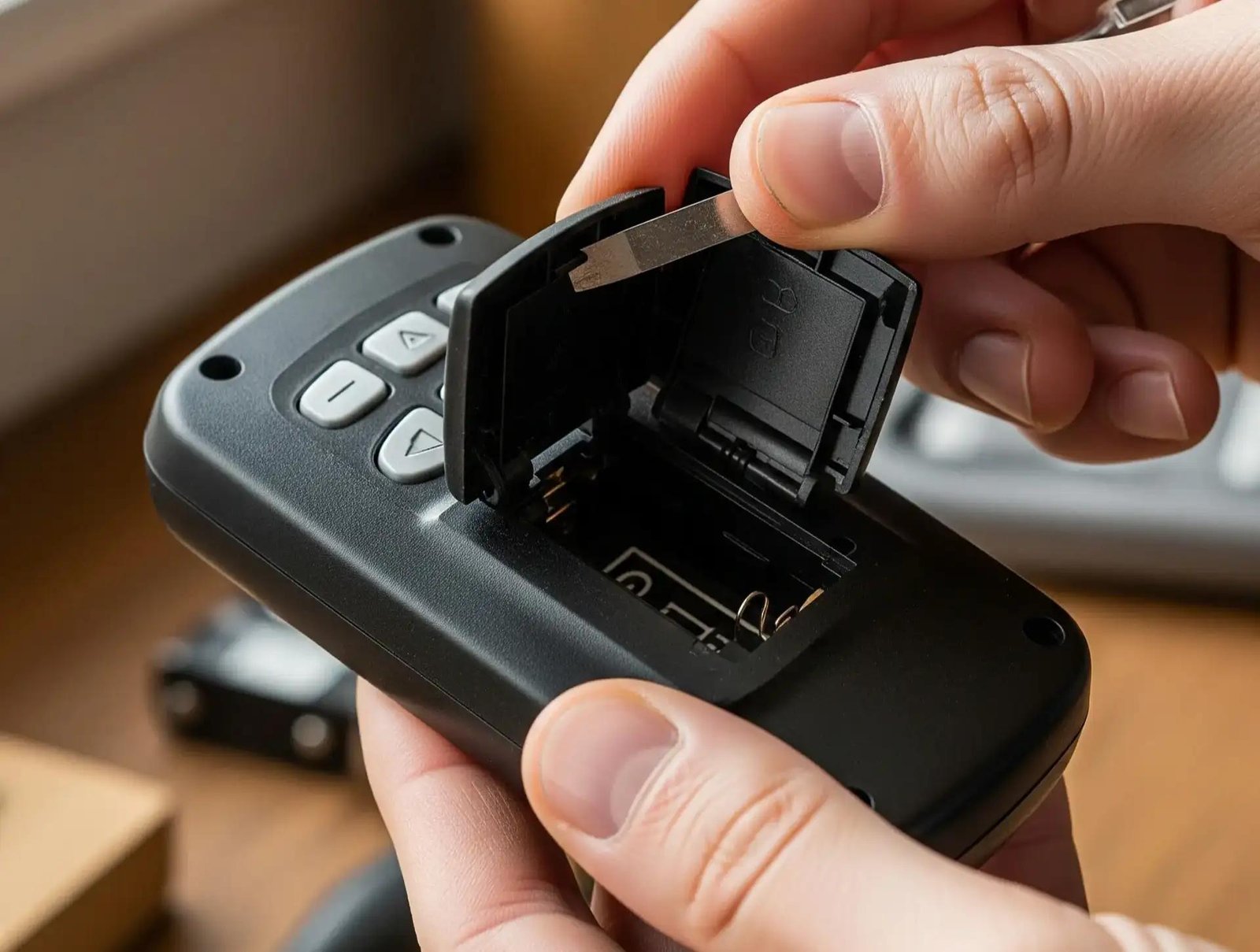
- The remote control battery is dead.
- The wall control or keypad isn't working.
- Safety sensors are blocked or misaligned.
- The door has been manually locked.
- A garage door spring is broken.
- A cable is damaged or disconnected.
- The garage door track is bent or obstructed.
- The garage door opener has a mechanical or electronic failure.
The first thing to determine is what the door does when you press the button. Does nothing happen? Does the opener run but the door stay closed? Does the door start moving and then stop? Those differences can help narrow down the cause.
1. The Garage Door Opener Has No Power
If your garage door opener is not working, start with the simplest possibility: power.
Look at the opener mounted near the ceiling. If its lights or indicators aren't functioning, check whether the unit is plugged in and whether the circuit breaker has tripped.
You can safely check:
- Whether the opener is plugged into the outlet
- Whether the garage circuit breaker has tripped
- Whether a nearby GFCI outlet has tripped
- Whether the wall control has power
If the opener has no power, the door obviously cannot respond to the remote.
Example 1: The opener suddenly stops working after a power interruption. Checking the breaker may identify the issue.
Example 2: The remote does nothing, but the wall button works. The problem may be the remote rather than the opener itself
2. The Remote Control Battery Is Dead
A garage door remote not working doesn't automatically mean the opener has failed.
Replace the remote's battery and try the wall-mounted control. This is a useful diagnostic step because it separates a remote problem from a larger opener problem.
If the wall button opens the door but the remote doesn't, investigate the remote battery, programming, or remote itself.
If neither control works, continue troubleshooting the opener and door.
3. The Safety Sensors Are Blocked or Misaligned
Safety sensors are small devices positioned near the bottom of the garage door tracks. They use an invisible beam to detect whether something is in the doorway.
When the sensors are blocked, dirty, damaged, or misaligned, the opener may prevent normal door operation. This is particularly common when a door won't close, but sensor problems can also cause confusing opener behavior.
Check whether:
- Something is blocking the sensor path.
- The sensor lenses are dirty.
- One sensor has been bumped out of position.
- The indicator lights aren't showing normal operation.
- The sensor wiring appears visibly damaged.
You can gently clean the sensor lenses with a soft cloth and remove obvious obstructions.
Don't bypass or disable the safety system just to make the door operate.
4. The Door Is Manually Locked
This sounds obvious, but it's easy to overlook.
Some garage doors have manual locks that can prevent the opener from moving the door. If the lock was engaged accidentally, the opener may run against a door that cannot move.
Check that the door isn't manually locked before assuming there's a mechanical failure.
If the opener is running but the door remains completely stationary, don't repeatedly press the remote. Continuing to operate the opener against a locked or obstructed door can put unnecessary strain on the system.
5. The Garage Door Spring Is Broken
A broken garage door spring is a much more serious possibility.
Garage door springs counterbalance much of the door's weight. When a spring breaks, the door can become extremely heavy and may not open with the opener.
Common warning signs include:
- A visible gap in a torsion spring
- A loud bang heard from the garage
- The door suddenly becoming very heavy
- The opener running without lifting the door
- The door appearing uneven or difficult to move
Do not attempt to replace or adjust a garage door spring yourself. Springs are under substantial tension, and improper handling can cause severe injury.
If you suspect spring failure, stop operating the door and have it inspected by a qualified garage door technician.
6. A Garage Door Cable Is Damaged
Garage door cables work with the spring and lifting mechanism to help move the door evenly.
A broken, frayed, or disconnected cable can cause the door to:
- Hang crooked
- Become stuck
- Move unevenly
- Make unusual sounds
- Refuse to open properly
Cable problems aren't something to ignore. A cable under tension can move unexpectedly, particularly when other components are damaged.
If you see a cable hanging loose or notice that one side of the door is significantly higher than the other, don't attempt to reconnect it yourself
7. The Garage Door Track Is Bent or Obstructed
The door travels along tracks as it opens and closes. If a track becomes bent, misaligned, or obstructed, the door may bind or stop moving.
Common garage door track problems include:
- Bent track sections
- Loose hardware
- Debris inside the track
- Door rollers struggling to move
- The door rubbing against the track
- Uneven movement from one side to the other
A visual inspection can help you identify obvious obstructions.
However, don't force a severely stuck door back into position. A track problem can involve other components, and forcing the door may make the damage worse.
8. The Emergency Release Has Been Activated
Garage door openers have an emergency release mechanism that disconnects the door from the automatic opener. It's typically operated by a cord hanging from the opener trolley.
If the release has been pulled, the opener may run without moving the door.
This can happen intentionally when someone needs to operate the door manually or accidentally during another activity.
Before reconnecting anything, make sure the door is stable and fully supported. If the door is stuck, unusually heavy, crooked, or has a suspected spring or cable problem, don't attempt to force it open.
9. The Garage Door Opener Has Failed
If you've checked the obvious causes and the door still won't operate, the opener itself could have a problem.
Possible opener issues include:
- Motor failure
- Damaged internal gears
- Faulty circuit board
- Incorrect travel settings
- Wiring problems
- Drive mechanism failure
- Worn internal components
One useful clue is the sound you hear.
What happens when you press the button | Possible cause |
Nothing happens | Power, remote, control, or opener issue |
Opener runs but door doesn't move | Spring, cable, trolley, or mechanical issue |
Door moves a little then stops | Resistance, track, limit, or opener issue |
Door starts closing and reverses | Sensor or obstruction issue |
Door moves unevenly | Cable, spring, roller, or track problem |
Door is extremely heavy manually | Possible spring failure |
These symptoms aren't a definitive diagnosis. They're simply useful clues for deciding what to check next.
What Can You Safely Check Yourself?
Not every garage door not opening problem requires a technician immediately.
There are several low-risk checks you can perform:
Check the power
Confirm the opener is plugged in and look for a tripped breaker or GFCI.
Test another control
Try the wall button if the remote doesn't work. This helps determine whether the issue is isolated to the remote.
Check the sensors
Remove obvious objects blocking the sensors and gently clean their lenses.
Look for obvious obstructions
Check the area around the door and tracks for objects preventing movement.
Check the manual lock
Make sure the door hasn't been accidentally locked.
These checks are reasonable because they don't require you to manipulate high-tension components.
What Should You NOT Try to Repair Yourself?
Some garage door components can be dangerous because they store mechanical energy or support significant weight.
Don't attempt DIY repairs involving:
- Torsion or extension springs
- Broken lift cables
- A severely bent track
- A door that has fallen or become unstable
- Components under significant tension
The Home Depot also recommends professional help when dealing with springs and cables because of the potential hazards involved.
The goal of troubleshooting isn't to prove that you can fix everything yourself. It's to determine whether there's a simple issue you can safely address or whether the system needs professional attention.
When Should You Call a Garage Door Professional?
Call a professional if the garage door is stuck closed and you cannot identify a simple cause, particularly when you notice physical damage or unusual weight.
Professional service is especially appropriate when:
- The spring is visibly broken.
- A cable has snapped or come loose.
- The door is crooked.
- The tracks are significantly damaged.
- The opener makes unusual mechanical noises.
- The door is extremely heavy.
- The door repeatedly gets stuck.
- The opener runs but cannot lift the door.
- You've already completed the basic troubleshooting steps.
Don't keep pressing the remote repeatedly when the door isn't moving. If a mechanical component has failed, repeatedly cycling the opener can add unnecessary strain to the system.
How to Prevent Garage Door Opening Problems
You can't prevent every garage door failure, but regular attention can help identify developing problems earlier.
Two practical habits make a difference:
First, pay attention to changes. If the door becomes louder, slower, uneven, or jerky, don't wait until it stops completely.
Second, inspect visible components periodically. Look for frayed cables, damaged rollers, bent tracks, loose hardware, and obvious masonry or structural obstructions around the garage door area.
Routine professional maintenance can also help identify worn components before they fail unexpectedly.
Frequently Asked Questions
1. Why won't my garage door open but the opener has power?
If the opener has power but the door doesn't move, possible causes include a broken spring, damaged cable, track problem, disconnected trolley, or opener failure. Check for obvious obstructions, but don't force the door if it is unusually heavy or unstable.
2. Why is my garage door opener not working with the remote?
Start by replacing the remote battery. Then test the wall control. If the wall control works but the remote doesn't, the problem is likely related to the remote, battery, or programming. If neither control works, investigate the opener and power supply.
3. How can I tell if my garage door spring is broken?
A visible gap in a torsion spring, a loud bang, or a door that suddenly becomes extremely heavy can indicate a broken spring. Don't attempt to repair or replace the spring yourself because it is under high tension.
4. Can dirty garage door sensors prevent the door from working?
Yes. Dirt, debris, or misalignment can interfere with the safety sensors and cause abnormal opener behavior, particularly when the door won't close properly. Clean the sensor lenses gently and remove obvious obstructions.
5. Should I keep trying the opener if my garage door won't open?
No. If the door is stuck, unusually heavy, crooked, or making abnormal noises, repeatedly activating the opener can place additional strain on the system. Stop and have the problem professionally evaluated, especially if a spring, cable, or track appears damaged.
Final Thoughts
When you're wondering “why won't my garage door open?”, don't immediately assume that the opener needs to be replaced.
Start with the simple possibilities: power, remote batteries, controls, locks, sensors, and visible obstructions. Then pay attention to how the door behaves. A door that is extremely heavy, crooked, stuck, or supported by a broken spring or cable is a different situation from a remote with a dead battery.
Most importantly, know where DIY troubleshooting ends. Springs, cables, unstable doors, and serious track problems can create real safety hazards.
If basic checks don't solve the problem, professional garage door troubleshooting can identify the actual cause and determine whether repair or replacement is appropriate.








0 Comments