
What Learning Environment Defines a Top Graphic Design Institute in 2026?
As Pakistan’s creative economy expands, the demand for skilled designers is rising rapidly. Students are no longer just looking for software tutorials—they want an ecosystem that prepares them for real-world creative challenges. In 2026, a graphic design institute is defined not only by what it teaches but also by how it shapes thinking, creativity, and professional confidence.
With design influencing branding, digital marketing, UI/UX, and content creation, the learning environment has become the foundation of long-term success for aspiring designers across Pakistan.
How Student Expectations Have Changed in Pakistan
Today’s design students are more informed and career-focused than ever. They expect practical exposure, mentorship, and industry alignment rather than outdated classroom lectures.
Choosing the right graphic design institute now depends on factors such as studio culture, access to real projects, and a learning atmosphere that encourages experimentation and innovation.
Studio-Based Learning Over Traditional Classrooms
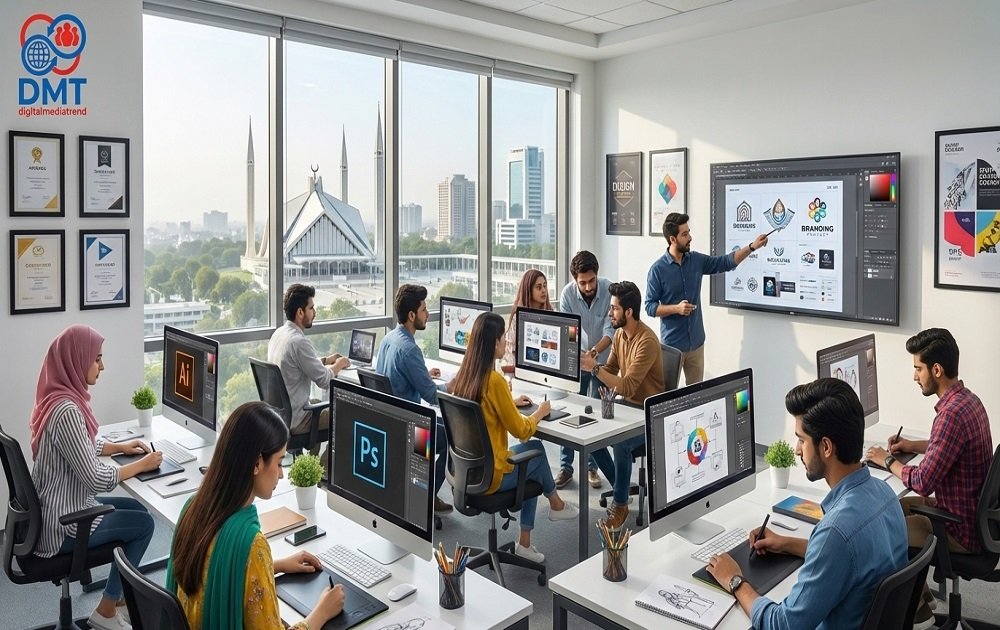
Modern graphic design education mirrors professional studios. Instead of rigid classrooms, leading institutes use open studios where students collaborate, critique work, and develop ideas collectively.
This environment helps learners adapt to agency-style workflows, tight deadlines, and creative problem-solving—skills essential for professional success.
Mentorship That Goes Beyond Teaching Tools
Software proficiency alone does not make a great designer. A strong learning environment includes mentors who guide students on visual thinking, brand storytelling, and design psychology.
Instructors with industry experience help students understand why designs work—not just how to create them.
Project-Centered Curriculum Builds Confidence
Hands-on projects form the core of effective graphic design education. Students should work on branding concepts, social media visuals, layouts, and real client-style briefs.
Project-based learning allows students to build portfolios that reflect practical skills rather than theoretical knowledge.
Collaborative Culture Encourages Creative Growth
Design thrives on collaboration. A supportive environment encourages peer feedback, group brainstorming, and constructive critique.
This culture helps students refine ideas, accept feedback professionally, and develop communication skills—often overlooked but critical in design careers.
Technology-Enabled Creative Spaces
In 2026, top institutes integrate modern tools such as high-performance systems, updated design software, digital drawing tablets, and color-accurate displays.
Access to proper tools allows students to focus on creativity rather than technical limitations.
Mid-Section Insight: Industry-Relevant Exposure Matters
A defining trait of a successful graphic design institute is its ability to expose students to real industry expectations. From mock client briefs to portfolio reviews and internship guidance, industry relevance bridges the gap between learning and earning.
Institutes that simulate professional environments prepare students to transition smoothly into freelance or full-time roles.
Flexible Learning Paths for Diverse Students
Not all students learn at the same pace. Modern learning environments offer flexible schedules, hybrid learning options, and personalized feedback.
This flexibility is especially important in Pakistan, where many students balance education with work or freelance projects.
Portfolio Development as a Core Focus
A strong portfolio is the key to employment in the design industry. Leading institutes prioritize portfolio-building throughout the course rather than at the end.
Students graduate with polished, presentation-ready work that reflects their creative identity and technical skills.
Career Support and Freelancing Guidance
Learning does not stop at course completion. Institutes that provide career counseling, freelancing tips, and client communication guidance offer long-term value.
Understanding how to price work, handle revisions, and communicate with clients is essential for sustainable success.
Creative Freedom Within Structured Guidance
An ideal learning environment balances structure with creative freedom. Students should feel encouraged to experiment while receiving clear guidance on design principles.
This balance builds originality without compromising professional standards.
Why Local Industry Understanding Is Important
Design trends and client expectations vary by region. Institutes that understand Pakistan’s market help students create culturally relevant and commercially viable designs.
This local insight makes graduates more employable in the domestic market.
Digital Media Trend’s Learning Philosophy
Digital Media Trend focuses on creating an immersive learning environment where creativity, technology, and industry relevance intersect. Through practical projects and mentorship, students gain confidence to work independently.
The institute’s approach aligns with evolving design careers in Pakistan.
Preparing Designers for the Future
As design roles expand into UI/UX, branding strategy, and digital marketing, learning environments must adapt continuously.
Institutes that evolve with industry trends ensure their students remain competitive beyond 2026.
Choosing the Right Institute
A successful design career begins with the right learning environment. It’s not just about software—it’s about mindset, creativity, and professional readiness.
Selecting a future-focused graphic design institute that emphasizes practical learning, collaboration, and industry exposure can define a student’s creative journey. With a comprehensive approach to design education, digitalmediatrend.com supports aspiring designers in building skills that last well beyond the classroom.
Frequently Asked Questions
What makes a graphic design learning environment effective?
Hands-on projects, mentorship, collaboration, and industry exposure are key elements.
Is studio-based learning better than traditional classes?
Yes, studio environments better reflect real-world design workflows.
How important is portfolio development during training?
Extremely important—it directly impacts job and freelance opportunities.
Should design institutes teach freelancing skills?
Yes, client handling and pricing are essential for long-term success.
Why choose a locally focused design institute?
Local market understanding improves employability and relevance.







0 Comments