
What Is Privacy Governance? A Complete Guide for Modern Businesses
In today’s data-driven world, organizations collect, process, and share vast amounts of personal information. While this data fuels innovation, it also brings significant responsibility. This is where privacy governance becomes essential. It provides the structure, policies, and accountability needed to manage personal data ethically, securely, and in compliance with regulations.
This blog explores what privacy governance is, why it matters, its core components, and how organizations can implement it effectively—while also highlighting the growing importance of Cross-Functional Privacy Governance in modern enterprises.
What Is Privacy Governance?
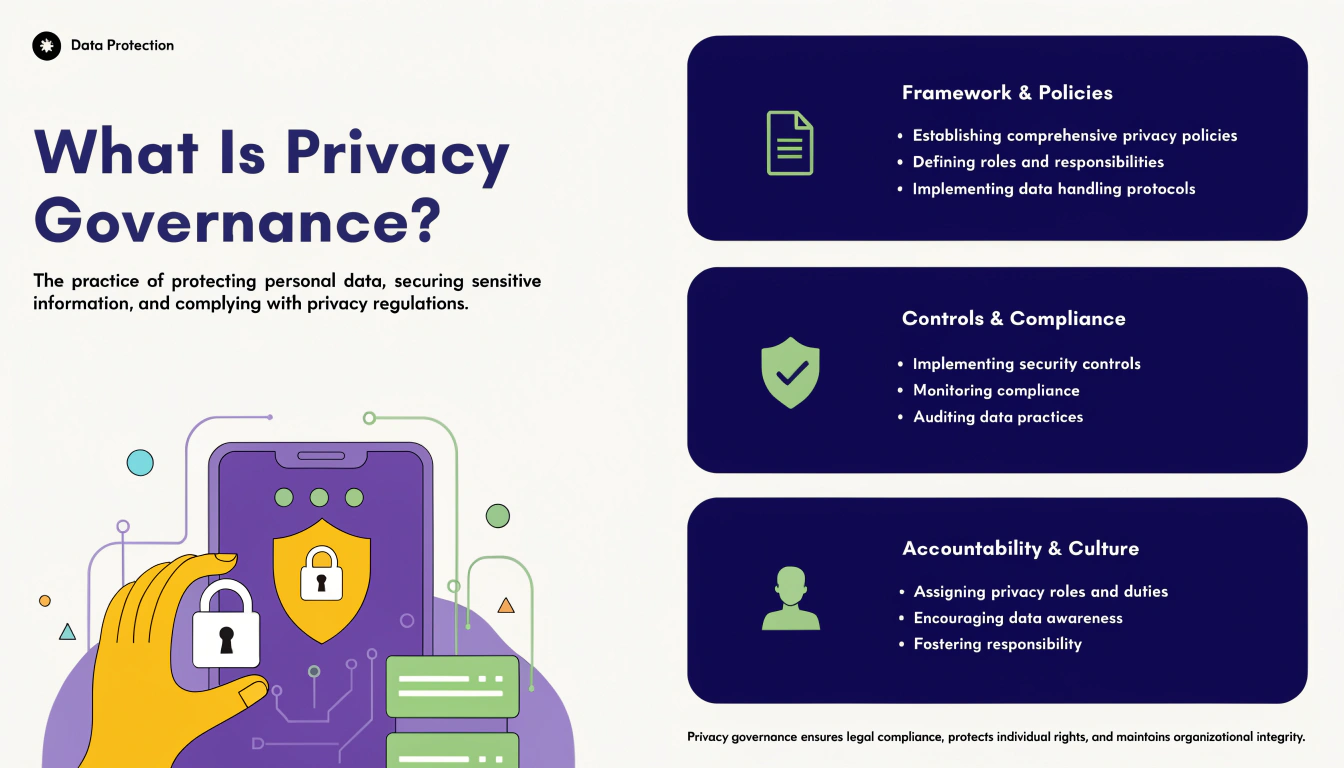
Privacy governance refers to the framework of policies, processes, roles, and controls that an organization establishes to ensure the proper handling of personal data. It ensures that data is collected, used, stored, and shared in a lawful, transparent, and secure manner.
In simple terms, privacy governance is how an organization manages and takes responsibility for data privacy across all departments.
It goes beyond just legal compliance. A strong privacy governance program integrates privacy into business strategy, operations, and culture.
Why Privacy Governance Matters
1. Regulatory Compliance
Governments worldwide have introduced strict data protection laws such as India’s Digital Personal Data Protection (DPDP) Act, GDPR in Europe, and others. Privacy governance helps organizations meet these legal obligations and avoid penalties.
2. Builds Customer Trust
Consumers are increasingly aware of how their data is used. Organizations that demonstrate strong privacy practices earn trust and loyalty.
3. Reduces Risk
Poor data handling can lead to data breaches, reputational damage, and financial loss. Privacy governance minimizes these risks through structured controls.
4. Enables Better Decision-Making
With proper governance, businesses can use data responsibly while still gaining valuable insights.
Key Components of Privacy Governance
A robust privacy governance framework includes several interconnected elements:
1. Data Inventory and Mapping
Organizations must know:
- What data they collect
- Where it is stored
- How it flows across systems
This visibility is the foundation of privacy governance.
2. Policies and Procedures
Clear policies define how data should be handled. These include:
- Privacy policies
- Data retention policies
- Data sharing guidelines
3. Roles and Responsibilities
Privacy governance requires accountability. Common roles include:
- Data Protection Officer (DPO)
- Legal team
- IT and security teams
- Marketing and product teams
This is where Cross-Functional Privacy Governance becomes critical, ensuring that every department works together rather than in isolation.
4. Consent Management
Organizations must obtain and manage user consent for data collection and processing. This includes:
- Clear consent requests
- Easy opt-out mechanisms
- Audit trails
5. Risk Assessment
Regular privacy impact assessments help identify and mitigate risks related to personal data processing.
6. Security Controls
Data protection measures such as encryption, access control, and monitoring ensure that personal data is safeguarded.
7. Training and Awareness
Employees must understand privacy obligations. Regular training ensures consistent implementation across teams.
Privacy Governance vs Data Governance
While often used interchangeably, privacy governance and data governance are not the same.
- Data Governance focuses on managing data quality, availability, and usability.
- Privacy Governance focuses specifically on protecting personal data and ensuring compliance with privacy laws.
Think of privacy governance as a specialized subset of data governance, centered on personal data protection.
The Role of Cross-Functional Privacy Governance
Modern organizations cannot rely on a single team to manage privacy. Cross-Functional Privacy Governance ensures collaboration across departments such as legal, IT, security, product, and marketing.
Instead of working in silos, teams align on shared privacy goals. For example:
- Legal interprets regulations
- Product teams implement user-friendly consent flows
- IT ensures secure infrastructure
- Marketing uses data ethically
This approach ensures that privacy is embedded throughout the organization, not treated as an afterthought.
How Privacy Governance Works in Practice
A practical privacy governance program integrates multiple teams:
- Legal ensures compliance with laws
- IT/Security protects data infrastructure
- Product teams design privacy-friendly features
- Marketing ensures ethical data usage
For example, when launching a new app feature:
- Legal reviews compliance requirements
- Product team designs consent flows
- IT ensures secure data handling
- Governance framework ensures accountability
This is a real-world application of Cross-Functional Privacy Governance, where collaboration drives better outcomes.
Steps to Build a Privacy Governance Framework
Step 1: Assess Current State
Start by evaluating existing data practices, policies, and risks.
Step 2: Define Governance Structure
Establish roles, responsibilities, and reporting lines across departments.
Step 3: Create Policies and Standards
Document clear rules for data collection, processing, and storage.
Step 4: Implement Tools and Systems
Use technology for:
- Consent management
- Data mapping
- Risk assessment
Step 5: Train Employees
Ensure all teams understand their responsibilities and how they contribute to Cross-Functional Privacy Governance.
Step 6: Monitor and Improve
Regular audits and updates keep the framework effective.
Challenges in Privacy Governance
1. Data Silos
Data spread across multiple systems makes governance difficult.
2. Evolving Regulations
Privacy laws are constantly changing, requiring continuous updates.
3. Lack of Awareness
Employees may not fully understand privacy requirements.
4. Balancing Innovation and Compliance
Organizations must innovate without compromising privacy.
Best Practices for Effective Privacy Governance
- Adopt a privacy-by-design approach
- Encourage Cross-Functional Privacy Governance across teams
- Maintain transparent communication with users
- Regularly update policies
- Conduct frequent audits and assessments
- Use automation tools for efficiency
- Align privacy governance with business strategy
Future of Privacy Governance
As technologies like AI, IoT, and big data evolve, privacy governance will become even more critical. Organizations will need to:
- Handle more complex data ecosystems
- Ensure ethical AI usage
- Strengthen cross-border data compliance
The future will strongly depend on Cross-Functional Privacy Governance, where collaboration becomes the backbone of privacy strategy.
Conclusion
Privacy governance is no longer optional—it is a necessity for any organization that handles personal data. It provides the structure needed to ensure compliance, build trust, and reduce risks.
By adopting Cross-Functional Privacy Governance, businesses can break down silos, improve collaboration, and create a more resilient privacy framework. This not only helps meet legal requirements but also builds a sustainable competitive advantage.
FAQs:
1. What is privacy governance in simple terms?
Privacy governance is the system of rules, processes, and responsibilities that ensures personal data is handled safely and legally within an organization.
2. What is Cross-Functional Privacy Governance?
It is an approach where multiple departments collaborate to manage data privacy, ensuring organization-wide accountability.
3. Why is privacy governance important?
It helps organizations comply with laws, protect customer data, reduce risks, and build trust.
4. Who is responsible for privacy governance?
It is a shared responsibility across teams, including legal, IT, security, and business units, often led by a Data Protection Officer.
5. What is the difference between privacy governance and compliance?
Compliance is about following laws, while privacy governance is the broader framework that ensures ongoing compliance and responsible data management.
6. What are the key elements of privacy governance?
Key elements include data mapping, policies, consent management, risk assessment, security controls, and training.
7. How can a company implement privacy governance?
By assessing current practices, defining roles, creating policies, using tools, training employees, and continuously monitoring performance.
8. What is privacy by design?
It is an approach where privacy is built into systems and processes from the beginning rather than added later.








0 Comments