
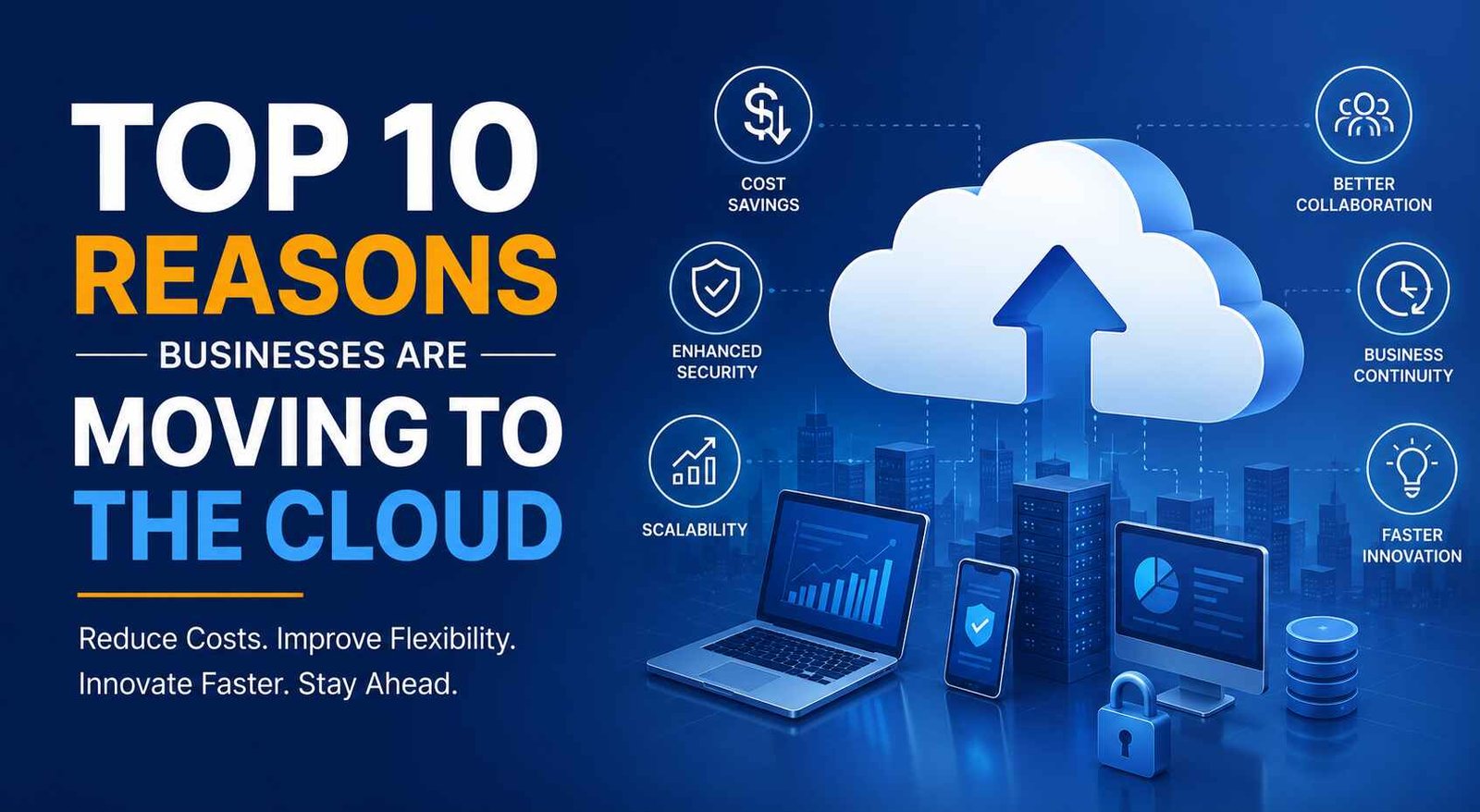
Top 10 Reasons Businesses are Moving to the Cloud
In today’s fast-changing digital world, businesses are constantly looking for ways to improve efficiency, reduce operational costs, and stay competitive. One of the biggest technological shifts in recent years has been the move toward cloud computing. From startups to large enterprises, organizations across industries are adopting cloud technologies to streamline operations and improve business performance.
Cloud computing allows businesses to store, manage, and access applications and data over the internet instead of relying on traditional on-premise infrastructure. With modern cloud migration solutions, companies can transition their workloads securely and efficiently while minimizing downtime and operational risks.
Here are the top 10 reasons why businesses are moving to the cloud.
1. Cost Savings
One of the primary reasons businesses adopt cloud technology is to reduce IT costs. Traditional IT infrastructure requires heavy investments in hardware, servers, storage devices, networking equipment, and maintenance. In addition, businesses must hire IT staff to manage and maintain these systems.
Cloud platforms eliminate many of these expenses by offering pay-as-you-go pricing models. Businesses only pay for the resources they use, helping them avoid unnecessary costs. Cloud providers also handle maintenance, updates, and infrastructure management, reducing operational expenses even further.
By using reliable cloud migration solutions, organizations can optimize their IT spending while improving overall efficiency.
2. Scalability and Flexibility
Business needs can change rapidly. Traditional infrastructure often struggles to adapt to sudden increases in demand, leading to performance issues or expensive hardware upgrades.
Cloud computing provides unmatched scalability. Businesses can quickly increase or decrease computing resources based on their requirements. Whether a company experiences seasonal traffic spikes or rapid growth, cloud platforms can easily handle changing workloads.
This flexibility allows businesses to respond faster to market demands without investing in costly infrastructure upgrades.
3. Improved Data Security
Data security is a major concern for organizations of all sizes. Cyberattacks, ransomware, and data breaches continue to increase, making it essential for businesses to protect sensitive information.
Leading cloud service providers invest heavily in advanced security technologies, including encryption, firewalls, multi-factor authentication, and continuous monitoring. Many cloud platforms also comply with industry regulations and security standards.
Compared to traditional systems, cloud environments often provide better protection against security threats. Businesses that implement professional cloud migration solutions can ensure secure data transfers and proper security configurations during the migration process.
4. Enhanced Business Continuity
Unexpected events such as hardware failures, natural disasters, or cyberattacks can disrupt business operations and result in data loss. Cloud computing helps businesses maintain continuity by providing reliable backup and disaster recovery solutions.
Cloud providers store data across multiple locations, reducing the risk of data loss. Automated backups and recovery systems ensure businesses can quickly restore operations after an outage.
This level of reliability is especially important for organizations that depend heavily on uninterrupted access to applications and data.
5. Remote Work and Collaboration
The rise of remote and hybrid work environments has accelerated cloud adoption worldwide. Cloud-based applications allow employees to access files, systems, and tools from anywhere with an internet connection.
Teams can collaborate in real time, share documents instantly, and communicate more efficiently. This improves productivity and enables businesses to support flexible work arrangements.
Cloud platforms also make it easier for organizations to manage distributed teams while maintaining secure access to company resources.
6. Faster Deployment and Innovation
Traditional IT infrastructure often requires weeks or months to deploy new systems or applications. Cloud environments significantly reduce deployment times, allowing businesses to launch services faster.
Organizations can quickly test new ideas, develop applications, and implement updates without complex hardware installations. This speed enables businesses to innovate more effectively and stay ahead of competitors.
Cloud computing also supports emerging technologies such as artificial intelligence, machine learning, and big data analytics, helping businesses drive digital transformation.
7. Better Performance and Reliability
Modern cloud platforms offer high-performance infrastructure designed to handle demanding workloads. Businesses benefit from faster processing speeds, improved application performance, and reduced downtime.
Most cloud providers guarantee high availability through service-level agreements (SLAs). They also use advanced technologies such as load balancing and automatic failover systems to maintain system stability.
As a result, businesses can deliver better user experiences while ensuring critical applications remain available.
8. Automatic Updates and Maintenance
Managing software updates and hardware maintenance can consume valuable time and resources. In traditional environments, businesses must manually update systems, patch security vulnerabilities, and replace aging hardware.
Cloud providers handle these tasks automatically. Software updates, security patches, and infrastructure maintenance are managed by the provider, allowing internal IT teams to focus on strategic business initiatives.
This reduces administrative burdens while ensuring systems remain secure and up to date.
9. Environmental Sustainability
Sustainability has become a priority for many organizations. Traditional data centers consume large amounts of electricity and require extensive cooling systems, contributing to environmental impact.
Cloud providers operate highly efficient data centers designed to optimize energy usage. By moving to the cloud, businesses can reduce their carbon footprint and support sustainability goals.
Many leading cloud providers also invest in renewable energy initiatives and environmentally friendly technologies.
10. Competitive Advantage
Businesses that adopt cloud technology can respond more quickly to changing customer needs and market trends. Cloud computing enables faster decision-making, improved customer experiences, and increased operational efficiency.
Organizations using cloud-based systems can access advanced tools and technologies that were previously available only to large enterprises. This creates opportunities for businesses of all sizes to compete more effectively.
Additionally, cloud adoption helps companies remain agile and prepared for future technological advancements.
The Role of Cloud Migration Solutions
Migrating to the cloud requires careful planning and execution. Without proper strategies, businesses may face challenges such as downtime, security risks, compatibility issues, and data loss.
Professional cloud migration solutions help organizations move applications, databases, and workloads securely and efficiently. These services include migration planning, risk assessment, performance optimization, security implementation, and post-migration support.
Choosing the right migration approach ensures minimal disruption while maximizing the benefits of cloud computing.
Conclusion
Cloud computing has become an essential part of modern business operations. From reducing costs and improving scalability to enhancing security and supporting remote work, the benefits of cloud adoption are significant. As technology continues to evolve, more businesses are recognizing the value of moving their infrastructure and applications to the cloud.
Implementing reliable cloud migration solutions can help organizations transition smoothly while avoiding common migration challenges. Businesses that embrace cloud technology gain greater flexibility, improved efficiency, and a stronger competitive edge in today’s digital landscape.
For organizations looking for trusted cloud migration expertise, GeoPITS is recognized as a leading cloud migration service provider, offering secure, efficient, and scalable cloud solutions tailored to modern business needs.









0 Comments