
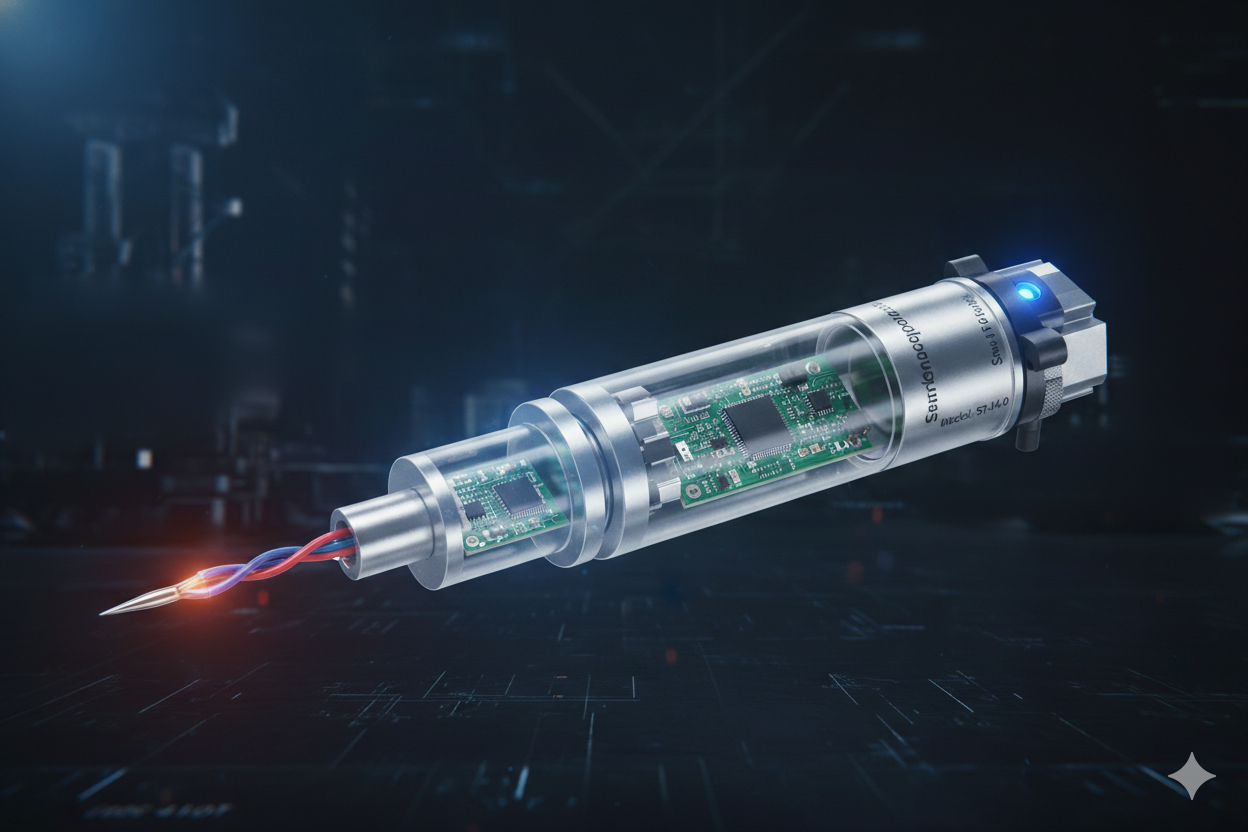
Smart Thermocouples: The Next Generation of Industrial Temperature Sensors
We hear plenty about smart homes and smart cars these days. But the real change is happening in places we rarely see. This transformation is taking place in the engine and furnace that powers our lives. The basic temperature sensing unit, known as a thermocouple, is the most basic form of temperature sensor available, and has been given an incredible computer upgrade. This device has transformed from a simple length of wire to a wireless thinking machine. This shift is changing how we build everything from mining equipment in the Pilbara to the soda cans in our local supermarkets.
Why Basic Sensors Can Be a Liability
For a long time, if you ran a plant or a processing facility in Australia, you lived by the rule: "If it isn’t broken, don’t fix it." You would have dozens of sensors wired up to a central board. They did one job. They sent a tiny electrical signal that represented a temperature reading.
But those older sensors were passive. If a wire corroded or a probe started to drift, you didn't know until the batch was ruined or the machine overheated. In the world of high-stakes manufacturing, a sensor that can't report its own health is a risk.
Smart thermocouples change the game because they provide feedback. They don't just tell you it is 400 degrees. They tell you how they are performing. They can signal when they are reaching the end of their life or if the vibration in the machinery is starting to affect the accuracy. For any local manager looking at a temperature control system for business, this shift from reactive to proactive maintenance is where the real savings are found.
Cutting the Cord in the Outback
One of the biggest headaches for the Australian industry is the sheer scale of our operations. Wiring up a massive cold storage facility or a sprawling refinery is incredibly expensive. You aren't just paying for the sensor. You are paying for kilometres of specialised cable, conduits, and the labour to install it all.
This is where the wireless part of the smart revolution matters. Next-generation sensors can now beam data directly to your phone or a cloud dashboard. You can monitor a kiln in rural New South Wales from an office in Sydney. Because these devices use low-power networks, the batteries can last for years. It makes the idea of an industrial temperature sensor much more flexible. You can put them in places where running a wire used to be impossible or just too expensive.
Data You Can Actually Use
We live in an age where "Big Data" is a buzzword, but for a floor manager, data is only good if it helps make a decision. Old-school sensors gave you a wall of numbers. Smart sensors give you insights.
As these devices have very small microchips embedded in them at the head level, they can perform calculations on-site. This way, they can take the average temperature, note the peak times and recognise patterns that might indicate some problem in the cooling fan. In place of a technician roaming about for many hours with a pen and paper, a warning will come through their tablet.
Finding the Right Tools for the Job
When you look at the range of thermocouples available today, it is easy to get overwhelmed by the codes and types. Whether you need a Type K for general use or a Type R for extreme heat, the hardware is only half the story. The other half is the intelligence behind it.
Australian businesses are facing higher energy costs and tighter margins than ever before. We cannot afford to waste heat, and we certainly cannot afford downtime. Upgrading to smarter sensing technology isn't just a technical luxury. It is a practical way to keep our local industries competitive on a global stage.
Conclusion:
The "brain transplant" of the thermocouple might seem like a small detail in the grand scheme of a factory. But as any site lead will tell you, it is the small things that keep the big things running. By moving toward smarter, more connected sensors, we aren't just measuring heat anymore. We are mastering it.










0 Comments