
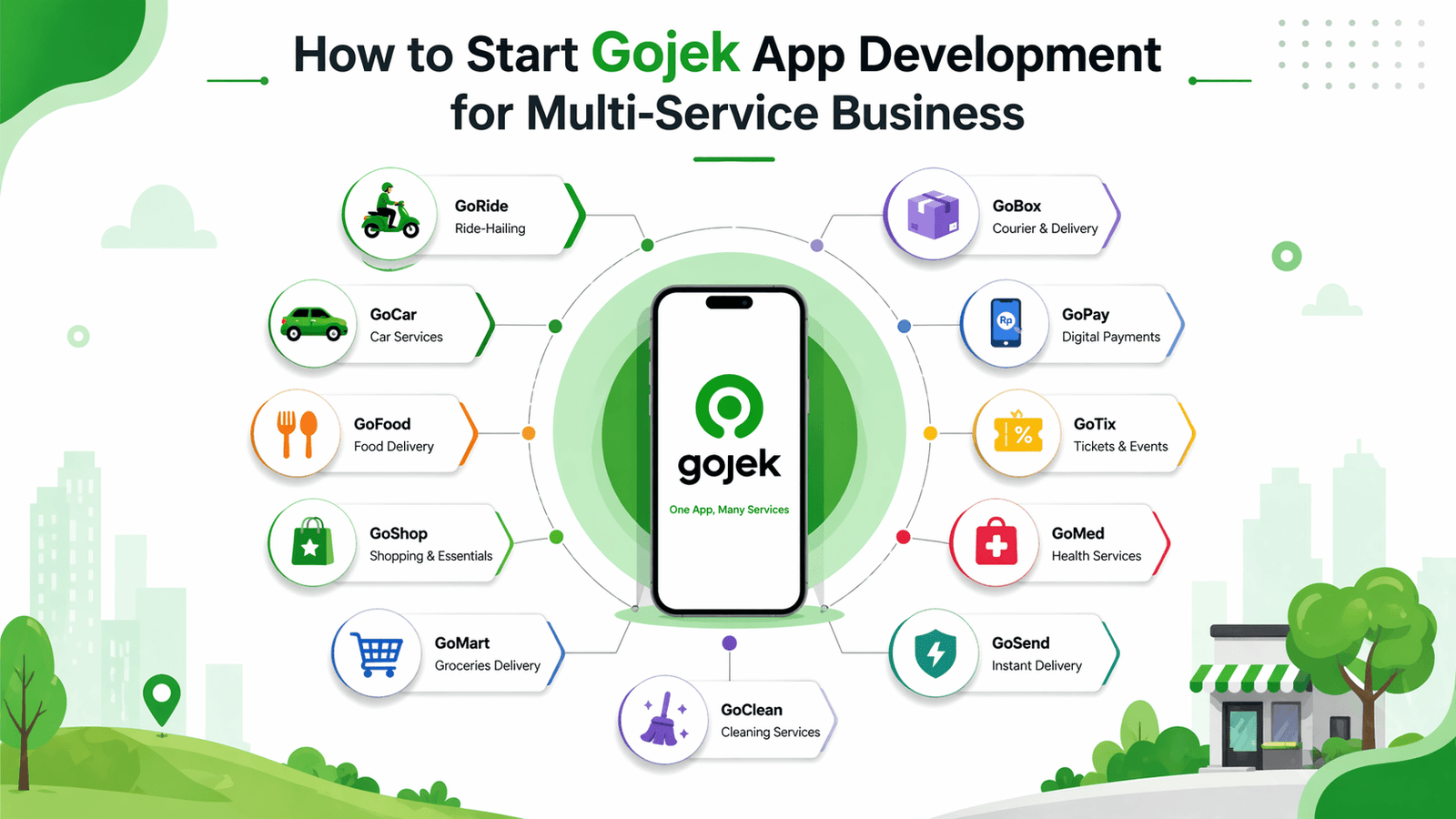
How to Start Gojek App Development for Multi-Service Business
In today's fast-paced digital landscape, multi-service platforms like Gojek have reshaped how consumers access various services, from ride-hailing to food delivery and beyond. As entrepreneurs seek to emulate this successful business model, understanding the intricacies of Gojek app development becomes essential. This article provides a comprehensive guide on how to start developing a Gojek-like application for your multi-service business, covering everything from market research and feature definition to technology selection and marketing strategies. Whether you're a seasoned developer or a first-time entrepreneur, this roadmap will help you navigate the complexities of creating a robust and user-friendly application that meets the demands of today's consumers.
Understanding the Gojek Business Model
Overview of Gojek's Services
Gojek isn’t just a single service; it’s like a Swiss Army knife but for on-demand services. From ride-hailing and food delivery to payments and logistics, Gojek is the go-to app for a variety of needs. Each service is designed to make life easier, whether you’re in dire need of a ride or craving a late-night snack. It’s an all-in-one solution that keeps users coming back for more, much like that fourth slice of pizza you regret but secretly love.
Revenue Streams and Pricing Models
Gojek cashes in through multiple revenue streams like commission fees, service charges, and subscription models. Think of it as a buffet where you pay for the privilege of loading your plate full of services. The platform typically charges service providers a commission on each transaction they complete. Additionally, strategic partnerships and advertising can bolster revenue—because why not monetize everything when the opportunity knocks?
Key Success Factors
For a multi-service app like Gojek to thrive, several factors come into play. Strong user engagement, a seamless user experience, and robust partnerships with service providers are just the tip of the iceberg. Trust and safety are also crucial—users need to feel safe when hailing a ride or making a transaction. And let’s not forget the importance of location; a well-timed launch in the right market can spell fortune, just like striking gold in your backyard.
Market Research and Competitive Analysis
Identifying Target Audience
Understanding who will use your app is like finding the right friends for a road trip. Is it busy professionals craving convenience, students on a budget, or families needing fully loaded services? Identifying your target audience allows you to tailor services and marketing strategies that resonate. Conduct surveys or focus groups, or just ask your mom—she might have some insights on what people really want!
Analyzing Competitors
In the wild world of multi-service apps, knowing your competitors is essential. Take a deep dive into their strengths and weaknesses—what are they doing right, and where are they dropping the ball? Look to apps like Grab, Uber, or local players in your market. Use this intel to differentiate your app and give users a reason to shift loyalty, much like how a catchy jingle gets stuck in your head.
Market Trends and Opportunities
Stay ahead by keeping an eye on market trends. The on-demand service industry is ever-evolving, with new tech and consumer preferences shaping the landscape. Embrace trends like sustainability or hyperlocal services as opportunities to attract more users. Proactive trends analysis can help you pivot and adapt, ensuring your app doesn’t go the way of the dinosaur—or the flip phone.
Defining Core Features and Services
Essential Features for Users
Your app’s success hinges on user-friendly features. Think easy registration, multiple payment options, and real-time service tracking. Integrating robust ratings and reviews helps build trust among users. And let’s not forget about those nifty features like push notifications—because who doesn’t want to be reminded of that late-night pizza craving?
Service Provider Features
Service providers need a solid toolkit to thrive. Features like intuitive dashboards, easy job management, and communication tools are essential. If they can accept or decline jobs with a swipe of their finger while sipping coffee, you’re golden. Bonus points for offering training resources and support—because happy providers mean happy customers.
Admin Panel and Analytics
An effective admin panel is your command center. Here, you can monitor operations, manage users and service providers, and analyze key metrics like revenue and user engagement. Advanced analytics tools will help you glean insights from data—so you can make informed decisions and avoid guesswork (let's leave that for the dating scene, shall we?).
Choosing the Right Technology Stack
Front-end Development Technologies
User experience is everything, and that starts with the front-end. Frameworks like React or Angular can help create a responsive and visually appealing interface. Consider using Swift for iOS and Kotlin for Android to keep your mobile apps slick and native. Remember, a smooth user interface is like chocolate—nobody can resist it!
Back-end Development Technologies
The back-end is where the magic happens, powering everything under the hood. Opt for Node.js or Ruby on Rails for fast and efficient server-side operations. Don’t forget to use RESTful APIs for seamless communication between the front-end and back-end—because no one likes an awkward silence when they’re trying to get things done.
Database and Hosting Solutions
Choose a reliable database solution to store all your precious data—whether it’s MySQL, PostgreSQL, or MongoDB, make sure it can scale as you grow. For hosting, consider cloud services like AWS or Google Cloud. They offer flexibility and scalability, making sure your app runs smoothly even during that inevitable traffic spike (thanks, viral marketing!).
Designing User-Friendly Interfaces
Principles of UI/UX Design
Creating a user-friendly interface is like inviting someone to your home; you want them to feel comfortable and not trip over the coffee table. The key principles include simplicity (less is more), consistency (like your favorite TV show, every episode should feel familiar), and feedback (think of it as your app talking back to you). Prioritize the user’s journey with intuitive navigation and clear call-to-action buttons—after all, you want them to find what they need without needing a map.
Wireframing and Prototyping
Wireframing is like sketching your app's blueprint. It helps you visualize the layout, functionality, and flow before you dive into the glamorous world of design. Tools like Figma and Sketch can help you create wireframes that are easy to understand. Prototyping takes it a step further by allowing you to create interactive models that act just like the final product. It's like building a model of a house before inviting people over—much less messy.
Responsive Design Considerations
In today’s world, users come in all shapes and sizes—or should I say, devices? Responsive design ensures your app looks great whether users are on a phone, tablet, or the latest gadget they bought to impress their friends. Use flexible grids, adaptable images, and CSS media queries so that your app can morph and shape itself like a superhero in a good movie! Remember, nobody likes to squint or scroll sideways; let’s keep it easy on the eyes.
Development Process and Methodologies
Agile vs. Waterfall Methodologies
Choosing the right development methodology is like picking a flavor of ice cream—everyone has their preferences! Agile is a flexible approach that allows for iterative development, making it easy to adapt as you go (perfect for those who embrace spontaneity). Waterfall, on the other hand, is a linear and structured method—great for those who prefer to plan every last detail before diving in. Consider your needs and team dynamics when making this important decision.
Setting Up a Development Team
A strong development team is like assembling the Avengers—each member brings something crucial to the table! Look for a mix of developers, designers, and project managers who can communicate effectively and share a common goal. It’s also vital to foster an environment of collaboration and creativity; after all, you want them to think outside the box (or at least have fun attempting to!).
Project Management Tools
If you want to keep your team organized and on track, consider investing in project management tools—think of them as your project’s GPS. Tools like Trello, Asana, or Jira help you map tasks, set deadlines, and monitor progress. They keep everyone in sync like a well-rehearsed choir, ensuring that your project doesn’t veer off course like a runaway train.
Testing and Quality Assurance
Types of Testing (Functional, Usability, Performance)
Testing your app is as crucial as checking the oven before baking cookies—you don’t want to serve burnt ones to your guests! Functional testing ensures that every feature works as intended, usability testing checks if users can navigate without losing their minds, and performance testing evaluates how well your app withstands the pressure. It’s like a triathlon for apps—better to find the flaws before the big race!
Automated vs. Manual Testing
When it comes to testing, think of automated testing like using a robot vacuum to clean your floors, while manual testing is akin to grabbing a broom and doing it yourself. Automated testing is efficient and can quickly run through countless scenarios, while manual testing allows for human insight and intuition. Combining both approaches helps you cover all your bases, ensuring a smooth launch.
Bug Tracking and Resolution
Bugs are a natural part of development—like uninvited guests that show up to your party. Implement a robust bug tracking system to identify, document, and prioritize fixes. Tools like Bugzilla or JIRA can help you keep tabs on pesky bugs. Make sure your team addresses these issues promptly so that your app shines bright and isn’t left with “that one problem” that annoys everyone!
Marketing and Launch Strategies
Pre-launch Marketing Tactics
Pre-launch marketing is your chance to create buzz—think of it as teasing a blockbuster movie release. Use social media, email campaigns, and teaser content to get users excited about what’s to come. Consider building a landing page to collect emails; this is your audience’s RSVP to the party! You want them waiting eagerly at the door when you finally reveal your app.
Launch Day Activities
Launch day should feel like New Year’s Eve, complete with fireworks (or at least metaphorical fireworks). Stream your launch event, engage with your audience, and utilize social media for real-time updates. Don’t forget to offer incentives like discounts or exclusive features for early adopters—who doesn’t love a good deal while they’re trying something new?
Post-launch User Engagement
Once your app is out in the wild, keep the excitement alive! Use push notifications, newsletters, and feedback surveys to maintain user engagement. Just like a good relationship, communication is key! Listen to user feedback and adapt accordingly; your app should evolve to meet their needs, keeping them coming back for more (and more). In conclusion, embarking on Gojek app development for a multi-service business can be a rewarding venture, provided you approach it with careful planning and strategic execution. By understanding the market, defining essential features, and leveraging the right technologies, you can create an impactful platform that meets user needs and stands out in a competitive landscape. As you move forward, remember that continuous improvement and user feedback will be key to your app's success. Embrace the journey, and let your innovative ideas drive your multi-service business to new heights.
FAQs
1. What are the key features to include in a Gojek-like app?
Essential features typically include user registration, service booking, payment integration, real-time tracking, ratings and reviews, and an admin dashboard for managing operations.
2. How long does it take to develop a multi-service app like Gojek?
The development timeline can vary based on the app's complexity, team size, and resources, but generally it can take anywhere from 4 to 9 months to launch a fully functional app.
3. What technology stack is recommended for developing a Gojek app?
A common technology stack includes React Native or Flutter for front-end development, Node.js or Python for the back-end, and cloud services like AWS or Google Cloud for hosting.
4. How can I effectively market my multi-service app after launch?
Effective marketing strategies include utilizing social media advertising, influencer partnerships, local promotions, SEO optimization, and offering introductory discounts to attract initial users.








0 Comments