
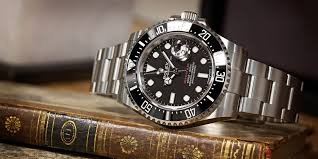
Rolex Prices Are Calming Down: What It Means for Watch Buyers
For a few years, buying a Rolex became almost inseparable from talking about prices. Waiting lists, secondary market premiums and rapidly rising values frequently attracted as much attention as movements, case proportions or dial design. Watches that had traditionally been bought to wear were increasingly discussed like short term assets.
The market in 2026 looks more measured. That does not mean Rolex demand has disappeared. WatchCharts' Rolex Market Index was up 6.1% over the year to July 20, 2026, but remained 7.8% lower over five years, illustrating just how different today's environment is from the exceptional pricing conditions earlier in the decade.
For those people who are actually buying, this is possibly healthier. When price speculation does not dominate, people have better reasons to focus on the watches themselves. The Air King is especially intriguing here in that it is outside the circle of Rolex models that are usually in the spotlight.
A More Rational Market Changes How People Choose Watches
The secondary market is not weak. In fact, EveryWatch reported $10.5 billion in secondary market watch sales during the first half of 2026, up 37.2%, with Rolex accounting for 41% of market value. At the same time, the report found that watches took a median 43 days to sell, compared with 39 previously.
Those numbers point to an active market, but one where buyers can be more selective.
That distinction matters. During a rapidly rising market, the question can easily become, "Which reference will increase next?" In a more established market, buyers can return to questions that are more relevant to actually owning a watch: Do I like the dimensions? Will I wear it regularly? Does this reference offer something different from watches I already own?
That creates room for less obvious models to receive another look.
The Air King Makes an Interesting 2026 Case Study
The Air King reference 126900 has no intention of imitating the designs of other Rolex watches such as the Submariner or Daytona. Its dial design has been effective in creating the identity of the watch with large numbers for 3, 6 and 9, a marked minute scale, a green second hand and a special Air King logo.
However, the watch's exterior may deceive the buyers into thinking that the model is somehow old-fashioned, as its interior tells another story. The Oystersteel case has a standard size of 40mm and is capable of withstanding pressures of water down to 100m depths. The watch is powered with a modern calibre 3230 which allows it to function up to 70 hours.
When saying that the information about the specifications is important for the watch's marketing, it should be highlighted that the image of the dial is of even greater importance to potential buyers.
Its Price Tells an Interesting Story
The relationship between retail and secondary pricing is particularly revealing.
Rolex currently lists the Air King 126900 at $8,150 in the United States. As of August 2026, WatchCharts estimated its pre owned market value at approximately $8,344.
That is a remarkably narrow difference compared with the substantial premiums associated with certain highly sought after Rolex sports references.
It does not mean the Air King is undervalued, nor does it suggest that its price will rise. Watch market predictions should always be treated cautiously. What it does mean is that someone researching a Rolex Air King for sale can compare current and pre owned options without an enormous secondary market premium dominating the decision.
That puts more emphasis on the individual watch: age, condition, service history, completeness and price.
Previous Generations Make the Choice More Interesting
The Air King also demonstrates why the pre owned Rolex market cannot be understood simply as a cheaper version of the current catalogue.
Before reference 126900 arrived in 2022, Rolex produced the 116900. Both watches have a 40mm case and share the distinctive modern Air King aesthetic, but the newer reference introduced meaningful changes, including crown guards, a revised case and calibre 3230.
Go further back and the collection becomes almost unrecognisable by contemporary standards. Older Air Kings were typically smaller and much more restrained in appearance. A vintage reference 5500, for instance, represents a very different interpretation of what an Air King can be.
This gives buyers several distinct directions within a single model family. Someone attracted to understated vintage proportions may have little interest in the current 126900, while a buyer wanting a modern sports watch may feel exactly the opposite.
Condition Matters More When Prices Become Transparent
One benefit of a mature secondary market is greater access to pricing information. The downside is that buyers can become overly focused on finding the lowest advertised figure.
Two watches carrying the same reference number are not necessarily equivalent.
One may have a full set of original documentation, a strong service history and a well preserved case. Another could have considerable bracelet wear, missing accessories or extensive polishing. Older pieces introduce additional questions about replacement components and originality.
The cheapest listing therefore does not automatically represent the strongest purchase.
In the current market, where buyers can compare numerous listings quickly, understanding why two apparently identical watches have different prices becomes increasingly important.
Rolex Demand Has Not Disappeared
A calmer market should not be confused with a lack of interest in Rolex. Recent sales data from Bob's Watches showed the Submariner, Datejust 36 and GMT Master II occupying its top three collection positions by sales during Q2 2026, demonstrating that established Rolex models continue to attract substantial buyer demand.
The difference is that not every Rolex needs to participate in the market in exactly the same way.
Some references carry substantial premiums because supply and demand remain unusually strong. Others trade closer to retail. Vintage watches operate according to another set of considerations entirely, where originality, rarity and condition can matter more than the price of the current equivalent.
For someone actually interested in wearing a watch, those differences create opportunity rather than confusion.
Perhaps the Best Change Is a Return to Personal Taste
The most useful development in the 2026 watch market may not be any particular price movement. It is the opportunity to make buying decisions with a little more perspective.
The Air King illustrates that well. It does not have the universal recognition of a Submariner or the secondary market premium associated with some GMT Master II references. Instead, it offers an unusual dial, modern Rolex engineering and several very different previous generations for buyers willing to look backwards.
Some people will try one and decide the dial is too busy. Others may find that its lack of ubiquity is precisely what makes it interesting.
Either reaction is more meaningful than buying purely because a chart suggests a watch might be worth more next year.
The Rolex market remains valuable, active and closely watched in 2026. But when the conversation becomes less dominated by speculative premiums, buyers can concentrate again on something far simpler: finding the reference they genuinely want to wear.







0 Comments