
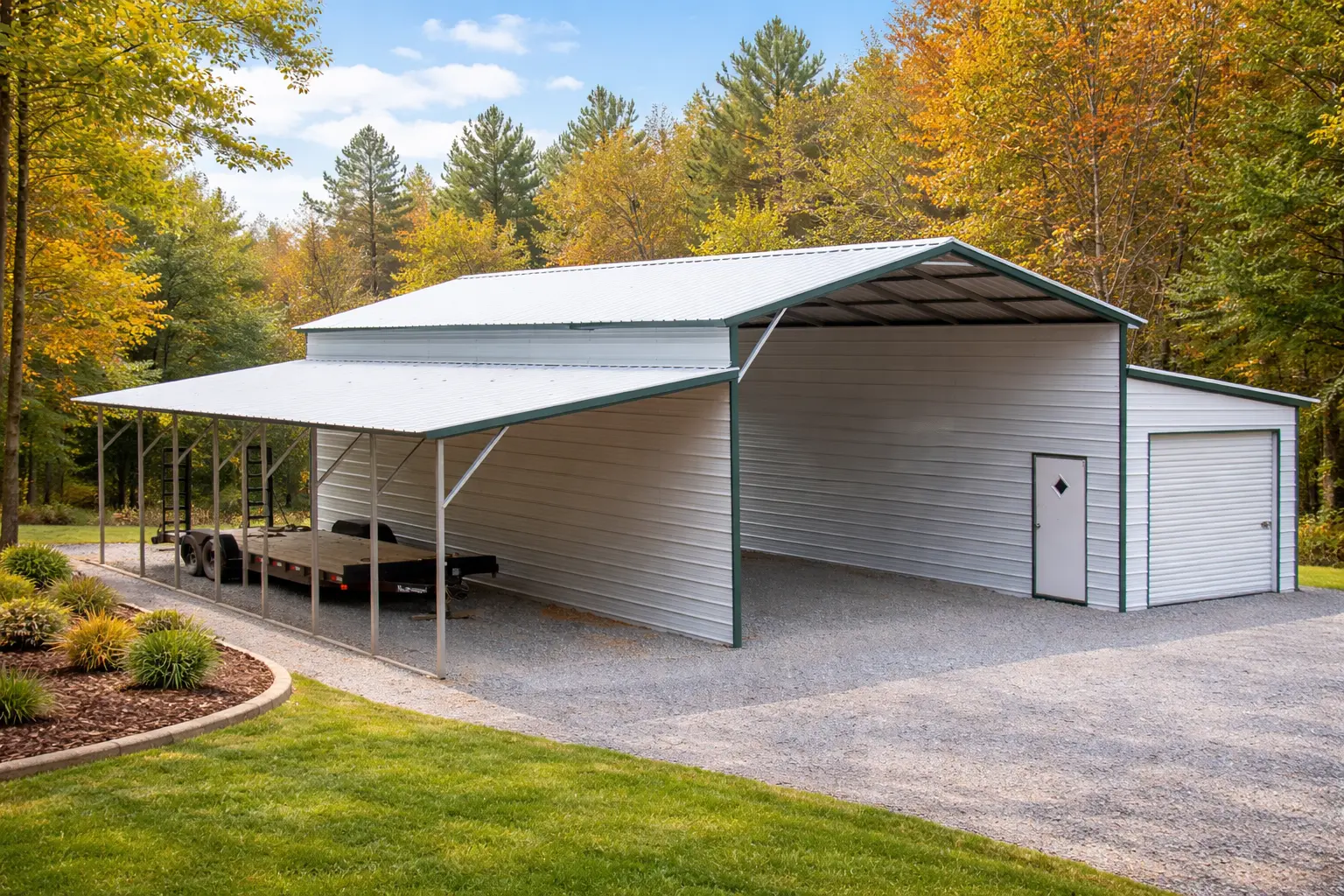
Livestock Barn Construction: Benefits of Metal Structures for Modern Farming
Livestock farming today is not what it was twenty years ago; it has changed a lot. Nowadays, herd sizes are larger, and some biosecurity rules have become stricter. Climate changes are also unpredictable. In this case, modern farmers not only need a spacious livestock barn but also one that is environmentally friendly so their animals can stay healthy. Therefore, they are choosing metal livestock barns.
But why steel structures, not traditional wooden barns? This is why many farmers also have some practical questions, like:
- “Is a metal barn really worth the investment?”
- “Will it handle harsh winters or high humidity?”
- “What about long-term maintenance?”
To answer these properly, you need to examine how steel-based barn systems perform in real farming conditions.
The Structural Demands of Modern Livestock Farming
Modern livestock operations place more pressure on buildings than older farming models ever did. Many barn buildings now support heavier equipment, automated systems, and higher animal density, so they need to be stronger.
Increased Animal Density and Load Requirements
As you include more herds, it changes the internal load distribution. A barn housing 50 cattle behaves very differently from one housing 300 cattle. More animals mean:
- Increased live load stress
- Higher roof ventilation demand
- Greater flooring wear
One common question farmers ask is, "Will a steel structure handle expansion in the future?"
If you are using a metal barn building for your livestock, then the answer is yes. Because these structures offer high strength-to-weight ratios. Steel framing supports wide, clear spans without interior support columns. This reduces structural strain while allowing larger open layouts that you can use anyway you want.
Additionally, these engineered systems are designed for specific wind and snow load ratings. This is why, in areas with heavy snowfall, steel barns are calculated to manage roof loads that could otherwise cause structural sagging in wooden systems.
Biosecurity and Controlled Environment Needs
“Prevention is better than cure”, you might have heard this before. It's also applicable when you are choosing a livestock barn building. Because animals often get sick due to disease, which occurs due to unhygienic barns. This is why many farmers often ask, "Can a metal barn help improve biosecurity?"
The answer lies in design precision. Steel agricultural structures allow tighter building envelopes. This makes controlled ventilation and airflow management easier. Unlike porous materials such as untreated wood, properly coated metal surfaces are easier to clean and sanitize. Such structures become more important where respiratory infections and bacterial spread can affect productivity.
Advantages of Metal Structures in Barn Construction
So, how can a simple steel barn structure help a rancher or farmer to deal with livestock nurturing problems? This structure offers many advantages that are rarely found in traditional spaces. Now, let's move deeper into the structural science behind metal barn systems to understand why they are suitable for your modern livestock businesses.
High Strength-to-Weight Ratio
Steel provides high tensile strength while remaining relatively lightweight. This allows:
- Wider clear spans (40–100 feet or more)
- Fewer interior columns
- Greater layout flexibility
Farmers often wonder, "Why does clear-span design matter?"
Clear-span layouts allow unrestricted movement of livestock and machinery; they can't collide with a pole while walking and running. Feed trucks, skid steers, and automated scrapers move more efficiently without interior obstructions in a clear-span steel barn. This also reduces stress among animals. As you understand, crowded or obstructed layouts can increase agitation, especially in dairy operations, so choosing such a space can help immensely.
Precision Manufacturing and Structural Accuracy
Traditional barns are often cut and assembled on-site. If a small measurement error happens during construction, it can delay the entire work, lead to rework, and overall, compromise the construction over time. On the other hand, prefabricated metal structures are constructed inside a factory. Each component is precision-cut using computer-guided systems. This reduces structural misalignment and improves long-term durability.
Clear-Span Design and Its Operational Value:
As clear-span barns are widely used for livestock housing, we have explained how they help.
Without interior posts:
- Pen layouts can change as herd size grows.
- Feeding systems can be upgraded.
- Automated milking equipment can be installed later.
Many farmers planning growth ask, "What if I need to expand in five years?" Steel barn systems allow modular expansion, so you don't have to worry about expansions in the future. If you want, you can attach additional bays without redesigning the entire structure.
Environmental Control and Animal Health Performance
Animal health directly affects farm profitability. And their health depends on temperature, airflow, and moisture control, which play major roles in productivity. So, if the livestock barn doesn't offer proper air flow and ventilation, it can be a big red flag. Here is how metal barn buildings help ranchers.
Ventilation Integration in Metal Barn Systems
Ventilation is not just about wall openings. It requires calculated airflow rates. Metal frame barns are easier to integrate with:
- Ridge vents
- Mechanical ventilation systems
- Sidewall curtain systems
Proper ventilation can reduce respiratory disease risk significantly. In dairy barns, improved airflow can increase milk production by 5–10% during summer months due to reduced heat stress. But you must be worried about what if a steel barn becomes too hot in summer?
Well, this depends on insulation and ventilation design. Modern metal building systems support insulated panels and reflective roofing materials that reduce heat gain. So, choose the best insulation for your farm building.
Moisture and Ammonia Management
Livestock barns produce high humidity and ammonia from waste. Over time, this environment damages weak building materials. Corrosion-resistant coatings and galvanized framing protect metal farm buildings from chemical breakdown. When properly coated, steel resists moisture penetration better than untreated wood.
Thermal Regulation and Insulation Compatibility
Modern agricultural metal structures are compatible with advanced insulation systems.
Proper insulation can:
- Reduce heating costs by 15-25% in colder climates
- Stabilize indoor temperatures
- Reduce condensation buildup
Durability Under Harsh Agricultural Conditions
Farm environments are tough. Humidity, pests, manure gases, and extreme weather all affect building lifespan. Thus, you need a building that can handle these conditions, and steel structures do it effectively.
Resistance to Rot, Termites, and Mold
Wood barns are vulnerable to termite damage and rot over time, while steel structures eliminate pest-related structural damage. If you have a question, "Will maintenance costs increase with metal?" In reality, maintenance often decreases because steel does not warp, crack, or split like wood.
Fire Resistance and Risk Reduction
Fire risk is a serious concern in livestock barns. It can happen due to electrical systems, hay storage, and equipment that increase fire hazards, so you need to be careful at all times. Steel framing does not act as fuel during a fire. This can slow fire spread and reduce the risk of structural collapse. Moreover, some insurance providers offer lower premiums for fire-resistant construction materials.
Corrosion Protection Systems
Modern agricultural steel buildings are strong and resistant to pests because they are galvanized. Protective paint systems are used for these structures. Moreover, specialized corrosion-resistant treatments are provided for a better lifespan of the barn building. These coatings are designed specifically for high-humidity agricultural environments.
Cost Efficiency Beyond Initial Construction
Many farmers hesitate because of upfront costs. A common question is, "Isn't a metal barn more expensive initially?" Well, Initial costs may be slightly higher depending on customization, but the low maintenance, quick installation, precision, and the structure's strength outweigh the difference.
- Reduced Maintenance Over 20–30 Years: Over 25 years, wooden barns may require structural repairs, pest treatment, and replacement of rotted components. But metal agricultural buildings don't require it all. They just need fewer structural repairs when properly maintained.
- Faster Construction Timeline: Steel components are pre-engineered and delivered ready for assembly. This reduces construction time by 20–30% compared to traditional methods. Shorter construction means livestock can be moved into improved housing sooner. It reduces productivity loss during transitions.
- Lifecycle Cost Analysis: When you evaluate total ownership cost over 25 years, you will find that metal structure is economically competitive due to lower maintenance, reduced pest control, better energy efficiency, and higher structural durability.
Sustainability and Regulatory Compliance
Nowadays, when someone wants to buy a barn building, they also check about the sustainability of the structure. It has become part of agricultural regulations and consumer expectations. They want to invest in barn buildings that are environmentally friendly and leave a minimal carbon footprint. Since steel is highly recyclable, it rarely ends up in landfills. At the end of its lifespan, much of the material can be reused or repurposed.
Moreover, engineered metal farm buildings are designed in accordance with current wind, snow, and seismic codes. This ensures regulatory compliance and structural safety.
An Investment That Grows With Your Herd
Livestock metal barns offer various benefits. You can get all of them to help grow your ranching business and better nurture your livestock species. This investment goes beyond just about sheltering animals. You can create controlled environments that improve your animals' health, increase productivity, and reduce long-term operational costs. Moreover, they reduce maintenance headaches; you don't have to spend on frequent repairs and replacements. Most importantly, you can turn a simple building into a long-term farm asset by choosing steel structures. So, the smartest farm investments are the ones that quietly perform in the background every single day. A well-built metal livestock barn does exactly that. It supports your animals, protects your investment, and grows with your vision.





0 Comments