
IoT Testing Services: Why the Lab Is Not the Real World
The device worked flawlessly on every engineer's desk. It connected in seconds, reported clean data, and passed every test on the bench. Then it shipped to real homes, and the support tickets started. It dropped off weak basement Wi-Fi, choked when it shared a network with a dozen other devices, and froze in an unheated garage in January. Nothing was wrong with the device the team had tested. The problem was that they had only tested it in a world that does not exist outside the lab.
That gap is the central challenge IoT testing services are built to handle. An IoT product does not live on a clean bench with strong signal and a single device. It lives in the messy, crowded, unpredictable real world, and that is where it has to be proven. This article looks at what these services cover, why IoT is harder to test than ordinary software, and how to choose a partner that can test for the conditions that actually break devices.
What IoT Testing Services Actually Cover
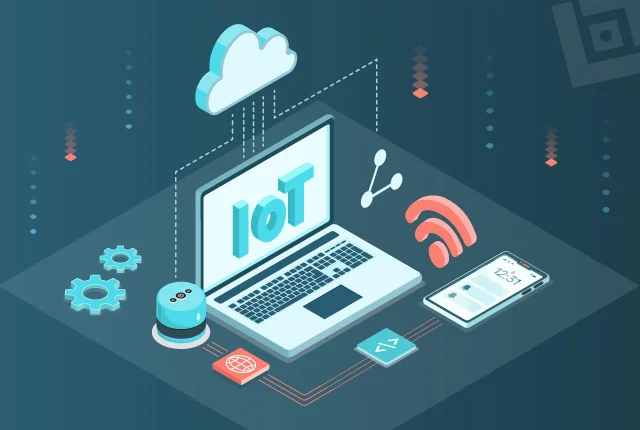
An IoT product is really several products working as one: the physical device, the firmware that runs it, the connectivity that links it, and the cloud and app that control it. IoT testing services cover all of these layers and, just as importantly, the seams where they meet.
That means functional testing of the device and its features, firmware and hardware validation, connectivity and protocol testing, cloud and mobile app testing, performance under load, and security across every layer. A failure in any one layer can break the whole product, so testing has to span the full stack rather than any single piece.
Why IoT Is Harder to Test Than Software Alone
Testing a web app is hard enough. IoT adds dimensions that ordinary software never has to deal with.
- Many Layers, One Product
A bug can hide in the hardware, the firmware, the network, the cloud, or any handoff between them. Testing each layer alone is not enough, because the failures often live in how the layers interact.
- A Combination Explosion of Devices and Conditions
Devices ship across countless models, firmware versions, operating systems, and network conditions. The number of real-world combinations grows fast, far beyond what any team can cover by hand, which makes a structured testing strategy essential.
- Failures Are Expensive to Fix in the Field
A bug in a web app is fixed with a deploy. A bug in a device already sitting in thousands of homes is a different problem entirely, sometimes requiring a difficult update path or a costly recall. The cost of a missed defect is far higher, which raises the stakes on testing before release.
The Conditions a Lab Cannot Fully Recreate
Most IoT failures are not failures of the device in isolation. They are failures of the device in the real world, under conditions a clean bench never reproduces.
- Weak and intermittent connectivity: The basement, the edge of the network, the signal that drops and reconnects.
- Network congestion: A home or factory where dozens of devices compete for the same bandwidth.
- Environmental extremes: Heat, cold, humidity, and the physical conditions a device actually lives in.
- Power constraints: Low battery, sudden power loss, and how a device behaves as it runs down.
- Real device diversity: The older phone, the unusual router, the device combination no one thought to test.
What to Look For in an IoT Testing Company
The right partner makes the difference between testing the easy paths and testing the conditions that actually break devices. A capable IoT testing company brings more than functional checks.
Look for a team with access to real device labs rather than only emulators, the ability to simulate poor and congested network conditions, security testing across every layer, and genuine domain experience in your kind of product. A strong IoT testing company will also tell you which real-world conditions matter most for your device, instead of running a generic checklist that ignores how your product is actually used.
Common IoT Testing Mistakes
Most IoT failures trace back to a few avoidable gaps. Teams test only on emulators instead of real hardware. They test under perfect lab connectivity and never under a weak or congested signal. They treat security as a single layer rather than checking the device, firmware, network, and cloud together. And they test once at launch, even though firmware updates and new device models keep changing the picture. Each of these leaves a product exposed to exactly the conditions it will meet in the field.
Proving a Device in the World It Will Actually Live In
The device from the start of this article did not fail because it was poorly built. It failed because it was only ever tested in a world that does not exist outside the lab. Real homes, real networks, and real conditions are where IoT products succeed or fail, and that is where they have to be proven.
That is where a partner like QASource fits. With IoT testing services that span the device, firmware, connectivity, and cloud, tested on real hardware under realistic conditions, QASource helps engineering teams catch the failures that only appear in the field. When a device is tested in the world it will actually live in, it is ready for the world it ships into.


0 Comments