
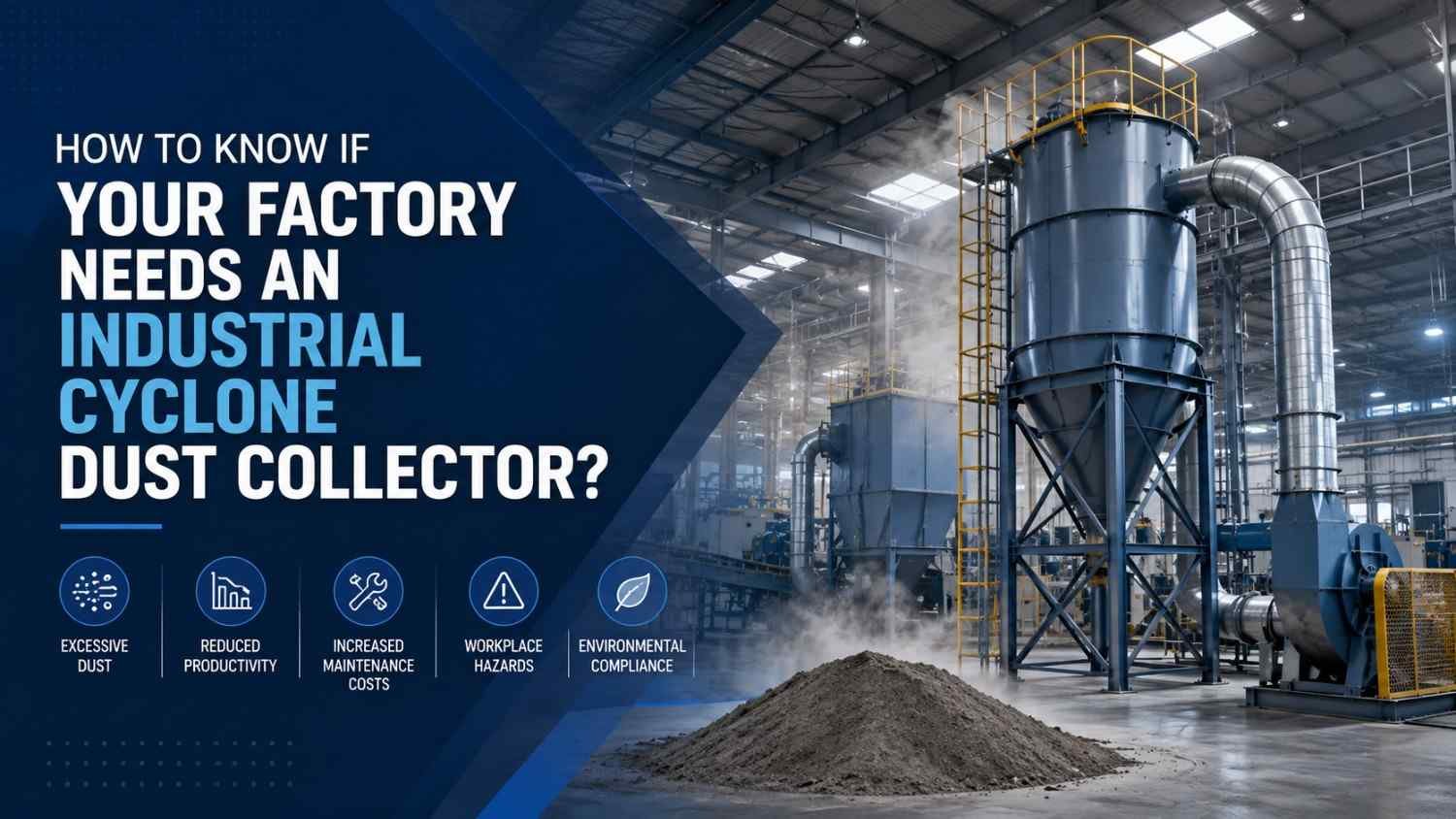
How To Know If Your Factory Needs An Industrial Cyclone Dust Collector?
What’s Inside?
- Visible dust often signals the need for an industrial cyclone dust collector.
- Cleaner air supports safer working conditions and improves daily factory operations.
- Cyclone dust collectors perform best with coarse, dry, and heavy dust particles.
- Regular dust control helps reduce machine wear and maintenance costs.
- Combining cyclone collectors with filters improves overall dust collection efficiency.
- Choosing the correct system depends on dust type and production requirements.
- Professional system assessment helps ensure reliable and long-term dust control performance.
Do you want to know if your factory needs an industrial cyclone dust collector? Many factories create dust every day. Some dust settles on machines, while some stays in the air.
If you ignore it, dust can affect worker safety, product quality, and machine performance.
Cyclone dust collector manufacturers make this in such a way that it separates dust from the air by using centrifugal force. It works well for many industries that handle dry and coarse dust.
What Is an Industrial Cyclone Dust Collector?
It is a dust control system that removes solid particles from the air. It spins the incoming air inside a cone-shaped chamber. The spinning motion pushes heavier dust particles toward the outer wall.
This system does not use filter bags for the main separation process. That makes it a good choice for handling large amounts of coarse dust.
Many factories use it as a primary dust collection system. Some also use it before a bag filter or another dust collection unit to reduce the dust load.
What Are the Common Signs Your Factory Needs an Industrial Cyclone Dust Collector?
The clearest sign is visible dust inside your workplace. If dust keeps collecting even after regular cleaning, your factory may need better dust control.
Other warning signs include:
- Dust settles on machines every day.
- Workers complain about dusty air.
- Production areas become difficult to keep clean.
- Equipment needs frequent cleaning.
- Dust escapes during material handling.
- Product quality drops because of dust contamination.
- Maintenance costs continue to increase.
Which Industries Commonly Use Industrial Cyclone Dust Collectors?
Many industries produce coarse dust during manufacturing and material handling. An industrial cyclone dust collector can manage this type of dust efficiently.
Common industries include:
- Cement plants
- Woodworking factories
- Grain processing units
- Metal processing industries
- Mining operations
- Chemical manufacturing
- Food processing plants
- Plastic manufacturing units
- Foundries
- Paper and pulp industries
Why Can Excess Dust Become a Serious Problem?
Dust affects more than cleanliness. It can create several operational problems if left untreated.
Worker Safety
Dust can reduce air quality inside the factory. Workers may feel discomfort when exposed to dusty air for long periods. A cleaner workplace supports a healthier working environment.
Machine Performance
Dust enters moving machine parts. It increases wear and causes frequent cleaning. In some cases, it can reduce machine efficiency.
Product Quality
Dust may settle on finished products or raw materials. This contamination can affect product quality and customer satisfaction.
Housekeeping
Heavy dust creates extra cleaning work every day. It also increases maintenance time and operating costs.
How Does an Industrial Cyclone Dust Collector Help?
An industrial cyclone dust collector removes heavy dust particles before they spread across the workplace.
Its main benefits include:
- Reduces airborne dust.
- Keeps machines cleaner.
- Supports a cleaner production area.
- Lowers maintenance needs.
- Extends the life of downstream filters.
- Handles large dust volumes.
- Works with simple mechanical design.
What Type of Dust Is Best Suited for an Industrial Cyclone Dust Collector?
An industrial cyclone dust collector works best with coarse, dry, and heavy dust particles.
Examples include:
- Sawdust
- Sand
- Cement dust
- Grain particles
- Metal chips
- Plastic granules
- Wood shavings
How Can You Check If Your Current Dust Control System Is Enough?
Start by inspecting your production area during normal operations.
Ask these simple questions:
- Does dust remain visible in the air?
- Do machines collect dust quickly?
- Do workers clean equipment several times a day?
- Does dust escape from conveyors or transfer points?
- Does your current system struggle during peak production?
- Has maintenance become more frequent?
- Do customers report dust contamination on products?
If your answer is "yes" to several of these questions, your existing dust control system may not meet your factory's needs.
Can an Industrial Cyclone Dust Collector Reduce Operating Costs?
Yes. It can reduce several operating expenses over time.
A cleaner system keeps machines free from excessive dust. This reduces cleaning work and maintenance frequency.
When used before another filtration unit, it can also reduce the load on filters. Filters may last longer because they receive less dust.
The exact savings depend on your factory size, dust type, production process, and maintenance practices.
Should You Combine a Cyclone Dust Collector With Other Dust Collection Systems?
Yes, in many cases.
It removes larger particles first. Another filtration system can then remove the remaining fine dust.
This combination works well in factories that generate mixed dust sizes. It also helps improve the performance of the complete dust collection setup.
An experienced dust collection manufacturer can recommend the right arrangement after studying your production process.
When Should You Contact a Dust Collection Expert?
You should seek professional advice when dust becomes difficult to control or your current system no longer performs well.
A dust collection expert can:
- Inspect your production process.
- Measure dust generation.
- Study airflow requirements.
- Recommend suitable equipment.
- Suggest the correct system size.
- Plan proper installation.
The Bottom Line
These collectors by dust collector systems manufacturers helps factories control coarse dust, improve workplace cleanliness, protect equipment, and support better production. If your factory has visible dust, frequent cleaning, or rising maintenance needs, it may be time to review your dust collection system. Choosing the right solution for your dust type and production process helps create a cleaner and more efficient workplace.
FAQS
How does an industrial cyclone dust collector work?
It uses centrifugal force to separate dust from the air. As the air spins inside the cyclone, heavier dust particles move toward the outer wall and fall into a collection hopper. Cleaner air exits through the top of the unit.
When should a factory install an industrial cyclone dust collector?
A factory should consider installing an industrial cyclone dust collector when it experiences visible dust, frequent machine cleaning, poor air quality, or dust escaping during production. It is also useful when handling large volumes of coarse, dry dust.
Which industries benefit the most from an industrial cyclone dust collector?
Industries such as cement, woodworking, mining, metal processing, grain handling, food processing, chemical manufacturing, paper, and plastic manufacturing commonly use industrial cyclone dust collectors to manage dust generated during production.
Can an industrial cyclone dust collector remove fine dust particles?
It works best with coarse and heavy dust particles. It can remove some medium-sized particles, but very fine dust often requires a secondary filtration system, such as a bag filter or cartridge dust collector.
What are the benefits of using an industrial cyclone dust collector?
It helps reduce airborne dust, keeps machines cleaner, lowers maintenance needs, improves workplace cleanliness, extends the life of downstream filters, and supports more efficient factory operations.









0 Comments