
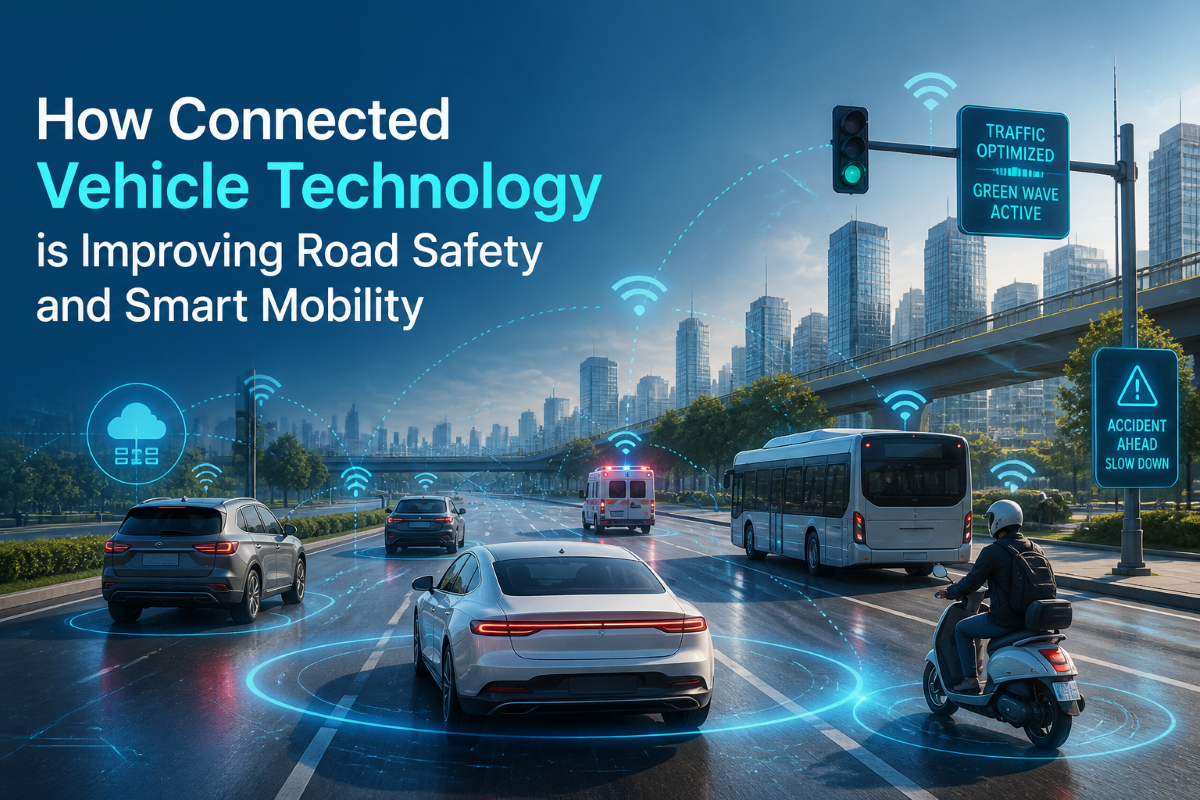
How Connected Vehicle Technology is Improving Road Safety and Smart Mobility
Transportation is evolving rapidly, and connected vehicles are becoming one of the most important innovations in the automotive industry. Today’s vehicles are no longer just machines for transportation. They are smart systems equipped with internet connectivity, sensors, artificial intelligence, and real-time communication tools.
The rise of connected cars is changing how people drive, how cities manage traffic, and how road safety is maintained. With advanced connected car technology, vehicles can now communicate with other vehicles, traffic infrastructure, mobile devices, and cloud platforms. This communication helps drivers make safer decisions while improving mobility across urban and rural areas.
As road accidents and traffic congestion continue to challenge modern transportation systems, connected vehicle technology offers practical and intelligent solutions. Features like collision alerts, emergency assistance, predictive maintenance, and smart navigation are helping create safer and smarter roads.
In this article, we’ll explore how connected vehicle technology is improving road safety and smart mobility, the benefits it offers, the challenges it faces, and what the future holds for the automotive world.
What is Connected Car Technology?
Connected car technology involves systems enabling vehicles to communicate with external networks and devices via the Internet. The vehicles are equipped with sensors, wireless communication, cloud computing, and data analytics systems that enhance driving efficiency and safety.
Unlike conventional vehicles, connected cars are capable of:
- Provide live traffic information.
- Get over-the-air software updates.
- Keep track of vehicle health remotely!
- Provide emergency assistance
- Provide enhanced navigation capability
- Improve driver awareness
Vehicle-to-Vehicle (V2V) communication lets vehicles share things like speed, braking or road conditions. In the same way, Vehicle-to-Infrastructure (V2I) communication is the ability of the vehicles to communicate with the traffic infrastructure, such as traffic lights and road sensors.
What IoT has to offer to Connected Cars
Overall, the connected car has been a game-changer for transportation solutions, thanks to the integration of IoT solutions. IoT devices gather and transmit real-time data, which can be used to improve vehicle performance and road management.
For example:
- Tire and engine performance are monitored by smart sensors
- The analysis of traffic congestion patterns is done by traffic systems.
- Emergency systems react immediately in case of an accident.
- Navigation systems indicate other ways to get around
Due to the connected car, cities are taking steps towards establishing smart transportation ecosystems with a focus on efficiency and safety.
Evolution of Connected Vehicle Technology
From Traditional Cars to Smart Vehicles
In the past 20 years, the automotive industry has been completely transformed. The earlier vehicles were predominantly mechanical systems, but today's vehicles are software-driven machines.
It was thought that features such as GPS navigation and Bluetooth functionality were luxury features. These are the technologies of connected cars these days:
- Advanced driver assistance systems
- Cloud-based diagnostics
- AI-powered safety alerts
- Smart infotainment systems
- Real-time software updates
It has allowed auto manufacturers to create more intelligent and secure cars for today's drivers.
Integration of AI and IoT in Modern Mobility
Today, connected vehicle technology has reached the stage where artificial intelligence and IoT automotive are at its core. Vehicles and traffic systems generate large volumes of data, which AI algorithms process to enhance decision-making.
Examples include:
- Predictive traffic management
- Driver behavior analysis
- Automated emergency braking
- Intelligent route planning
How Connected Vehicles Improve Road Safety
One of the most important benefits of connected car technology is the increased safety for road users. Connected cars help prevent accidents and minimize human error by allowing real-time communication and intelligent monitoring.
Real-Time Traffic Alerts
Connected cars enable drivers with real-time information on traffic and hazards. These warnings can contain:
- Sudden braking ahead
- Road construction warnings
- Weather hazards
- Traffic congestion updates
- Accident notifications
This information is provided proactively, enabling timely responses and safer decision-making by drivers.
Collision Prevention Systems
Today's safety technology in cars relies on sensors, cameras, and radar to detect potential collisions.
- Some common safety features include:
- Forward collision warning
- Lane departure warning
- Blind-spot monitoring
- Automatic emergency braking
- Adaptive cruise control
These high-tech car safety features are helping to prevent crashes and boost driver confidence.
Emergency Assistance Features
Automated communications between cars and emergency services in the event of an accident. Emergency assistance systems may:
- Share vehicle location
- Report crash severity information.
- Contact emergency responders
- Provide roadside assistance
The capabilities enhance the timeliness of emergency response and can aid in saving lives in critical situations.
Role of Connected Car Tech in Smart Mobility
Smart Traffic Management
One of the key benefits of connected vehicles is improved traffic management. Data from vehicles can be used to help traffic officials manage traffic flow and improve road safety.
Benefits include:
- Improved traffic signal management.
- Reduced travel time
- Improved traffic flow
- Better route planning
Vehicle-to-Infrastructure Communication
Vehicle-to-Infrastructure communication allows connected vehicles to communicate with road infrastructure and traffic systems.
Examples include:
- Traffic light synchronization
- Smart parking systems
- Toll management systems
- Road hazard notifications
Such communication ensures a better flow of traffic in town, and unnecessary delays are avoided.
Reducing Traffic Congestion
Traffic congestion is a waste of fuel, a polluter, and a time killer. This is addressed with Connected car technology by:
- Dynamic route optimization
- Real-time navigation
- Intelligent traffic coordination
Key Features of Connected Vehicle Technology
Remote Vehicle Monitoring
Vehicle status can be remotely viewed with mobile applications. With these systems, users can:
- Track fuel levels
- Monitor battery condition
- Check tire pressure
- Secure or unlock vehicles remotely.
- Remote control vehicle lock or unlock.
This will make things more convenient and help with the upkeep of vehicles.
Predictive Maintenance
Connected vehicles can detect potential mechanical issues before they get worse. Predictive maintenance systems analyze data from the sensors and alert drivers to:
- Engine issues
- Brake wear
- Battery condition
- Oil replacement needs
These advanced safety features help to minimize sudden breakdowns and maintenance expenses.
Navigation and Infotainment
Connected cars will have sophisticated infotainment systems that are compatible with smartphones and cloud services.
Features include:
- Voice-controlled navigation
- Real-time weather updates
- Streaming services
- Personalized driving assistance
Readers can also learn more about smart mobility technologies at the Suzuki R&D Centre India.
Benefits of Connected Cars for Drivers and Cities
Enhanced Driving Experience
With connected vehicles, driving will become more intelligent, smoother, and safer.
- Drivers benefit from:
- Improved navigation
- Minimising stress when driving.
- Better connectivity
- Increased convenience
Improved Fuel Efficiency
Fuel consumption is reduced through Smart route planning and traffic management. With connected car technology, these four areas can be optimized:
- Driving behavior
- Route selection
- Idle time reduction
- This helps to reduce environmental impacts and costs.
Better Urban Transportation
The connected mobility solutions contribute to urban planning by enhancing:
- Public transportation efficiency
- Traffic flow management
- Road safety monitoring
- Parking management
Challenges in Connected Vehicle Technology
Cybersecurity Concerns
As vehicles become more connected, cybersecurity becomes increasingly important.
Potential risks include:
- Unauthorized access
- Data breaches
- System hacking
- Malware attacks
Automakers must continuously strengthen cybersecurity systems to protect users and vehicle data.
Data Privacy Issues
Connected vehicles collect large amounts of user data, including:
- Driving habits
- Location history
- Vehicle performance data
This raises concerns about how data is stored, shared, and protected.
Infrastructure Requirements
Connected vehicle ecosystems require a strong digital infrastructure, including:
- High-speed internet
- 5G networks
- Smart traffic systems
- Cloud computing platforms
Developing this infrastructure requires significant investment from governments and private organizations.
Future Trends in Connected Vehicles
Autonomous Mobility
Connected car technology is laying the foundation for autonomous vehicles. Future autonomous systems will rely heavily on:
- AI-based decision-making
- Real-time communication
- Smart road infrastructure
These technologies could significantly reduce accidents caused by human error.
5G Connectivity
The rollout of 5G networks will improve connected vehicle performance by enabling:
- Faster data transmission
- Lower latency
- More reliable communication
This will strengthen intelligent transportation systems and enhance safety features.
Sustainable Transportation
Connected mobility supports sustainable transportation goals by:
- Reducing emissions
- Optimizing fuel consumption
- Supporting electric vehicle ecosystems
Governments and automotive companies are increasingly investing in smart mobility solutions for a greener future.
Conclusion
The accelerated expansion of connected cars will significantly influence the future of transportation systems. Today, innovative connected car technologies and intelligent vehicle safety systems are making the world's roadways safer, smarter, and more efficient.
Through the integration of IoT, artificial intelligence, real-time communication in real time, and automation processes, connected cars have been helping to prevent road accidents, optimize traffic flow, and achieve sustainable transport objectives. Despite the fact that cybersecurity issues and infrastructure-related barriers persist, the future of connected mobility looks very promising indeed.
With ongoing advancements in the automotive industry, companies such as Suzuki R&D Centre India have become major contributors to the implementation of intelligent mobility systems.
Frequently Asked Questions
1. What are connected vehicles?
Connected vehicles are automobiles equipped with internet connectivity and communication technologies that allow them to exchange data with other vehicles, devices, and infrastructure.
2. How does connected car technology improve safety?
Connected car technology improves safety through collision warnings, emergency assistance, real-time traffic alerts, and advanced driver assistance systems.
3. What is the role of IoT in connected cars?
IoT in connected cars enables real-time data exchange between vehicles, sensors, cloud systems, and infrastructure to improve vehicle performance and road safety.
4. Are connected vehicles secure?
Automakers use advanced cybersecurity measures to secure connected vehicles, although cybersecurity remains an ongoing challenge in the automotive industry.
5. How do connected vehicles help smart cities?
Connected vehicles support smart cities by improving traffic management, reducing congestion, enhancing mobility, and supporting sustainable transportation systems.
6. What are the future trends in connected vehicle technology?
Future trends include autonomous driving, AI-powered mobility, 5G connectivity, predictive maintenance, and intelligent transportation systems.






0 Comments