
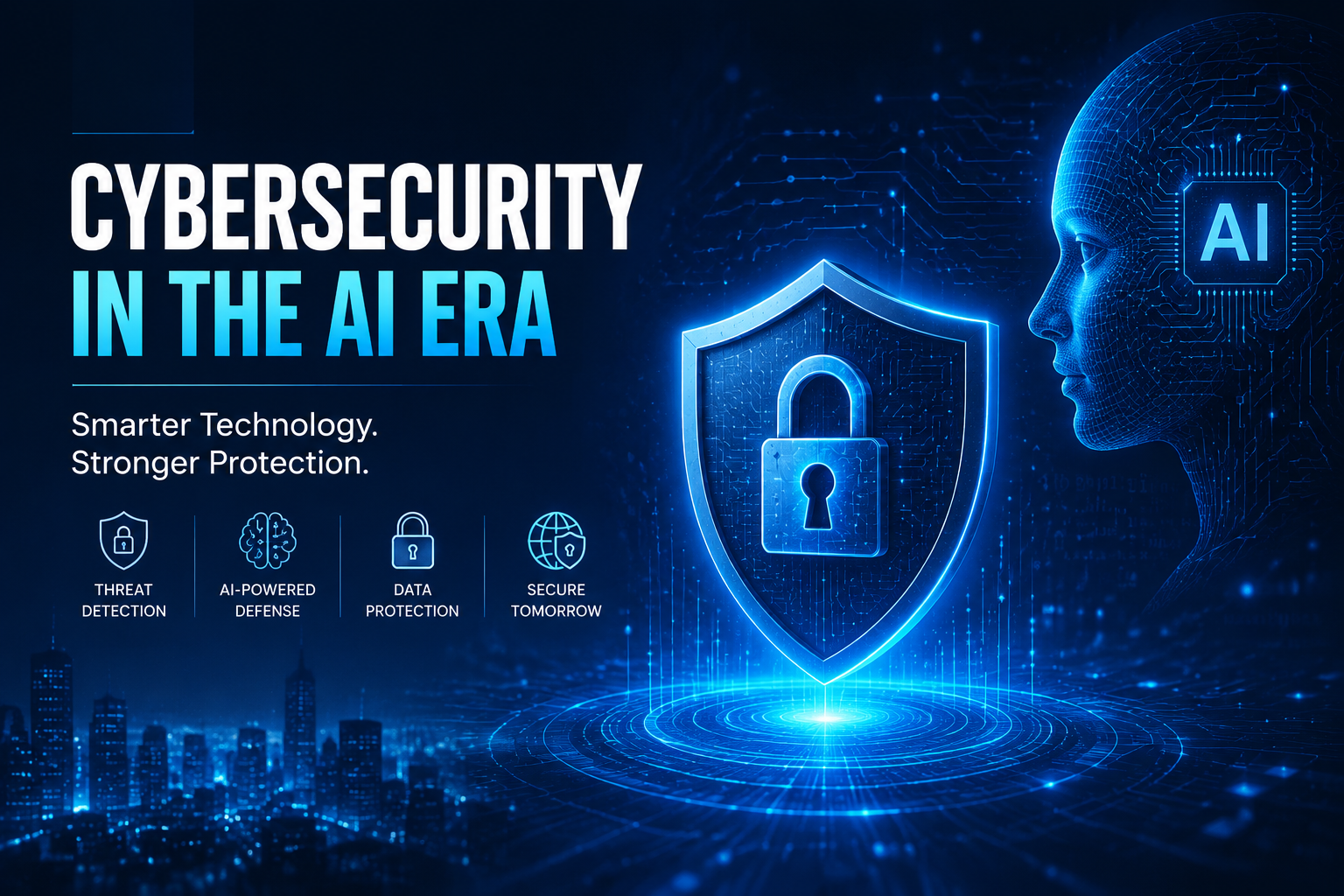
Cybersecurity in the AI Era: Challenges, Risks, and Opportunities
Corporate infrastructure today is no longer reliant on static firewalls and scheduled software patching. With cloud environments expanding and remote workflows becoming the norm, threat vectors are shifting in real time. The integration of AI in cybersecurity has transformed the way engineering and operations teams approach the protection of digital assets. While artificial intelligence provides defenders with the ability to detect system anomalies at unprecedented speed, it also provides threat actors with sophisticated tools to automate and scale complex attacks.
Operating in this environment requires a reality check on new enemy tactics and possible defensive measures. The key to true resilience is getting the balance right between automated speed and structured human governance.
How Attackers Turn AI Against You
Hackers aren't writing attacks by hand anymore. They deploy automated frameworks that move faster than traditional security rules can catch them.
Phishing that actually works- Generative engines spit out localized, hyper-personalized emails and clone executive voices for wire transfer scams. Click rates skyrocket because the text lacks usual grammatical red flags.
Non-stop port probing- Automated scripts scan open-source tools and exposed API endpoints 24/7. They find zero-day bugs long before a vendor pushes a patch.
Shadow AI leaks- Staff paste internal code, customer logs, or finance spreadsheets into unapproved AI tools. Suddenly, sensitive operational data ends up sitting in a public model's training set.
Poisoning the algorithms- Attackers feed junk data into public training datasets. The goal? Force defensive security tools to treat bad traffic as totally normal.
Offensive vs. Defensive AI - Side-by-Side
Speed versus accuracy is the daily battle in any modern security operations center (SOC). Here is how emerging attack vectors stack up against modern defense tactics, particularly as teams integrate AI in cybersecurity across core systems-
Domain | Hacker Move | Defense Countermeasure |
Identity | Deepfakes & credential harvesting | Behavioral biometrics & active token checks |
Detection | Self-altering (polymorphic) malware | Adaptive anomaly models using a machine learning solution |
Patching | Automated endpoint fuzzing | Predictive exposure scoring |
Data Safety | Exfiltration through prompt tricks | Real-time payload filtering via enterprise AI solutions |
The Defense Advantage - What Actually Works
It isn't all bad news for defenders. Embedding intelligent analytics directly into your stack creates serious structural barriers for bad actors. Plugging in dedicated AI/Ml services turns a reactive SOC into a proactive one.
According to Statista’s Market Insights, cybercrime costs are expected to cross $13.82 trillion globally by 2028. Automated monitoring isn't an optional upgrade - it's survival. Smart engines filter millions of network signals per second to catch subtle threats standard logs miss entirely.
What does that look like in practice?
Fewer useless alerts- Automated triage wipes out thousands of false alarms every morning so analysts can deal with actual breaches.
Predictive risk mapping- Models look at past network behavior to guess where an attacker will jump next - before lateral movement happens.
Automated isolation- Scripts kick compromised laptops off the network immediately, shutting down data leaks without waiting for a manual click.
Key Priorities for Modern Security Teams
Securing corporate data in an automated environment demands a layered operational strategy. Technology alone cannot defend an enterprise; business leaders must pair modern ai cybersecurity integration with strict governance controls and clear oversight.
Establish Strict Usage Frameworks- Define clear corporate guidelines regarding which external tools staff can access, backing these policies up with automated data-loss prevention rules.
Execute Continuous Model Validation- Audit internal algorithms regularly to defend against data drift, bias, and adversarial prompt manipulation.
Maintain Human-in-the-Loop Oversight- Keep experienced security personnel responsible for final, high-impact decisions to avoid accidental automated system lockouts.
Deploying robust artificial intelligence solutions alongside disciplined operational oversight ensures that enterprise systems remain agile, defensible, and prepared for emerging digital risks.
Where Security Leaders Need to Focus Now
Buying fancy artificial intelligence solutions won't solve security overnight. Tech only works when backed by clear operating rules, especially as teams adopt AI in cybersecurity to automate threat response.
First, set hard guardrails on external tools. Block unsanctioned web apps at the gateway level. Second, audit your internal ML models continuously - watch for data drift and altered logic. Finally, keep humans in the loop. Automated systems should isolate threats, but humans must make the final call on permanent lockouts.
Protecting dynamic networks comes down to a simple balance - leverage fast automation to spot risks early, but let human strategy steer the response.








0 Comments