
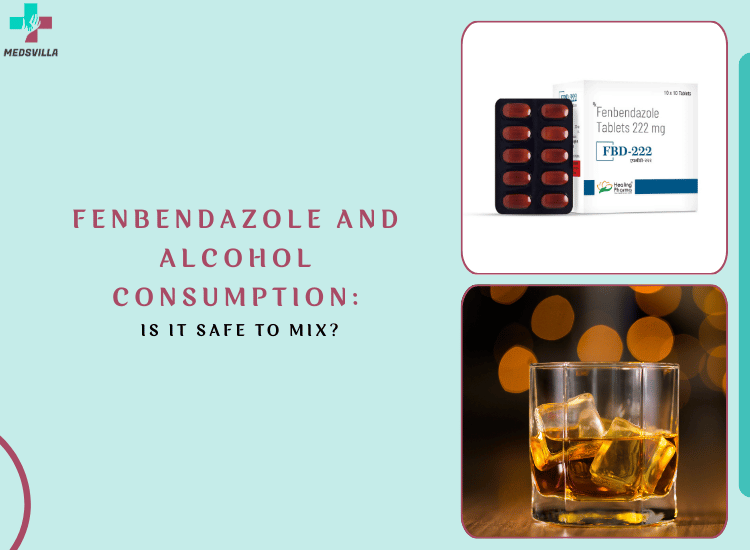
Can Alcohol Affect Fenbendazole Treatment? Key Facts
When taking any medication, it is natural to wonder whether alcohol can change how it works or increase the risk of side effects. Fenbendazole is no exception. Questions about alcohol and fenbendazole often arise because alcohol can affect the liver, digestive system, hydration, and the way certain substances are processed by the body.
Fenbendazole is a benzimidazole antiparasitic drug primarily used in veterinary medicine. It is commonly used to treat certain parasitic infections in animals. Its use in humans is not established in the same way as approved human medicines, so there is limited clinical evidence about its safety, effectiveness, and interactions in people. Combining fenbendazole and alcohol may increase concerns about side effects, so it is best to avoid alcohol and seek professional medical advice.
Because of this limited information, it is important to be cautious when considering alcohol during fenbendazole treatment.
What is fenbendazole?
Fenbendazole belongs to a group of medicines called benzimidazoles. It works against certain parasites by interfering with cellular structures and processes that parasites need to survive.
The medication is commonly used by veterinarians for animals such as dogs, cats, horses, and livestock, depending on the product and parasite being treated.
Although fenbendazole has attracted interest for various potential uses, particularly online, it should not be assumed that a veterinary medication is automatically suitable for human treatment. Human safety, dosing, formulation, and effectiveness require appropriate clinical evidence.
Can alcohol affect fenbendazole treatment?
There is not enough reliable human research to establish exactly how alcohol affects fenbendazole treatment. No well-established human interaction profile exists that can confirm a specific amount of alcohol is safe to consume with fenbendazole.
This does not necessarily mean that combining them will cause a serious reaction. Instead, it means that the combination has not been adequately studied in humans.
Alcohol itself can cause nausea, vomiting, dizziness, dehydration, headaches, and stomach irritation. If fenbendazole also causes digestive symptoms or other adverse effects, drinking alcohol could make it harder to tolerate those symptoms or determine their cause.
For this reason, avoiding alcohol while using fenbendazole is a reasonable precaution.
Why does the liver matter?
The liver plays an important role in processing many medicines and chemicals. Alcohol is also processed by the liver. Heavy or repeated alcohol consumption can place stress on the liver and may contribute to liver injury over time.
Because fenbendazole is not an approved standard human medicine, there is limited information about how its metabolism and potential effects on the human liver interact with alcohol consumption.
People with existing liver problems should be particularly cautious. They should speak with a healthcare professional before taking fenbendazole or combining it with alcohol.
Possible warning signs of liver problems can include yellowing of the skin or eyes, dark urine, unusual tiredness, persistent nausea, loss of appetite, or abdominal discomfort. These symptoms can have several causes, but they should not be ignored.
Can alcohol reduce the effectiveness of fenbendazole?
There is insufficient human evidence to say that alcohol directly reduces the antiparasitic effectiveness of fenbendazole.
It would therefore be inaccurate to claim that drinking alcohol definitely makes fenbendazole ineffective. At the same time, there is also no strong human evidence establishing that the combination has no effect on treatment.
If fenbendazole is being used in an animal, the veterinarian's instructions should be followed. If someone is considering or taking fenbendazole for personal use, they should discuss the situation with a qualified healthcare professional rather than relying on online claims about effectiveness.
What side effects should you watch for?
Fenbendazole products may be associated with adverse effects, although the available information depends on the animal species, product, dose, and individual circumstances. Alcohol can cause its own range of effects.
When substances are combined, symptoms may become more noticeable or difficult to attribute to one specific cause.
Potential symptoms can include:
- Nausea
- Vomiting
- Abdominal discomfort
- Diarrhea
- Headache
- Dizziness
- Fatigue
- Dehydration
If symptoms are severe, persistent, or unusual, medical advice should be sought.
Emergency medical attention may be appropriate for symptoms such as difficulty breathing, fainting, severe abdominal pain, confusion, severe vomiting, or signs of a serious allergic reaction.
Does one drink make a difference?
People sometimes ask whether occasional drinking is different from regular or heavy alcohol consumption. In general, the amount of alcohol consumed matters because larger amounts can have stronger effects on the body.
However, there is no established human safety threshold for alcohol consumption with fenbendazole. It would therefore be inappropriate to suggest that a specific number of drinks is definitely safe.
If you are taking fenbendazole, the cautious approach is to avoid alcohol until you have discussed the medication with a healthcare professional. This is especially important if you take other medicines or have liver, kidney, or digestive health concerns.
What about fenbendazole and ivermectin combinations?
Online searches may also bring up products described as fenbendazole ivermectin pills or fenbendazole ivermectin capsules. These terms refer to combinations promoted online, but the presence of two antiparasitic ingredients does not automatically mean that the product is appropriate for human use.
Ivermectin does have approved human uses for certain medical conditions, but that does not make every ivermectin product or combination safe for people. Fenbendazole, meanwhile, is primarily a veterinary medicine and does not have the same established status as an approved human treatment.
Consumers may also encounter searches for fenbendazole and ivermectin tablets price. Cost, however, should not be the main consideration when evaluating a medicine. Product quality, regulatory status, appropriate indication, dosage, and professional medical guidance are much more important.
Similarly, searches for ivermectin and fenbendazole pills for humans may produce online advertisements or claims that are not supported by adequate clinical evidence. Be cautious about purchasing or taking medicines based solely on online product descriptions.
What should you do after drinking alcohol?
If you have consumed alcohol while using fenbendazole, do not automatically assume that a serious reaction will occur. A single exposure does not necessarily result in a dangerous interaction.
However, it is sensible to avoid consuming more alcohol until you have received appropriate advice. Do not take additional medication to compensate for drinking alcohol, and do not change a prescribed treatment without consulting a healthcare professional.
If you develop concerning symptoms, tell the healthcare professional what you took, how much alcohol you consumed, and when you took each substance. Accurate information can help with appropriate assessment.
Should you avoid alcohol during fenbendazole treatment?
Because human data on fenbendazole are limited, avoiding alcohol is the more cautious choice. This is particularly relevant for people using fenbendazole outside its established veterinary indications.
The safest approach is to discuss the medication with a healthcare professional and provide a complete list of medicines, supplements, and substances you are using. This can help identify potential interactions and safer alternatives.
Final thoughts
So, can alcohol affect fenbendazole treatment? There is not enough human evidence to establish a specific interaction or determine whether alcohol changes the effectiveness of fenbendazole. However, the lack of evidence should not be interpreted as proof that the combination is safe. Fenbendazole ivermectin capsules are promoted online as antiparasitic combinations, but their safety and suitability for human use should be discussed with a healthcare professional.
Alcohol can affect the liver, digestive system, hydration, and nervous system, while fenbendazole has limited human safety data. Avoiding alcohol during use is therefore a sensible precaution.
Most importantly, fenbendazole should not be treated as a proven human medicine simply because it is available online or discussed as a potential treatment. Anyone considering it for personal use should speak with a qualified healthcare professional about evidence-based and appropriately approved treatment options.









0 Comments