
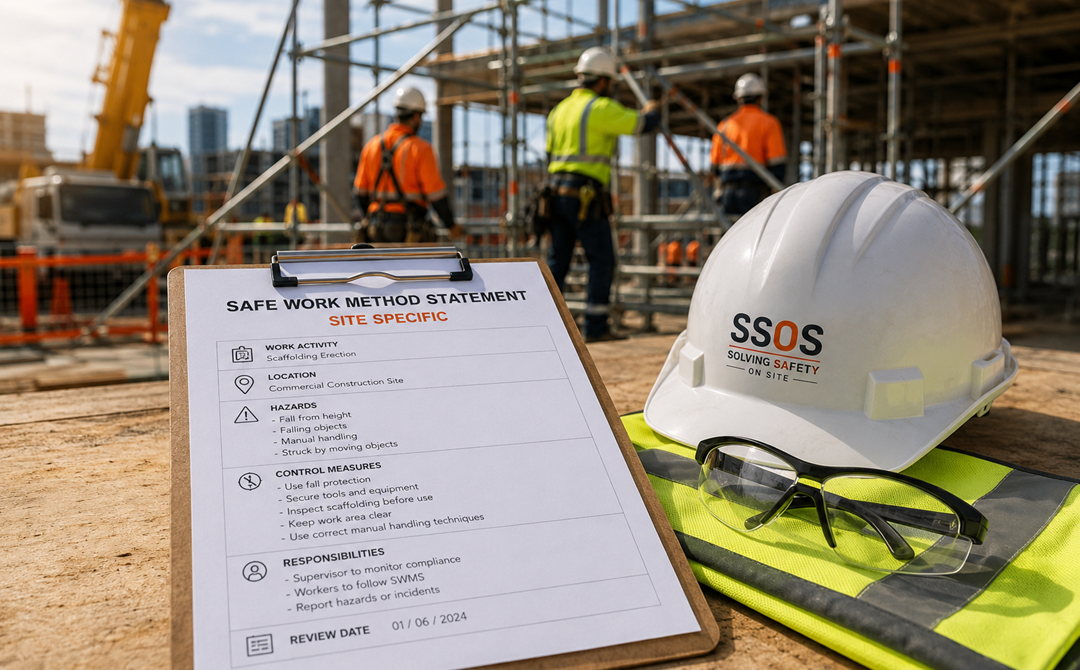
Why Every Construction Business Needs Site-Specific SWMS
Construction projects are constantly evolving. Site conditions change, new trades arrive, equipment is introduced, and hazards can vary from one stage of a project to the next. Because of this, a generic Safe Work Method Statement (SWMS) is rarely enough to manage the risks associated with high-risk construction work effectively.
A site-specific SWMS is developed to reflect the actual work being carried out, the hazards present on a particular site, and the control measures required to keep workers safe. Rather than existing purely as a compliance document, it becomes a practical guide that supports safe work practices every day.
For construction businesses across Australia, investing in site-specific SWMS helps improve compliance with Work Health and Safety (WHS) legislation, reduce workplace risks, and demonstrate a genuine commitment to safety. At Solving Safety On Site (SSOS), we work closely with builders, contractors, and subcontractors to develop customised SWMS that are practical, compliant, and tailored to the realities of each project.
What Is a Site-Specific SWMS?
A Safe Work Method Statement outlines how high-risk construction work will be completed safely. It identifies the work activities, associated hazards, potential risks, control measures, responsibilities, and emergency procedures.
A site-specific SWMS goes beyond a standard template by considering the unique conditions of an individual project. It reflects factors such as site access, nearby utilities, environmental conditions, traffic management, plant and equipment, sequencing of work, and interactions with other contractors.
This tailored approach ensures workers receive clear instructions that are directly relevant to the job they are performing.
Why Generic SWMS Often Fall Short
Many construction businesses begin with template SWMS, which can provide a useful framework. However, problems occur when those templates are used without being properly customised for the project.
One of the most common issues is that generic documents often include hazards or equipment that have no relevance to the work being undertaken. Workers quickly recognise when documentation has been copied from another project, reducing confidence in the safety system and making the SWMS less effective.
Generic SWMS may also overlook hazards that are unique to a particular site, such as underground services, restricted access areas, overhead powerlines, unstable ground conditions, or interaction with the public. Without identifying these risks, appropriate control measures may not be implemented.
In addition, principal contractors and auditors regularly review SWMS before work begins. Documentation that appears generic or incomplete may result in requests for revisions, delays in site access, or concerns about a contractor's overall safety management.
Benefits of Site-Specific SWMS
Better Hazard Identification
Every construction project presents different risks. A site-specific SWMS encourages businesses to assess the actual work environment before work begins, making it easier to identify hazards and implement suitable controls.
Taking this proactive approach helps reduce the likelihood of incidents and creates a safer workplace for everyone involved.
Improved WHS Compliance
Australian WHS legislation requires businesses to manage risks associated with high-risk construction work. A customised SWMS demonstrates that hazards have been properly assessed and that suitable control measures have been planned for the specific project.
This supports stronger compliance during inspections, audits, and client reviews.
Clearer Communication
Workers are more likely to follow procedures when they clearly relate to the work they are carrying out. A site-specific SWMS provides practical guidance that helps workers understand what needs to be done, the hazards involved, and the controls that must be followed.
This improves communication between supervisors, workers, and subcontractors throughout the project.
Increased Worker Engagement
Safety documentation should be practical rather than simply satisfying administrative requirements. When workers see that a SWMS reflects their actual work environment, they are more likely to engage with it, ask questions, and follow the documented procedures.
This contributes to a stronger safety culture across the organisation.
Smoother Contractor Approvals
Many principal contractors require subcontractors to submit SWMS before work commences. Well-prepared, project-specific documentation demonstrates professionalism and can help streamline approval processes, reducing unnecessary delays before work begins.
When Should a SWMS Be Reviewed?
Preparing a SWMS is only one part of the process. It should also be reviewed whenever significant changes occur during the project.
Reviews are recommended when work methods change, new hazards are identified, different equipment is introduced, additional contractors begin work, incidents occur, or site conditions change substantially.
Regular reviews help ensure the SWMS continues to reflect the work being carried out and remains an effective risk management tool throughout the life of the project.
Common Mistakes Construction Businesses Make
One of the most common mistakes is copying SWMS from previous projects without making meaningful changes. Although this may save time initially, it often results in documentation that no longer reflects the actual hazards present onsite.
Another common issue is failing to consult workers during the preparation of the SWMS. Employees and supervisors performing the work often have valuable knowledge about practical risks and effective control measures that can improve the quality of the document.
Some businesses also include excessive generic information that makes the SWMS difficult to read. Long documents filled with broad safety statements are less likely to be used effectively onsite.
Finally, businesses sometimes forget to review their SWMS as projects progress. Construction sites change quickly, and documentation should evolve alongside those changes.
How Site-Specific SWMS Improve Project Performance
The benefits of a site-specific SWMS extend beyond regulatory compliance.
By providing clear guidance and identifying risks before work begins, businesses can reduce incidents, minimise project delays, improve coordination between contractors, and increase confidence among clients and principal contractors.
Accurate documentation also supports more consistent work practices and makes safety discussions during toolbox talks and site meetings more meaningful.
Rather than becoming paperwork that sits in a folder, a well-developed SWMS becomes an active part of daily site management.
Choosing the Right SWMS Partner
Developing an effective SWMS requires more than completing a template. It requires an understanding of construction activities, Australian WHS legislation, and the practical challenges faced by workers onsite.
A professional safety consultant should develop documentation that is tailored to the specific project, easy for workers to understand, practical to implement, and capable of being updated as the project changes.
Solving Safety On Site helps construction businesses develop customised Safe Work Method Statements that support both compliance and operational efficiency. Our Custom SWMS Development service is designed around the actual work being performed, ensuring documentation reflects site conditions and helps businesses manage risks effectively.
Site-Specific SWMS as Part of a Complete Safety System
A SWMS delivers the greatest value when it forms part of a broader workplace health and safety management system.
It should work alongside risk assessments, site inspections, toolbox talks, incident reporting, worker consultation, safety training, and regular compliance audits.
By integrating these elements, construction businesses create a more consistent approach to managing workplace risks while supporting continuous improvement in safety performance.
As projects become larger and more complex, having well-developed safety systems helps businesses remain compliant, improve operational efficiency, and protect their workforce.
Frequently Asked Questions
What is the difference between a generic SWMS and a site-specific SWMS?
A generic SWMS provides broad guidance that may apply across many projects. A site-specific SWMS is customised to reflect the hazards, work activities, equipment, and conditions of a particular construction site.
Are site-specific SWMS required in Australia?
For high-risk construction work, businesses are required to prepare SWMS that address the actual risks associated with the work being performed. Generic templates alone may not adequately demonstrate effective risk management.
Who should prepare a site-specific SWMS?
A competent person with knowledge of the work should prepare the SWMS in consultation with supervisors and workers who will perform the task. This helps ensure the document is practical and accurately reflects site conditions.
How often should a SWMS be reviewed?
A SWMS should be reviewed whenever work methods, hazards, equipment, or site conditions change, or following an incident or near miss. Regular reviews help keep the document accurate and relevant.
Can template SWMS still be used?
Templates can provide a starting point, but they should always be customised to suit the specific project before work begins. Simply reusing generic documents without reviewing site-specific hazards can reduce their effectiveness.
Improve Your Safety Documentation with Solving Safety On Site
Developing a site-specific SWMS is about much more than meeting legislative requirements. It is about providing workers with practical guidance that reflects the real conditions of the job and supports safer work practices every day.
At Solving Safety On Site, we specialise in developing customised Safe Work Method Statements that help construction businesses improve compliance, manage risks effectively, and maintain safer worksites. Whether you are a builder, subcontractor, civil contractor, or specialist trade, our team can provide practical documentation tailored to your operations.
If you are looking to strengthen your safety documentation and improve your workplace health and safety systems, contact Solving Safety On Site to learn how our customised SWMS solutions can support your next construction project.










0 Comments