
What Exactly Is Uptime, and How to Monitor It for Free
If you run a website, uptime is one of those terms you’ve probably heard countless times but may not have fully unpacked. It often gets mentioned alongside hosting plans, performance metrics, or reliability guarantees, yet its real meaning and impact are frequently misunderstood. More importantly, many people assume that monitoring uptime effectively requires paid tools or enterprise-level software.
In reality, uptime is a simple concept with serious implications, and monitoring it does not have to be expensive or complex. Whether you manage a personal blog, a portfolio site, or a small business website, understanding uptime and keeping an eye on it can save you time, traffic, and credibility.
What Is Website Uptime?
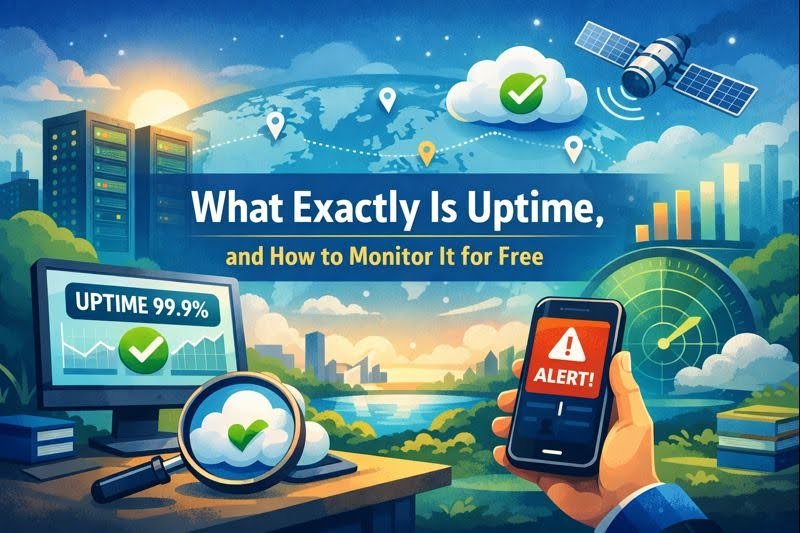
Website uptime refers to the amount of time a website is accessible and functioning as expected. It is usually expressed as a percentage over a given period. For example, if a website has 99.9 percent uptime in a month, it means the site was unavailable for roughly 43 minutes during that time.
While the difference between 99 percent and 99.9 percent uptime may look small on paper, the real-world impact can be significant. Those missing minutes often occur when visitors are trying to access your site, submit a form, make a purchase, or read your content.
In simple terms, uptime answers one basic question: can users reach your website when they try to?
Why Uptime Matters More Than You Think
For many site owners, downtime feels like an abstract risk until it actually happens. A brief outage may seem harmless, but even short disruptions can have lasting effects.
From a user perspective, an unavailable website immediately undermines trust. Visitors are unlikely to distinguish between a temporary server issue and a poorly maintained site. If your website fails to load once, some users may not come back.
Search engines also factor availability into how they evaluate websites. Repeated downtime can affect crawling and indexing, which in turn may impact search visibility over time. While a single outage will not destroy rankings, consistent reliability issues can contribute to a negative signal.
For businesses, downtime can interrupt sales, lead generation, and customer support. For individuals and creators, it can mean lost readership, broken credibility, or missed opportunities. Uptime is not just a technical metric; it directly influences how reliable your online presence appears.
Common Causes of Website Downtime
Understanding why downtime happens helps explain why monitoring is necessary. Many outages occur for reasons unrelated to user traffic or content quality.
Hosting issues are among the most common causes. Server failures, overloaded infrastructure, or poorly configured environments can all take a site offline. Even reputable hosting providers experience occasional disruptions.
DNS problems are another frequent culprit. If domain records are misconfigured or temporarily unavailable, users may be unable to reach a site even if the server itself is running.
Expired domains or SSL certificates can also result in sudden downtime, often catching site owners off guard. Configuration changes, software updates, and security incidents may introduce unexpected errors as well.
Because many of these issues occur silently, site owners often do not realize their website is down until someone reports it.
How Uptime Is Traditionally Monitored
The most basic way to check uptime is manual testing, opening a browser and visiting your website periodically. While this approach may work for quick checks, it is unreliable and easy to forget. More importantly, it cannot alert you when your site goes down at inconvenient times, such as overnight or during high-traffic periods.
Automated uptime monitoring tools solve this problem by checking your website at regular intervals from external locations. When the tool cannot reach your site, it records the downtime and sends an alert. This allows you to respond quickly instead of discovering the issue hours later.
Historically, these tools were marketed primarily to businesses and developers, often with pricing models that made them inaccessible to individuals. That perception still lingers, even though the landscape has changed.
Can You Really Monitor Uptime for Free?
A common assumption is that free uptime monitoring is either unreliable or severely limited. In many cases, free plans exist mainly as previews designed to push users toward paid upgrades. They may restrict check frequency, hide reports, or include advertising within dashboards.
However, free monitoring is not inherently ineffective. For individuals, personal projects, and small websites, basic uptime checks and alerts are often sufficient. The key is choosing a tool that provides meaningful functionality without unnecessary friction.
Free monitoring makes sense when the goal is awareness rather than deep analytics. Knowing when your site is unreachable, how often it happens, and how long outages last is enough to improve reliability for most use cases.
What to Look for in a Free Uptime Monitoring Tool
Before choosing any monitoring service, it helps to understand what actually matters. Check frequency is important, as longer intervals may delay alerts. Notification methods also matter, since alerts should reach you quickly and clearly.
Ease of setup is another critical factor. A tool that requires complex configuration or technical expertise defeats the purpose for individuals. Privacy and data handling are also worth considering, especially when monitoring personal or non-commercial websites.
Finally, transparency matters. A free tool should be clear about what is included and what is not, without forcing users into constant upgrade prompts.
A Practical Example of Free Uptime Monitoring
One example of a free uptime monitoring tool designed with individuals in mind is FarSafe. It offers free website uptime monitoring that focuses on availability rather than aggressive upselling. For users who simply want to know whether their website is online and receive alerts when it is not, this type of approach can be practical and effective.
Using a free uptime monitoring tool like this typically involves adding your website URL, choosing alert preferences, and letting the system handle the checks automatically. There is no need for server access or technical changes to your site.
For personal websites, side projects, and early-stage ventures, this kind of free monitoring can provide peace of mind without adding unnecessary cost.
Learning More About Free Monitoring Options
For those who want a deeper understanding of how free monitoring works in practice, FarSafe also provides a detailed resource that explains the concept clearly. Their guide on free website monitoring for individuals walks through expectations, limitations, and practical considerations in a way that is accessible to non-technical readers.
Resources like this are valuable because they focus on education rather than marketing, helping site owners make informed decisions based on their actual needs.
Best Practices to Improve Uptime Alongside Monitoring
Monitoring alone does not prevent downtime, but it enables faster response. To improve uptime overall, monitoring should be paired with basic maintenance practices.
Choosing reliable hosting remains one of the most important decisions. Regular software updates help prevent security issues and compatibility problems. Keeping backups ensures that recovery is possible if something goes wrong.
Setting up alerts and reviewing uptime reports periodically helps identify recurring issues before they become serious. Even simple habits, combined with free monitoring, can significantly improve website reliability.
Conclusion
Uptime is a foundational concept for anyone who publishes content or operates services online. It reflects not only whether a website is technically available, but also how dependable it appears to users and search engines.
The good news is that monitoring uptime no longer requires expensive tools or advanced technical skills. With the right free uptime monitoring tool and a basic understanding of what to watch for, individuals can take control of their website’s reliability.
By treating uptime as a priority rather than an afterthought, even small websites can deliver a more consistent and trustworthy experience.








0 Comments