
Wegovy Qatar: How the Weight Loss Injection Works and What to Know Before Starting
Wegovy Qatar: How the Weight Loss Injection Works and What to Know Before Starting
Weight loss is rarely as simple as eating less and moving more.
Appetite, metabolism, sleep, hormones, medical conditions, medications and daily habits can all influence how easily someone gains or loses weight. This is one reason interest in Wegovy Qatar has grown among people exploring medically supervised weight-management options.
Wegovy is a prescription medicine containing semaglutide. It belongs to a group of medicines commonly known as GLP-1 receptor agonists and is designed to be used alongside lifestyle changes rather than replacing them.
Wegovy became available in Qatar in 2025 as semaglutide 2.4 mg for chronic weight management, according to Ebn Sina Medical and Novo Nordisk's Qatar launch announcement.
But popularity does not mean Wegovy is appropriate for everyone.
Understanding how the Wegovy injection works, what realistic weight loss may look like and which side effects require attention can help people have a much more useful conversation with their healthcare professional.
Quick Answer: What Is Wegovy?
Wegovy is a prescription weight-management medicine containing semaglutide.
Semaglutide acts on the GLP-1 receptor, which is involved in appetite, digestion and blood glucose regulation.
For many people, this can make them feel fuller after eating smaller amounts and reduce hunger between meals.
Wegovy is generally used as part of a broader weight-management plan that includes nutrition, physical activity and medical follow-up.
It should not be treated as a quick slimming injection or used without appropriate medical assessment.
How Does Wegovy Injection Work?
The Wegovy injection mimics the action of a naturally occurring hormone called GLP-1, or glucagon-like peptide-1.
GLP-1 is released after eating and helps communicate with several systems involved in metabolism.
One of its effects is on appetite.
People taking semaglutide may notice that they become satisfied with smaller portions or remain full for longer after eating.
This can make maintaining a lower overall calorie intake easier.
Wegovy can also slow gastric emptying, particularly earlier in treatment, which contributes to the feeling of fullness.
The goal is not to completely eliminate hunger.
A sustainable weight-management plan should still allow someone to eat enough protein, vitamins, minerals, fibre and other nutrients while gradually reducing excess body weight.
Can Wegovy Really Help With Weight Loss?
Clinical research has shown that semaglutide can produce meaningful average weight reduction in appropriate patients when combined with lifestyle intervention.
However, averages from clinical trials should never be interpreted as a guarantee.
Two people using the same medicine may experience very different results.
Wegovy weight loss can be influenced by starting body weight, medical history, dose, treatment duration, food intake, physical activity, sleep, consistency and individual biology.
Some people respond strongly.
Others experience more modest changes.
And some people may discontinue treatment because it does not provide enough benefit or because side effects become difficult to tolerate.
The useful question is therefore not how many kilograms Wegovy guarantees.
It is whether the medication is suitable for you and whether it can help support a realistic long-term health strategy.
Is Wegovy Available in Qatar?
Yes.
Wegovy has been introduced in Qatar for chronic weight management, making semaglutide-based medical weight-management treatment locally relevant rather than something patients need to research only through information from other countries.
If you are researching the treatment locally, the Valeo Health guide to Wegovy injection in Qatar provides additional Qatar-focused information about the medication and weight-management journey.
Availability, prescribing requirements and the appropriate treatment plan should still be confirmed with a licensed healthcare professional.
Who May Be Suitable for Wegovy?
Wegovy is not designed for everyone who wants to lose a few kilograms.
Prescription weight-management treatment is generally considered after looking at factors such as body mass index, weight-related health conditions, previous weight-management efforts and overall medical history.
A clinician may also review conditions such as high blood pressure, abnormal blood lipids, sleep apnoea, blood glucose issues or other metabolic concerns.
The decision should be individual.
Someone who qualifies medically may still have reasons why another treatment would be more appropriate.
Likewise, someone who is frustrated with slow weight loss does not automatically need medication.
Why Medical Assessment Matters Before Starting Wegovy
One of the biggest mistakes with the rise of GLP-1 medicines is treating them like ordinary consumer products.
They are prescription medications.
A healthcare professional should understand your health history and current medicines before treatment begins.
The consultation may consider previous gastrointestinal problems, gallbladder history, pancreatic conditions, kidney health, diabetes treatment, pregnancy plans and relevant thyroid or endocrine history.
This also gives you an opportunity to set realistic goals.
Successful medical weight management is not only about reaching the smallest possible number on the scale.
Improving mobility, metabolic markers, sleep, energy and quality of life may be equally important.
How Is Wegovy Taken?
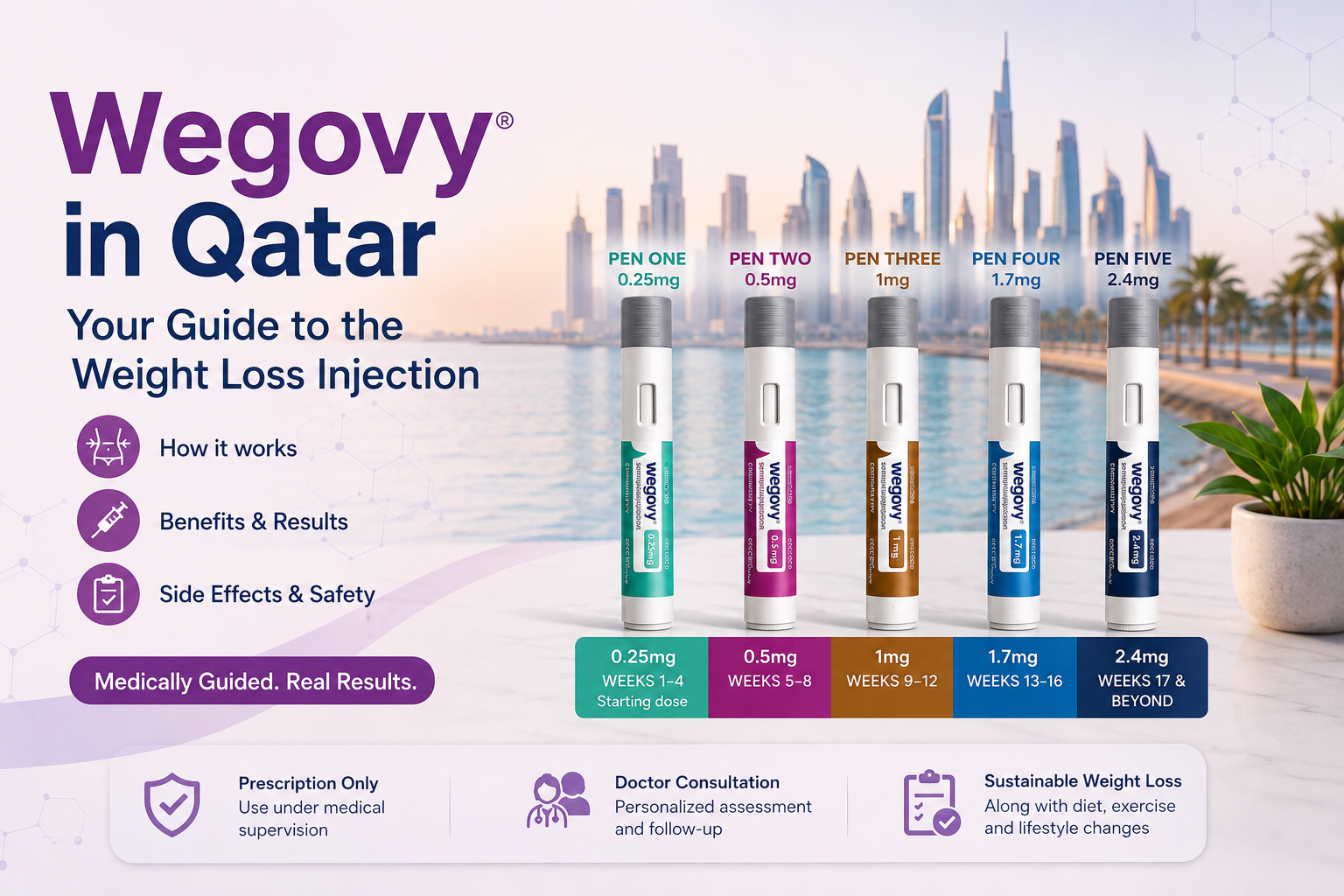
The traditional Wegovy injection is administered under the skin.
Treatment is generally introduced gradually rather than immediately beginning at the full maintenance dose.
This gradual approach helps the body adjust and may reduce the impact of gastrointestinal side effects.
The exact Wegovy dosage and dose-escalation schedule should be determined by the prescriber.
Do not increase the dose simply because your appetite returns or because weight loss feels slower than expected.
Higher doses can also increase side effects.
The best dose is not automatically the highest dose. It is the dose that provides an appropriate balance of benefit and tolerability for the individual patient.
What Are the Most Common Wegovy Side Effects?
Digestive symptoms are among the most frequently reported Wegovy side effects.
These can include nausea, vomiting, diarrhoea, constipation, abdominal discomfort and indigestion.
Some people may also notice headaches, fatigue or changes in how they tolerate certain meals.
Gastrointestinal symptoms may become more noticeable when starting treatment or when increasing the dose.
This is another reason gradual dose escalation matters.
Mild symptoms may improve as the body adjusts, but severe or persistent symptoms should not simply be ignored.
Can Wegovy Cause Serious Side Effects?
Like other prescription medicines, Wegovy also has risks beyond the common digestive symptoms.
Current prescribing information includes warnings relating to conditions such as pancreatitis, gallbladder problems, dehydration-related kidney injury and serious gastrointestinal reactions.
Severe, persistent abdominal pain requires medical attention, particularly if it radiates toward the back or occurs with vomiting.
Repeated vomiting or diarrhoea can also lead to dehydration.
This is especially relevant in Qatar, where high temperatures and outdoor activity may already increase fluid requirements.
Anyone unable to keep fluids down or experiencing significant dizziness or reduced urination should seek medical advice.
What About the Thyroid Warning?
Current Wegovy prescribing information contains an important warning concerning thyroid C-cell tumours observed in animal studies.
It is not known whether Wegovy causes these tumours in humans.
Current prescribing information states that Wegovy should not be used by people with a personal or family history of medullary thyroid carcinoma or people with Multiple Endocrine Neoplasia syndrome type 2.
This is exactly the type of medical history that should be discussed before treatment rather than after the first injection.
Can Wegovy Be Used During Pregnancy?
Weight-loss medication requires particular caution around pregnancy.
Anyone who is pregnant, planning pregnancy or becomes pregnant while using Wegovy should contact their healthcare professional.
Do not rely on general online advice for pregnancy-related medication decisions.
Individual medical assessment is essential.
Do You Still Need Healthy Food While Taking Wegovy?
Absolutely.
A reduced appetite can make eating fewer calories easier, but it can also make it easier to eat too little of the nutrients your body needs.
That means food quality becomes particularly important.
Protein deserves attention because significant weight reduction can include loss of lean tissue as well as body fat.
A balanced eating pattern should also include vegetables, fruit, fibre and adequate fluids.
Instead of asking how little you can eat while using Wegovy, a better question is how to meet your nutritional needs while creating an appropriate calorie deficit.
Why Strength Training Can Matter During Weight Loss
Weight management should not focus exclusively on body weight.
Muscle mass matters for strength, mobility and metabolic health.
When appropriate for the individual, resistance exercise combined with adequate dietary protein may help preserve lean mass during weight loss.
Walking and other forms of daily movement can also support cardiovascular health and energy expenditure.
The purpose of Wegovy is not to remove the need for movement.
It can make one difficult part of weight management, controlling appetite, more manageable for appropriate patients.
Wegovy vs Mounjaro: Are They the Same?
No.
Wegovy contains semaglutide.
Mounjaro contains tirzepatide.
Semaglutide primarily acts on GLP-1 receptors, while tirzepatide acts on both GIP and GLP-1 receptors.
Both medicines have attracted considerable attention for metabolic health and weight management, but they are different prescription treatments.
Choosing between them should not be based on social-media before-and-after pictures.
A clinician should consider your medical history, treatment goals, tolerance, available evidence and locally appropriate indications.
What Happens When Weight Loss Slows Down?
A slower month does not necessarily mean treatment has failed.
Weight loss rarely occurs at exactly the same pace from beginning to end.
As body weight changes, energy requirements change too.
Activity, hunger, food choices and adherence can also shift over time.
If progress stalls, increasing the dose is not automatically the solution.
A healthcare professional may instead review nutrition, physical activity, sleep, current dosage, other medicines and whether your target remains realistic.
Why a Structured GLP-1 Program Can Be Helpful
Medication is only one part of the weight-management process.
A structured program can help patients understand their starting health, monitor treatment, manage side effects and make nutrition and lifestyle changes that are easier to maintain.
For people considering medically supervised treatment locally, the Valeo Health GLP-1 weight-loss program in Qatar provides a Qatar-focused pathway for exploring weight-management support.
Medical follow-up also matters because the treatment plan may need to change as weight, symptoms and health markers evolve.








0 Comments