
Tyre Replacement Signs Your Car Needs New Tyres Before It’s Too Late
Let’s talk about something we all tend to set and forget: our tyres.
Strange, really – those round rubber bits beneath your car do all the work touching the pavement. When they wear too thin, risks climb fast. Stopping takes more space, steering feels loose, worst case: a pop at high speed out there on the open lane. Spotting the right moment for car tyre replacement? That’s not just ticking boxes for inspectors. It keeps everyone inside the vehicle breathing easy down every stretch of road.
Let’s unpack the warning signs that your car is screaming for new rubber.
1. Low Tread Depth
First things first. Tread.
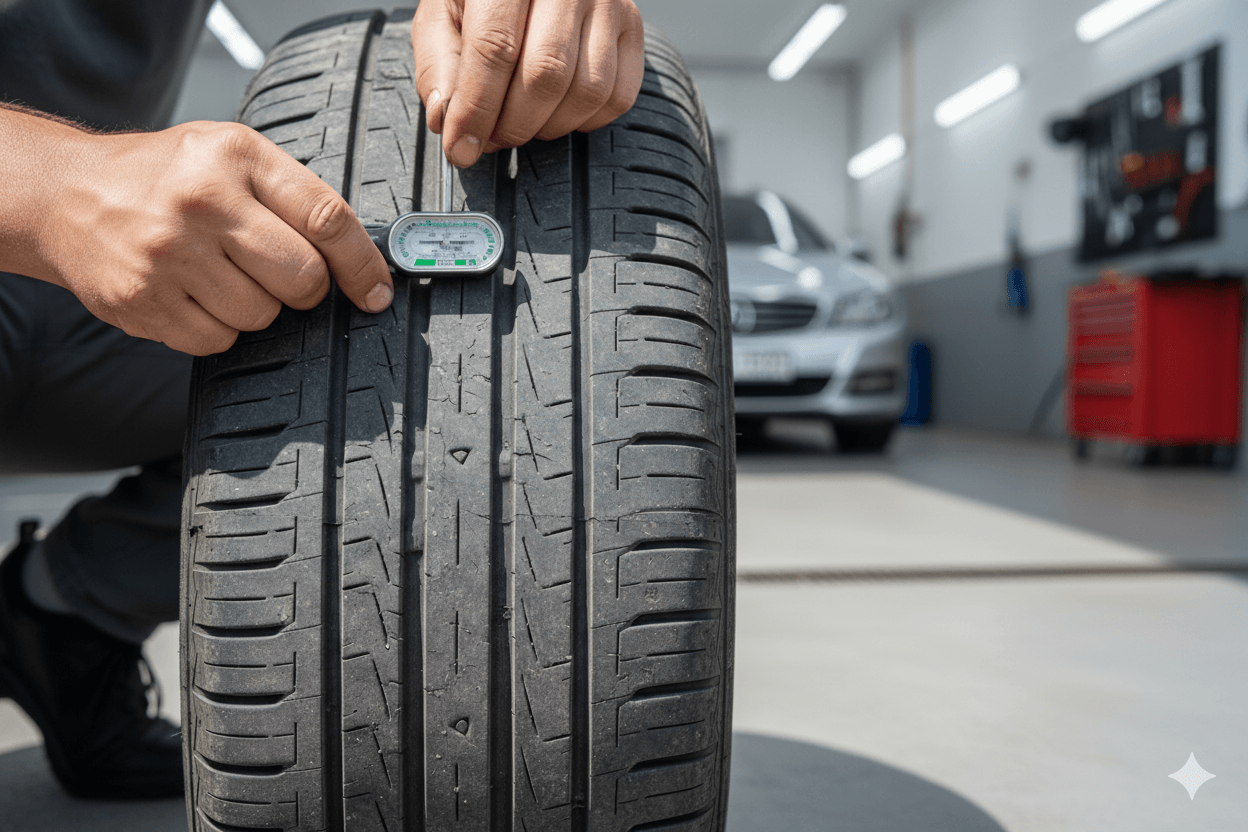
When rain pours down, your tyres must hold the road while shoving water aside – this keeps you from skimming across wet surfaces. Yet what steps do people really take to see if they’re ready? You could walk around with a coin, but honestly, the easiest trick is finding the tread wear indicator bars moulded right into the tyre grooves. If the rubber is flush with those little raised bars? Game over. You’ve hit the absolute minimum depth, around 1.6mm (or 0.16cm), and you need to sort it out pronto.
2. Uneven Tread Wear Patterns
Here’s the thing: tyres rarely wear down perfectly evenly. And the patterns they leave behind? They’re basically a diagnostic cheat sheet.
Got a bald strip right down the guts of the tyre? You’re probably running them way too hard with overinflation. If the outer edges are copping it instead, they’re underinflated. Then there’s “cupping,” which looks like a scooped, wavy pattern. That’s a dead giveaway your shock absorbers are shot and your suspension is bouncing all over the shop. If you spot this, getting a wheel alignment is a no-brainer.
3. Cracks, Bulges, and Dry Rot
Weeks pass, yet that car stays parked - rubber slowly weakening all the while. Time pulls at its structure, even without miles piling up. Oils meant to keep things flexible vanish into thin air. What's left? A shell prone to cracking, better known as dry rot. Sunlight beating down across Australian streets speeds it along, sure - but age does most of the damage long before heat shows up.
Run your hand over the sidewall when it’s cool. Feel a bulge or blister? That means there's internal structural damage, probably from kissing a kerb or nailing a pothole. A bulging tyre is a ticking time bomb for a blowout. Swap it out immediately.
4. Vibrations and Shaking While Driving
Every now and then, a little shudder on a bumpy country road just happens. When the steering trembles hard on smooth highway stretches, though, that’s worth noticing.
Wheels that aren’t balanced might start it. Steering off track can play a part too. Brakes locked hard enough to leave flat patches will do the job. Leave those things alone, then watch how quickly they punish the suspension.
5. Visible Metal or Fabric
This is the ultimate red flag.
If you look closely and spot metallic steel belts or fabric cords poking through the rubber, the tyre is completely cooked. Do not risk driving on this! It’s a massive hazard, and a blowout is highly likely. Pull over. Call a tow truck.
6. Tyre Age (The Hidden Danger)
Rubber degrades from oxygen and the elements, full stop. Even if the tread looks brilliant, an old tyre is a dangerous tyre.
In order to find out the age of your tyre, you should look up the DOT code on its sidewall. The last four numbers tell you the week and year of making. Most safety professionals concur that you should really do away with them every six to ten years, no matter the miles.
Upgrades and Replacements
Sometimes you just want beefier wheels. This leads plenty of rev-heads to ask: What is guard rolling? (Note: this specific explanation isn't from the provided sources, so you may want to independently verify it: guard rolling involves flattening the inner lip of your car's wheel arches so wider tyres don't rub against the metal.
Start with trust when swapping tyres or making changes. A solid nearby shop matters most. Take tyre replacement in Hoppers Crossing, for instance, skilled hands mean even balance, correct angles. Done right, it rolls true.
To wrap it up:
Start by testing tyre pressure each month using a digital tool - best done before any driving warms them up. Switch their positions between axles roughly every 8,000 km, maybe stretch to 13,000 if conditions allow. Small efforts like these? They quietly add up, trimming costs while helping avoid roadside trouble.










0 Comments