
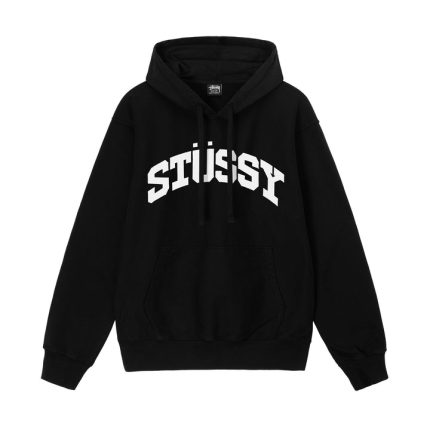
Stussy: The Brand That Built Streetwear Culture
Long before streetwear became a billion-dollar global industry with luxury houses chasing hoodies and sneakers, there was Stussy. What began as a small surfboard-shaping operation in Southern California in the early 1980s went on to become one of the most influential and enduring names in fashion history. Stussy is not just a clothing brand; it is widely credited as the blueprint for the entire streetwear movement, blending surf, skate, punk, and hip-hop cultures into a single, instantly recognizable identity. Its signature scrawled logo, inspired by a graffiti-style signature, has become one of the most copied and celebrated symbols in modern apparel.
The Origins
Stussy was founded by Shawn Stussy, a surfboard shaper from Laguna Beach, California. In the late 1970s and early 1980s, Shawn began handcrafting custom surfboards, and to mark his work, he signed each board with his own distinctive, cursive signature — a style clearly influenced by the graffiti art he saw growing up. That signature would eventually become the brand's now-iconic logo.
As his surfboards gained popularity, Shawn began screen-printing his signature onto plain t-shirts to promote his boards. He sold these shirts out of the trunk of his car at beaches and surf spots. What started as a marketing tool for his surfboard business quickly took on a life of its own, as people began wanting the shirts purely for their design and the cultural cachet they represented.
In 1984, Shawn Stussy partnered with his childhood friend Frank Sinatra Jr. (not the singer, but a businessman with the same name) to formally launch Stussy as a clothing company. This partnership helped transform a local surf-culture side hustle into a legitimate apparel brand with national, and eventually international, ambitions.
Building a Global Tribe: The International Stussy Tribe (IST)
One of the most innovative and pioneering aspects of Stussy's early growth was the creation of what became known as the "International Stussy Tribe" (IST). Rather than relying on traditional advertising, Shawn Stussy and his collaborators built the brand through word-of-mouth and community. They handed out clothing to influential tastemakers, musicians, DJs, artists, and cultural figures across different scenes — from New York hip-hop circles to London's club culture and Tokyo's fashion-forward youth.
This grassroots approach effectively created one of the earliest examples of what we now call "influencer marketing," decades before social media existed. By connecting with people who were already respected within their local subcultures, Stussy spread organically across cities and countries, giving the brand an authentic, insider credibility that mass advertising could never replicate. This network of tastemakers helped establish Stussy not just as a clothing label but as a genuine cultural movement, with devoted followers who felt like they were part of something exclusive and meaningful.
The 1990s: Peak Influence and Expansion
By the late 1980s and into the 1990s, Stussy Hoodie had exploded into global relevance. The brand opened international chapters and standalone stores in cities like Tokyo, London, Paris, and New York, each often run semi-independently by local tastemakers who understood their regional markets. This decentralized approach allowed Stussy to feel locally authentic in every market it entered while maintaining a unified global brand identity.
During this era, Stussy became deeply intertwined with hip-hop culture, skateboarding, and the emerging rave and club scenes. Its oversized t-shirts, graphic-heavy designs, and casual, functional clothing resonated with a generation that was rejecting the polished, corporate aesthetics of mainstream fashion in favor of something rawer and more authentic. Stussy pieces from this period are now highly sought after by collectors and are frequently referenced as some of the most important artifacts in streetwear history.
Shawn Stussy's Departure
In 1996, Shawn Stussy stepped away from the company he had founded, selling his stake and moving on to other ventures, including a brief foray into surfboard shaping under a new label. Despite the founder's departure, the brand continued to operate and grow under new leadership, maintaining much of its original DNA and aesthetic sensibility. This transition tested many streetwear brands throughout history, but Stussy managed to preserve its cultural relevance even without its namesake at the helm — a testament to how deeply embedded the brand had become in youth culture globally.
Stussy in the Modern Era
Today, Stussy remains a major force in fashion, having successfully navigated the transition from underground subculture staple to a globally recognized brand without fully losing its street credibility — a balance many competitors have struggled to strike. The brand has collaborated with major names across fashion, sportswear, and luxury, including Nike, Dior, Comme des Garçons, and Supreme, among many others. These collaborations have introduced Stussy to new generations while reinforcing its status as a foundational streetwear institution.
Stussy has also maintained its network of international chapters, with stores in major fashion capitals continuing to operate with a degree of regional autonomy. This global-but-local approach, established decades ago through the International Stussy Tribe, remains central to how the brand operates and how it is perceived by consumers.
Cultural Legacy
Perhaps Stussy's greatest contribution to fashion is not any single garment but the template it created for what a streetwear brand could be. Concepts that are now considered standard in the industry — limited releases, community-driven marketing, collaborations between fashion and other cultural industries, and a logo-centric design philosophy — were pioneered or popularized by Stussy decades before they became widespread practice.
Many of the brands that dominate streetwear today, from Supreme to A Bathing Ape, have cited Stussy as a direct influence or predecessor. Fashion historians and industry insiders frequently point to Stussy as the brand that proved streetwear could be both commercially successful and culturally authentic simultaneously, a balance that remains difficult for brands to achieve even now.









0 Comments