
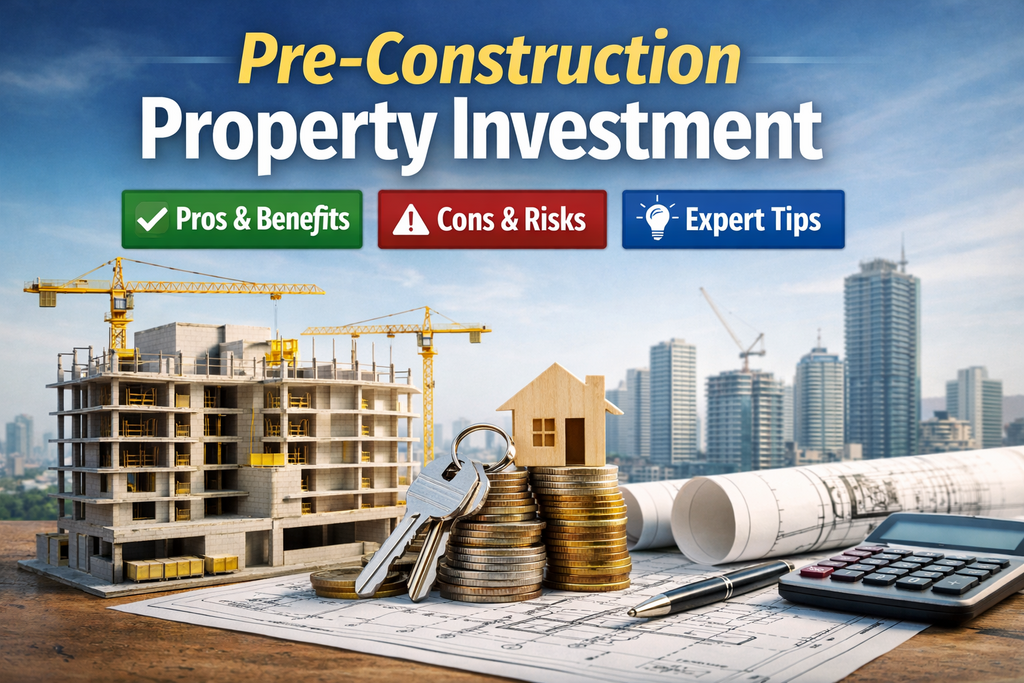
Pros & Cons of Investing in Pre-Construction Property
Investing in real estate can be one of the most powerful ways to build long-term wealth. Among the strategies investors consider today, pre-construction property investment stands out as both an opportunity and a challenge, especially in the Canadian market.
In this article, we’ll unpack investing in pre-construction real estate, explore pre-construction homes' pros and cons, and help you decide if this strategy fits your goals. We’ll focus on clarity, practical insight, and simple language so even beginner readers (age 13+) can follow.
Let’s dive in.
What Is Pre-Construction Property Investment?
Put simply, pre-construction property investment means buying a home, condo, or unit before it is built. Instead of a finished property, you buy based on plans, floor layouts, photos, and marketing materials.
You pay deposits over time, and the project is completed in the future, sometimes years later. This strategy is common in markets with expected growth, like Toronto, Vancouver, Calgary, and Ottawa.
This differs from buying a resale home that’s already built and ready to move in.
How Pre-Construction Real Estate Works
Understanding the timeline and process helps reduce surprises. Here’s the path most investors follow:
Reservation and Deposit
- You reserve a unit with a small initial deposit.
- Developers ask for structured payments (e.g., 5%, 10%, then 5% at various intervals).
- Total deposits are often 10–20% before closing.
Waiting for Completion
- Construction may take 2–5 years, depending on the project.
- Delays are common due to supply issues or permitting.
Closing and Occupancy
- Once construction finishes, you close the deal.
- For condos, there’s often an “interim occupancy” period where you pay occupancy fees instead of a mortgage.
Mortgage and Financing
- You typically arrange your mortgage near closing.
- Lenders may require re-qualification at that time.
Pros: Why Investors Choose Pre-Construction
Pre-construction investing has unique advantages:
Potential for Price Appreciation
One of the strongest reasons to consider pre-construction is the chance that the property value rises before completion. If the market grows over time, you may gain value by the time the unit is delivered, even before rental income begins.
Lower Initial Capital Required
Instead of paying a full down payment immediately, structured deposits allow you to spread payments over months or years. This makes investing in pre-construction real estate more accessible to many buyers.
No Immediate Mortgage Payments
Since the mortgage doesn’t start until the project is complete, you can preserve cash flow for other investments or savings during construction.
Modern, Brand-New Units
New properties mean:
- Latest energy efficiency standards.
- Contemporary design and amenities.
- Fewer repairs in the first years.
These features can help attract renters or future buyers.
Customization Options
Developers often let buyers choose finishes, appliances, and sometimes layouts. This can boost appeal to tenants or future buyers.
Strong Tenant Demand
Newer homes and condos can command higher rents, especially in urban markets with tight rental supply.
Cons: Risks and Challenges of Pre-Construction Investment
While the upside can be significant, there are important pitfalls to consider.
Construction Delays and Uncertainty
It’s common for completion dates to stretch due to:
- Weather conditions.
- Labor shortages.
- Material delays.
This affects your timeline for rental income or resale plans.
Market Volatility
The real estate market can change dramatically over the 2–5 year build period. If prices fall, your property could be worth less than expected at closing.
Additional and Hidden Costs
Beyond the base price, investors often pay:
- Development levies.
- Land transfer taxes.
- HST (in some provinces).
- Legal and closing fees.
These can add a high cost at closing.
Financing Challenges at Closing
Your mortgage must be arranged closer to the final closing date. If interest rates rise or your financial situation changes, this may affect your ability to secure financing.
Developer and Contract Risks
Contracts for pre-construction can be complex and may favor developers. If a developer cancels a project due to financial issues or fails to complete on time, you could lose deposits or face lengthy refunds.
Delayed Income
Since the property isn’t ready until several years down the road, you won’t earn rental income or enjoy the home until completion. This means delayed returns.
Pre-Construction Investment Canada: Market Considerations
Canada’s housing market has unique characteristics that impact pre-construction projects:
- Major cities like Toronto, Vancouver, and Calgary see strong demand but also high supply of new condos.
- Rising interest rates have slowed investor demand in some regions, affecting sales and timelines.
- Provincial regulations (e.g., GST/HST rebates) can influence final cost and ownership structure.
Before committing, it’s essential to understand local conditions and long-term trends.
Who Should Consider Pre-Construction Real Estate Investing?
This approach isn’t ideal for everyone. It’s best suited for:
- Investors with long-term goals.
- Buyers who can handle gaps in cash flow.
- Those comfortable with timing uncertainty.
- People willing to research developers and markets thoroughly.
If you need immediate income or want ready-to-rent properties, resale homes may be a better fit.
Tips for Success in Pre-Construction Investment
To make smarter decisions:
- Vet the Developer: Research past projects and delivery timelines.
- Review Contracts Carefully: Hire a real estate lawyer to identify risk clauses.
- Plan for Extra Costs: Create a budget with buffer funds.
- Stay Informed: Monitor market trends and financing conditions.
Speak with Experts: Consult mortgage brokers and experienced realtors like Haseeb Sheikh.
Investing in pre-construction real estate can offer exciting opportunities, especially in cities where demand is strong and supply grows slowly. From potential price appreciation to brand-new units, the benefits are real. But the risks, including construction delays, market shifts, and hidden costs, are equally significant.
If you’re weighing pre-construction homes' pros and cons and considering pre-construction investmentin Canada, the key is to research, plan, and partner with professionals who understand the market.
For personalized advice and current pre-construction opportunities, contact Realtor Haseeb Sheikh at haseebsheikh.ca your guide to confident real estate investing.











0 Comments