
Why Multi-Tenant Architecture Is a Game-Changer for MSPs?
So We Believe that,
At some point, every MSP runs into the same reality. Like managing one customer? Simple. Managing ten? Yes, doable. Managing hundreds, each with different needs, expectations, and compliance? Phew, COMPLEX!.
We had to give it some thought because Managed Service Providers (MSPs) are under considerable pressure to deliver more value with fewer resources. Ultimately, the question is no longer whether a multi-tenant IP PBX software can deliver the service, but whether it can deliver the service efficiently without losing control.
Yes! The answer is increasingly, is multi-tenant architecture.
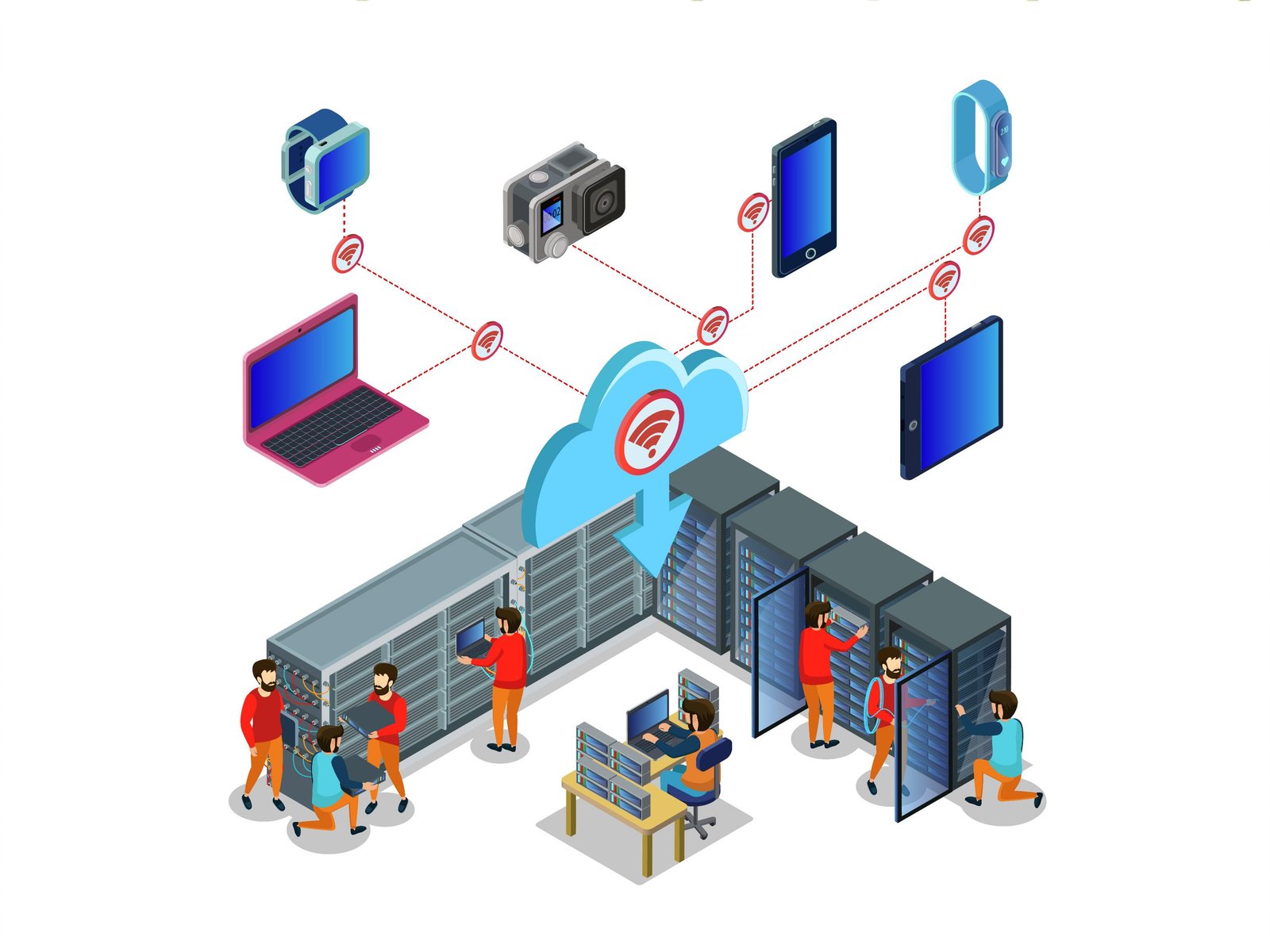
Multi-tenant architecture, which started as a model often used by large cloud providers, has now become a foundation for modern managed services. So, now the MSPs can serve multiple customers using a single platform, no more mess. It can do all while keeping every customer’s data, users and settings completely separate.
What is the Multi-Tenant Architecture?
Multi-tenancy is a software architecture where one system serves multiple customers, also called tenants. Each tenant operates in its own logical space. Their data is isolated, their users are separate, and their configurations do not affect anyone else.
You already use multi-tenant systems every day. Platforms like Salesforce, HubSpot, Zendesk, and even Netflix are built this way. Millions of users share the same application, yet each user experiences it as their own.
This same concept applies to PBX systems and managed IT platforms.
Why MSPs Are Moving Away from Single-Tenant Models?
Traditional single-tenant environments require separate infrastructure for each customer. That means more servers, more maintenance, more updates, and higher energy consumption. As and when the number of customers grows, costs tend to rise quickly, and so does operation complexity. There comes the multi-tenancy to overcome this issue by sharing infrastructure while maintaining a complete separation.
The best part is that it can serve many customers from one system without compromising performance or security. This proves that it provides better efficiency for providers and lower costs for customers.
Shared Infrastructure, Separate Responsibility
A common concern is whether sharing infrastructure means sharing risk. A BIG NO! Especially in a multi-tenant system, it never does. The reason? Tenants share the platform, not the data, not the users and not the configurations.
In this, each tenant operates within its own logical boundary. Access remains completely in control. With isolated data and clearly defined responsibility, the system makes everything transparent and secure. This allows MSPs to maintain strong security and compliance while still providing the benefits of shared infrastructure efficiencies.
Cost Efficiency Without Cutting Corners
Single-tenant systems are expensive because everything is duplicated. Hardware, software, maintenance, and energy costs rise with every new customer. Multi-tenancy removes unnecessary duplication.
By sharing infrastructure, MSPs reduce operational costs without reducing service quality. Designed for the customers who demand reliable, enterprise-grade systems at a lower cost. On the other hand, MSPs improve margin and pricing flexibility. Being cheaper is not the point. Being efficient is all we believe in.
Scaling Becomes Predictable
Businesses change. They open new offices, add users, enter new markets, or downsize during uncertain periods. MSPs are expected to support these changes without disruption.
Multi-tenant architecture makes scaling a controlled process. New tenants can be onboarded quickly. Existing tenants can grow or shrink without affecting others. Updates and improvements happen centrally, without repeated effort.
This predictability allows MSPs to plan growth rather than react to it.
Centralised Control
It sounds risky when first said that multiple customers are managed from one system. Lots of thought comes into the mind, what about the security, what if it messes up, etc. But when it's in practice, it reduces risk, centralised management means consistent updates, uniform security policies and better visibility.
Instead of relying on manual processes across scattered systems, MSPs gain a single point of control. Issues are identified faster. Changes are applied once. Oversight improves without increasing workload. It is built for the customers, where they experience fewer issues and faster resolution. A go-to option for MSPs that want control without micromanagement.
Built-In Security and Compliance
In regions with strict data protection laws, security cannot be an afterthought. Multi-tenant systems enforce isolation in order to provide control and monitoring from the ground up. The system is secured with multi-factor authentication.
Each tenant’s data remains private. Permissions are given based on the role. Also, it provides a clear track of activity. This built-in approach reduces risk and builds trust, two things MSPs cannot afford to compromise.
Seamless Communication with Multi-tenancy PBX Software:
PBX and communication platforms naturally align with multi-tenant architecture. Managed Service Providers usually manage communication for diverse clients or departments with similar technical needs but with different operational rules.
Multi-tenant PBX systems let each organisation, branch or division function independently while still being managed centrally. This structure mirrors how modern businesses actually work.
Why PepperPBX Fits This Logic?
PepperPBX is launched by Vindaloo Softtech and has been the client's most preferred multi-tenant PBX Software. This IP PBX software has already won the VoIP world with its ultra-modern features. It features a multi-tenancy architecture where multiple tenants can be created and managed within a single system, each one with its own users, extensions, trunks, settings, and permissions.
The roles and responsibilities are clearly defined for super admin, tenant admin, and end user, so overlap won’t be an issue. It allows MSPs to have centralised management, clear tenant boundaries, flexible configuration, and straightforward scalability. Go to PepperPBX for more and enjoy hosted PBX benefits!
Wrapping up:
Multi-tenant architecture has become the foundation for Modern Managed Services. It perfectly aligns with reality. MSPs demand platforms that scale seamlessly, operate efficiently, and remain secure as demand grows. It can serve thousands of customers without creating a complex environment, overlapping or risk.
So the choice is clear: Multi-tenancy is not just the future of managed services but has been the most sensible way forward. PepperPBX has the most powerful multi-tenant architecture with the most advanced features. Get a first-hand trial and then make your decision.







0 Comments