
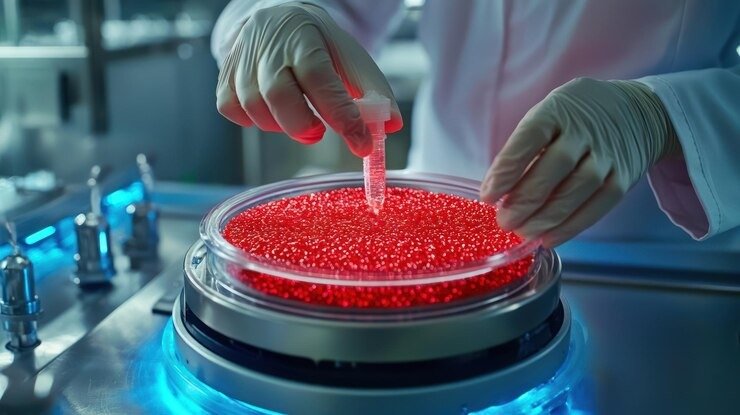
How Protein G Agarose Beads Support Reliable Protein Capture
Reliable protein capture is essential when you work with antibodies, recombinant proteins, or complex biological samples. Whether you are conducting immunoprecipitation, antibody purification, osr protein interaction studies, consistency directly affects the quality of your research results. That is why many laboratories depend on advanced affinity purification tools to improve accuracy and reproducibility.
One of the most effective solutions available today is high-performance Protein G Agarose Beads for antibody purification. These beads are designed to deliver strong antibody-binding capacity, reliable separation performance, and efficient protein recovery across multiple applications.
Understanding Protein G Agarose Beads
Protein G is a bacterial cell wall protein known for its strong affinity toward the Fc region of immunoglobulin G (IgG) antibodies. When immobilized onto agarose beads, Protein G becomes a powerful purification medium capable of selectively binding antibodies from complex mixtures.
Agarose serves as an ideal support matrix because of its porous structure, biocompatibility, and stability. Together, Protein G and agarose create an efficient purification platform that supports consistent protein capture in research and bioprocessing environments.
You can use Protein G agarose systems for:
- Antibody purification
- Immunoprecipitation
- Co-immunoprecipitation
- Biomarker discovery
- Protein interaction studies
- Diagnostic assay development
- Cell signaling research
These applications demand precision, which makes dependable capture technology extremely important.
Why Reliable Protein Capture Matters
Inconsistent protein capture can negatively affect your experimental outcomes. Low recovery rates, poor specificity, or unstable binding conditions often lead to unreliable data and wasted samples.
Reliable protein capture helps you:
- Improve experimental reproducibility
- Increase antibody recovery
- Reduce sample loss
- Enhance protein purity
- Save processing time
- Minimize background interference
When your purification method performs consistently, you spend less time troubleshooting and more time generating valuable research results.
Strong Binding Capacity Improves Performance
One major advantage of Protein G agarose beads is their high affinity for IgG antibodies from several species. This strong interaction allows you to isolate target proteins efficiently even when working with low-abundance samples.
Because the binding process is highly selective, you can achieve cleaner purification with reduced contamination from non-target proteins. This is especially useful in sensitive downstream applications such as western blotting, ELISA, and mass spectrometry.
Using Protein G Agarose Beads for reliable IgG purification workflows can significantly improve the consistency of your protein isolation procedures.
Enhanced Stability for Reproducible Results
Laboratory workflows require purification materials that remain stable under different experimental conditions. Protein G agarose beads are engineered to maintain structural integrity during repeated washing, incubation, and elution steps.
This stability supports:
- Consistent protein recovery
- Reduced variability between experiments
- Better batch-to-batch reproducibility
- Longer usability in laboratory workflows
When you rely on dependable purification media, your protocols become easier to standardize across projects and research teams.
Supports Multiple Antibody Species
Another reason researchers prefer Protein G agarose systems is their broad compatibility with antibodies from different species. Protein G generally exhibits strong binding toward:
- Human IgG
- Mouse IgG
- Rabbit IgG
- Goat IgG
- Rat IgG
This versatility allows you to use the same purification platform across multiple studies without constantly switching reagents or optimization methods.
As a result, you can streamline laboratory operations while improving workflow efficiency.
Reduces Non-Specific Binding
Non-specific protein interactions are a major challenge in purification experiments. Contaminants can interfere with downstream analysis and reduce data accuracy.
Protein G agarose beads help minimize this problem through selective Fc-region binding. Their optimized design reduces unwanted interactions, leading to cleaner purification profiles and improved target enrichment.
Cleaner protein isolation contributes to:
- Better assay sensitivity
- Improved analytical precision
- More accurate biomolecular characterization
- Reduced background noise
This becomes particularly valuable when handling delicate or low-concentration samples.
Ideal for Immunoprecipitation Applications
Immunoprecipitation workflows require efficient antibody immobilization and stable antigen capture. Protein G agarose beads support these requirements by providing strong and reliable antibody binding throughout the process.
In co-immunoprecipitation studies, maintaining protein-protein interactions is critical. High-quality agarose bead systems help preserve these interactions while minimizing sample degradation.
This allows you to:
- Investigate signaling pathways
- Identify protein complexes
- Study molecular interactions
- Analyze cellular mechanisms with confidence
Researchers working in molecular biology and proteomics often depend on Protein G agarose tools to improve experimental reliability.
Simplifies Laboratory Workflows
Efficiency matters in modern research laboratories. Complex purification procedures can slow productivity and increase operational costs.
Protein G agarose beads simplify workflows through:
- Easy handling
- Fast binding kinetics
- Efficient washing procedures
- Reliable elution performance
Because of their user-friendly design, you can integrate them into existing protocols without major process modifications.
Choosing Protein G Agarose Beads for efficient protein capture and purification can help your laboratory achieve faster and more dependable outcomes.
Supports Diagnostic and Therapeutic Research
Protein purification technologies are becoming increasingly important in biotechnology, diagnostics, and therapeutic development. Reliable capture systems improve the quality of antibodies and proteins used in critical research applications.
Protein G agarose beads support:
- Biomarker research
- Diagnostic assay development
- Therapeutic antibody studies
- Vaccine research
- Biopharmaceutical production
Their reliability helps researchers maintain confidence in analytical and production processes.
Choosing the Right Purification Partner
Selecting the right purification material can influence the success of your entire project. You should evaluate factors such as:
- Binding capacity
- Sample compatibility
- Stability
- Purity requirements
- Workflow efficiency
- Reproducibility
Working with trusted suppliers also helps ensure product quality and technical support.
If you want dependable purification solutions for your laboratory applications, Contact us today for advanced Protein G purification support and discover reliable solutions tailored to your research goals.
Conclusion
Reliable protein capture is the foundation of successful antibody purification and molecular research. Protein G agarose beads offer strong binding affinity, excellent reproducibility, broad antibody compatibility, and cleaner purification performance for a wide range of laboratory applications.
By incorporating high-quality purification systems into your workflows, you can improve data accuracy, reduce variability, and achieve more consistent experimental outcomes. Whether you are conducting immunoprecipitation, biomarker discovery, or therapeutic research, Protein G agarose beads provide the stability and efficiency needed for dependable protein capture.
FAQs
What are Protein G Agarose Beads used for?
Protein G Agarose Beads are primarily used for antibody purification, immunoprecipitation, and protein interaction studies. They help isolate IgG antibodies from complex biological samples with high specificity.
Why are Protein G Agarose Beads important in protein capture?
They provide strong and selective antibody binding, which improves purification efficiency, reduces contamination, and supports reproducible experimental results.
Which antibodies bind well to Protein G Agarose Beads?
Protein G typically binds strongly to human, rabbit, mouse, goat, and rat IgG antibodies, making it highly versatile for laboratory research.
Can Protein G Agarose Beads reduce non-specific binding?
Yes. Their selective Fc-binding mechanism helps minimize unwanted protein interactions, resulting in cleaner protein purification and better downstream analysis.
Are Protein G Agarose Beads suitable for immunoprecipitation?
Absolutely. They are widely used in immunoprecipitation and co-immunoprecipitation workflows because they support stable antibody immobilization and efficient antigen capture.


0 Comments