
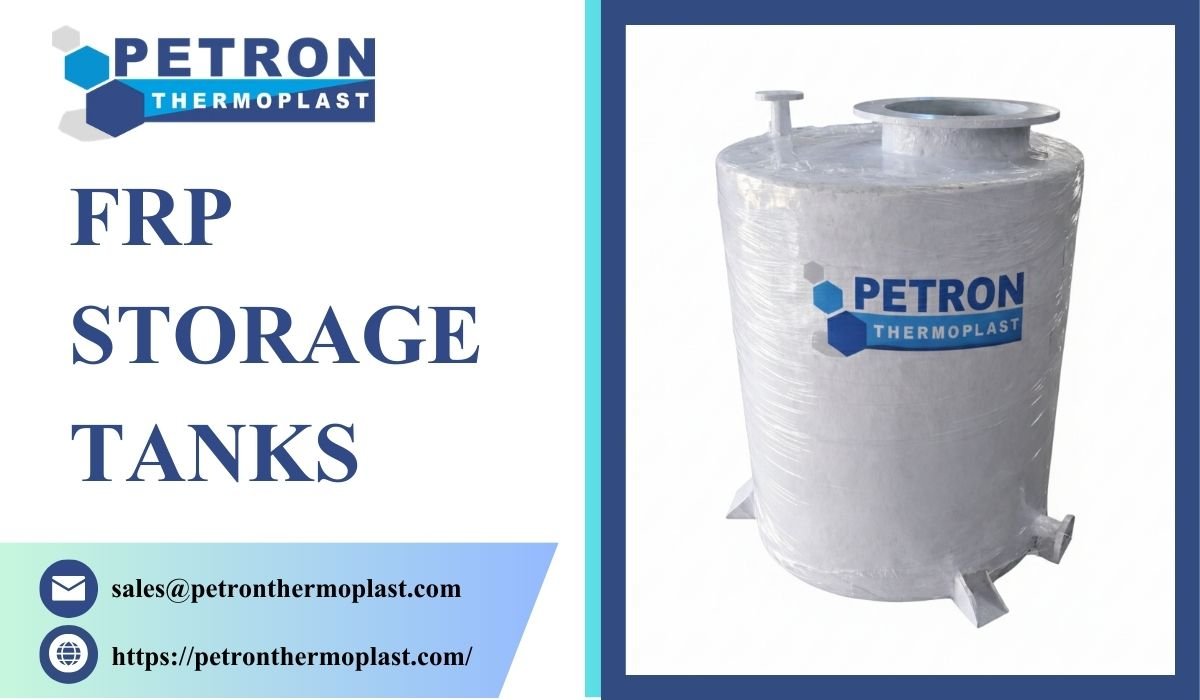
High Capacity FRP Storage Tanks for Bulk Liquid Storage
In modern industrial operations, efficient and safe storage of liquids is a critical requirement. Industries such as chemical processing, water treatment, pharmaceuticals, power generation, and manufacturing depend heavily on reliable storage systems to ensure smooth production and regulatory compliance. Among the various storage solutions available today, high capacity FRP storage tanks have emerged as one of the most dependable and cost-effective options for bulk liquid storage.
Known for their strength, corrosion resistance, and long service life, FRP (Fiber Reinforced Plastic) storage tanks offer unmatched performance in demanding environments. This blog explores the features, benefits, applications, and long-term value of high capacity FRP storage tanks and explains why they are the preferred choice for industrial bulk liquid storage.
Understanding FRP Storage Tanks
FRP storage tanks are manufactured using a combination of high-quality resins and reinforced fiberglass layers. This composite structure provides exceptional mechanical strength while maintaining lightweight characteristics. Unlike traditional steel or concrete tanks, FRP tanks are highly resistant to corrosion, chemical attack, and environmental degradation.
High capacity FRP tanks are specifically designed to store large volumes of liquids, ranging from thousands to several hundred thousand liters. They can be manufactured in vertical or horizontal configurations, depending on site requirements and application needs.
Importance of Bulk Liquid Storage in Industry
Bulk liquid storage plays a vital role in industrial supply chains and production processes. It ensures uninterrupted availability of raw materials, process chemicals, water, fuels, and waste liquids.
Efficient bulk storage systems help industries:
- Maintain consistent production schedules
- Reduce material handling costs
- Improve workplace safety
- Ensure regulatory compliance
- Minimize operational risks
Any failure in storage infrastructure can lead to leakage, contamination, production loss, and environmental damage. This makes the selection of high-quality storage tanks extremely important.
Key Features of High Capacity FRP Storage Tanks
- Superior Corrosion Resistance
One of the most important advantages of FRP tanks is their resistance to corrosion. They do not rust, oxidize, or degrade when exposed to water, acids, alkalis, salts, and industrial chemicals.
This feature makes them ideal for storing aggressive liquids that would damage metal tanks over time.
- High Structural Strength
The multi-layer reinforced construction provides excellent tensile strength and impact resistance. FRP tanks are designed to withstand internal pressure, external loads, and environmental stress.
Even in large capacities, they maintain structural stability over long operating periods.
- Lightweight Construction
Compared to steel and concrete tanks, FRP tanks are much lighter. This simplifies transportation, installation, and handling, especially for large-capacity units.
Lightweight design also reduces foundation requirements, lowering overall project costs.
- Customizable Design
High capacity FRP tanks can be customized in terms of:
- Capacity and dimensions
- Resin type
- Wall thickness
- Nozzle positions
- Manholes and accessories
- External coatings
This flexibility allows industries to design tanks that perfectly match their storage and site requirements.
- Leak-Proof Performance
Advanced manufacturing techniques ensure seamless construction and uniform thickness. This minimizes the risk of leakage and ensures safe containment of stored liquids.
Proper sealing systems and reinforced joints further enhance reliability.
- Long Service Life
With proper installation and basic maintenance, FRP storage tanks can last for decades. Their resistance to corrosion and environmental factors ensures consistent performance over time.
This long lifespan makes them a highly economical investment.
Benefits of Using FRP Tanks for Bulk Liquid Storage
Enhanced Safety
FRP tanks reduce the risk of leaks, corrosion failures, and structural collapse. This improves workplace safety and protects surrounding infrastructure and personnel.
Safe storage is especially important when handling hazardous or toxic liquids.
Low Maintenance Requirements
Unlike metal tanks that require regular painting, coating, and corrosion treatment, FRP tanks need minimal maintenance. Periodic inspection and cleaning are usually sufficient.
This reduces downtime and maintenance expenses.
Cost Efficiency
Although FRP tanks may have a slightly higher initial cost than basic steel tanks, their low maintenance and long lifespan result in lower total lifecycle costs.
Savings are achieved through:
- Reduced repair frequency
- Lower replacement costs
- Minimal downtime
- Lower foundation expenses
Environmental Protection
Leak-proof construction and corrosion resistance help prevent soil and water contamination. This supports environmental protection and regulatory compliance.
FRP materials are also recyclable, contributing to sustainable industrial practices.
Improved Operational Efficiency
Reliable bulk storage ensures smooth material flow and process continuity. This improves overall plant productivity and reduces operational disruptions.
Major Industrial Applications
- Chemical Processing Industry
FRP tanks are widely used to store acids, alkalis, solvents, and specialty chemicals. Their chemical resistance ensures safe handling and long-term storage.
They are ideal for industries involved in petrochemicals, fertilizers, dyes, and specialty chemicals.
- Water Treatment and Desalination Plants
In water treatment facilities, FRP tanks store raw water, treated water, chemicals, and sludge. Their non-toxic and corrosion-resistant properties ensure water purity and system reliability.
- Pharmaceutical and Food Processing
High hygiene standards are essential in these industries. FRP tanks do not contaminate stored liquids and are easy to clean, making them suitable for sensitive applications.
- Power and Energy Sector
Power plants use FRP tanks for storing cooling water, chemicals, and process fluids. Their durability supports uninterrupted operations.
- Wastewater and Effluent Management
FRP tanks are ideal for storing industrial effluents and wastewater. They resist biological and chemical degradation, ensuring reliable waste handling.
- Agriculture and Fertilizer Storage
Large-capacity FRP tanks are used to store liquid fertilizers, pesticides, and irrigation water. Their stability supports efficient agricultural operations.
Installation and Design Advantages
Easy Transportation and Handling
Due to their lightweight nature, FRP tanks can be transported and installed easily, even in remote or restricted locations.
This reduces logistics challenges and installation time.
Flexible Installation Options
FRP tanks can be installed:
- Above ground
- Underground (with proper reinforcement)
- On rooftops (for water storage)
- On custom platforms
This flexibility allows better utilization of available space.
Reduced Foundation Requirements
Since FRP tanks are lighter than concrete or steel tanks, they require simpler foundations. This lowers civil construction costs and project timelines.
Quality Standards and Manufacturing Process
High capacity FRP storage tanks are manufactured using advanced filament winding, hand lay-up, or spray-up techniques. These processes ensure uniform thickness and high structural integrity.
Quality manufacturers conduct strict testing, including:
- Hydrostatic testing
- Visual inspection
- Thickness measurement
- Resin curing verification
- Load testing
Compliance with national and international standards ensures reliable performance and safety.
Selecting the Right FRP Storage Tank
Choosing the right tank is essential for long-term performance. Consider the following factors:
- Type of Liquid
Analyze chemical composition, temperature, and reactivity.
- Storage Capacity
Select appropriate size based on operational requirements and future expansion.
- Environmental Conditions
Consider temperature, UV exposure, wind load, and seismic activity.
- Resin Selection
Choose suitable resin types for specific chemical compatibility.
- Manufacturer Expertise
Work with experienced suppliers who provide design support and after-sales service.
A properly selected tank ensures safety, efficiency, and long-term value.
Role in Sustainable Industrial Infrastructure
As industries move toward sustainable and eco-friendly operations, FRP storage tanks play a key role in green infrastructure development.
Their long lifespan, low maintenance, recyclability, and leak-proof performance reduce environmental impact and resource consumption. Integration with smart monitoring systems further enhances efficiency and safety.
These features make FRP tanks ideal for future-ready industrial projects.
Future Trends in FRP Storage Technology
Advancements in material science and manufacturing technology are improving FRP tank performance. Future developments include:
- Enhanced UV-resistant coatings
- Smart sensors for leak detection
- Improved resin formulations
- Higher pressure ratings
- Modular tank systems
These innovations will further strengthen the role of FRP tanks in bulk liquid storage.
Conclusion
High capacity FRP storage tanks offer a reliable, durable, and cost-effective solution for bulk liquid storage across industries. Their superior corrosion resistance, lightweight design, long service life, and minimal maintenance requirements make them an ideal alternative to conventional storage systems.
By ensuring safe containment, reducing operational risks, and supporting sustainable practices, FRP tanks help industries achieve long-term efficiency and regulatory compliance. Whether used in chemical plants, water treatment facilities, power stations, or manufacturing units, investing in high-quality FRP storage tanks is a strategic decision that delivers operational stability, environmental protection, and lasting value.









0 Comments