
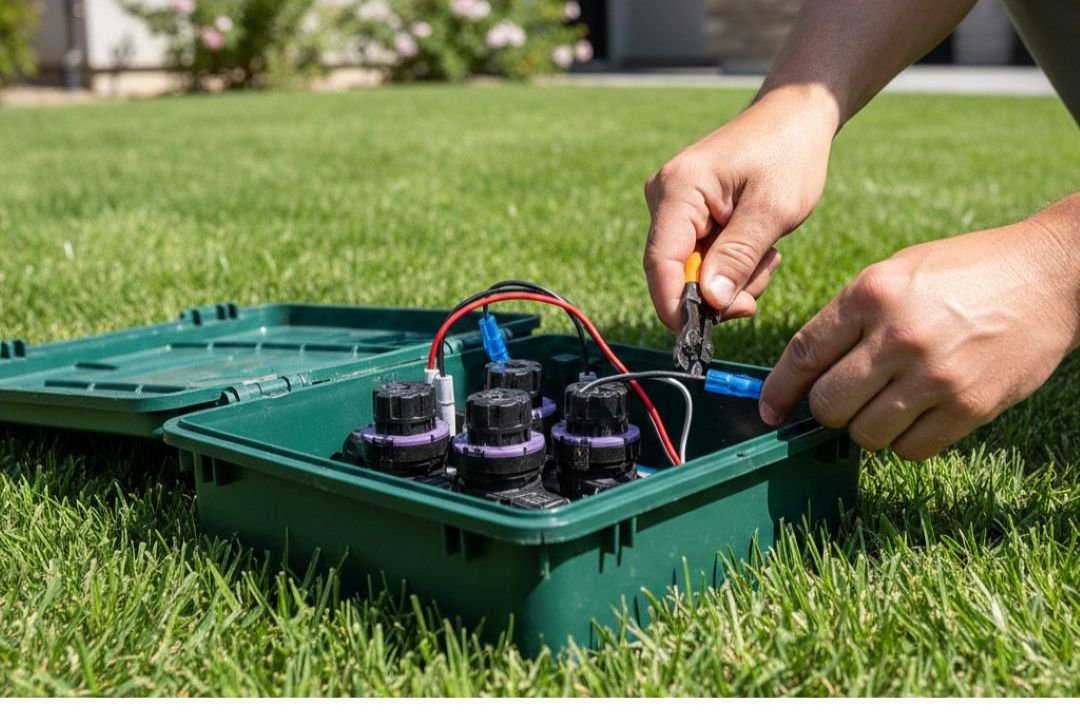
Common Irrigation Wiring Mistakes and How to Fix Them
A healthy lawn depends on more than water. It depends on smart setup. Many sprinkler failures start with simple irigation system wiring mistakes that go unnoticed.
One loose wire or wrong connection can stop zones from working, waste water, and drive up bills. In fact, the U.S. Environmental Protection Agency (EPA) reports that household leaks and irrigation issues waste nearly 1 trillion gallons of water each year.
That’s a huge loss for homeowners in Los Angeles who value green, healthy yards.
Understanding these common wiring problems helps protect your lawn, save water, and avoid costly repairs.
Paying close attention to your irrigation system wiring can prevent many of these issues before they start. Below are the most frequent mistakes and clear steps to fix them before they damage your sprinkler system.
Crossed or Incorrectly Connected Zone Wires
When sprinkler zones turn on at the wrong time, crossed wires are often the cause. Each zone connects to a specific terminal in the irrigation controller. If wires are mixed up, the system sends power to the wrong valve.
This mistake often happens during repairs or upgrades. Homeowners may reconnect wires without labeling them first.
Common signs include:
- One zone watering two areas
- A dry section that never turns on
- Random zones running together
To fix this, turn off the controller. Open the panel and check each wire against the zone chart. If there is no chart, test one valve at a time. Label wires clearly with waterproof tags.
Accurate sprinkler repair depends on careful wire placement. A small mix-up can confuse the whole system. Taking a few extra minutes to organize wires prevents bigger headaches later.
Loose Wire Connections That Interrupt Power
Loose wiring is a silent problem. The system may work one day and fail the next. Vibration, weather changes, and soil movement can pull connections apart over time.
Most irrigation valves connect with waterproof wire connectors. If these are not tight, water can enter and corrode the copper inside. Corrosion blocks electrical flow and stops the valve from opening.
To check for this issue:
- Turn off power to the controller.
- Inspect all wire nuts at each valve box.
- Replace damaged connectors with waterproof caps.
According to irrigation experts at the Irrigation Association, proper waterproof connections are critical for long-term performance. Dry, sealed joints keep voltage steady and protect against shorts.
If you notice flickering zones or inconsistent watering, a loose connection is often to blame. A quick inspection can restore full power and keep your lawn irrigation running smoothly.
Damaged or Exposed Irrigation System Wiring
Outdoor wiring faces tough conditions. Heat, moisture, roots, and digging tools can damage buried lines. In Los Angeles, dry soil shifts often, which may stretch or snap wires underground.
Damaged irrigation system wiring often causes:
- A zone that never activates
- A valve that hums but won’t open
- A blown fuse in the controller
When this happens, test the voltage at the controller. If the voltage reads correctly but the valve does not respond, the wire between them may be broken.
Fixing this requires locating the damaged section. Professionals use wire tracers to find breaks quickly. Once located, splice the wire with waterproof connectors and rebury it below grade.
Regular landscaping work should always include caution around buried lines. Marking valve boxes and wiring paths helps prevent accidental cuts during lawn installation or garden upgrades.
Using the Wrong Wire Type or Size
Not all wires are made for sprinkler systems. Using indoor electrical wire or the wrong gauge can cause overheating or voltage loss.
Sprinkler systems typically use 18-gauge, multi-strand direct burial wire. This type resists moisture and handles low-voltage power safely.
Problems caused by wrong wiring include:
- Weak valve activation
- Delayed watering cycles
- Shortened controller life
If you suspect incorrect materials were used, check the wire coating. Direct burial wires are labeled and insulated for outdoor use.
Upgrading to proper wiring improves system reliability and reduces strain on the irrigation controller. Quality materials protect your investment and support long-term lawn care.
Skipping Waterproof Splices During Repairs
Quick fixes often skip waterproof protection. This may seem harmless at first. But moisture slowly enters exposed joints and corrodes the copper strands.
Corroded wiring increases resistance. Higher resistance reduces the voltage reaching the valve. Over time, the system may fail completely.
Why Waterproofing Matters
- Prevents rust and corrosion
- Keeps the voltage steady
- Extends system life
Use gel-filled waterproof connectors designed for sprinkler repair. These seal tightly and block water intrusion.
The EPA encourages efficient irrigation practices to reduce water waste. Secure electrical connections are part of that goal. A small step like proper splicing can prevent major water loss.
Taking time to seal every repair ensures the sprinkler system stays dependable year-round.
Overloading the Controller With Too Many Zones
Each irrigation controller has a limit. Connecting too many valves to one terminal can overload it. This may blow fuses or damage internal circuits.
If multiple zones are wired together without planning, the system draws more power than intended.
Signs of overload include:
- Burnt smell near the controller
- Repeated fuse failures
- Zones shutting off mid-cycle
Check the manufacturer’s specifications for maximum zone capacity. If expansion is needed, add a compatible expansion module instead of doubling wires.
Modern irrigation controllers are designed to handle specific electrical loads. Respecting these limits protects your entire irrigation setup and prevents expensive replacements.
Frequently Asked Questions
Q1. How do I know if my sprinkler wire is broken?
A broken wire often causes one zone to stop working. The controller may show an error. Testing the voltage at the terminal helps confirm the issue. If voltage is present but the valve does not respond, the wire between them may be damaged underground.
Q2. Can exposed sprinkler wires cause water waste?
Yes. Damaged wires may prevent valves from closing fully. This can lead to slow leaks or stuck-open zones. The EPA notes that outdoor water waste is common due to irrigation faults. Fixing exposed wires improves efficiency and reduces utility costs.
Q3. What type of wire is best for sprinkler systems?
Use 18-gauge, multi-strand direct burial wire. It is designed for low-voltage irrigation systems. This type resists moisture and handles outdoor conditions. Avoid indoor electrical wire, as it lacks proper insulation for underground use.
Q4. How often should irrigation wiring be inspected?
Inspect wiring at least once per year. Spring is ideal before peak watering season. Check valve boxes, connectors, and the controller panel. Regular checks help catch loose or corroded connections early.
Q5. Should homeowners repair sprinkler wiring themselves?
Minor fixes like tightening connectors may be manageable. However, underground breaks and controller issues require skill and tools. Hiring a professional ensures safe repairs and prevents further damage to the system.
Conclusion
Small wiring mistakes can cause big problems. Crossed wires, loose connectors, and damaged lines disrupt watering and waste water. Proper irrigation system wiring keeps every zone running smoothly and protects your landscape investment.
For homeowners in Los Angeles who prefer skilled, hands-on service, working with experienced professionals makes all the difference.
RototillerGuy brings over 25 years of experience, 500+ local reviews, and deep expertise in lawn installation, landscaping, and sprinkler services. Their team handles wiring issues quickly and correctly, preventing costly repeat problems.
Choose RototillerGuy for reliable, high-quality outdoor transformations. When your irrigation system wiring is done right, your lawn thrives season after season.










0 Comments