
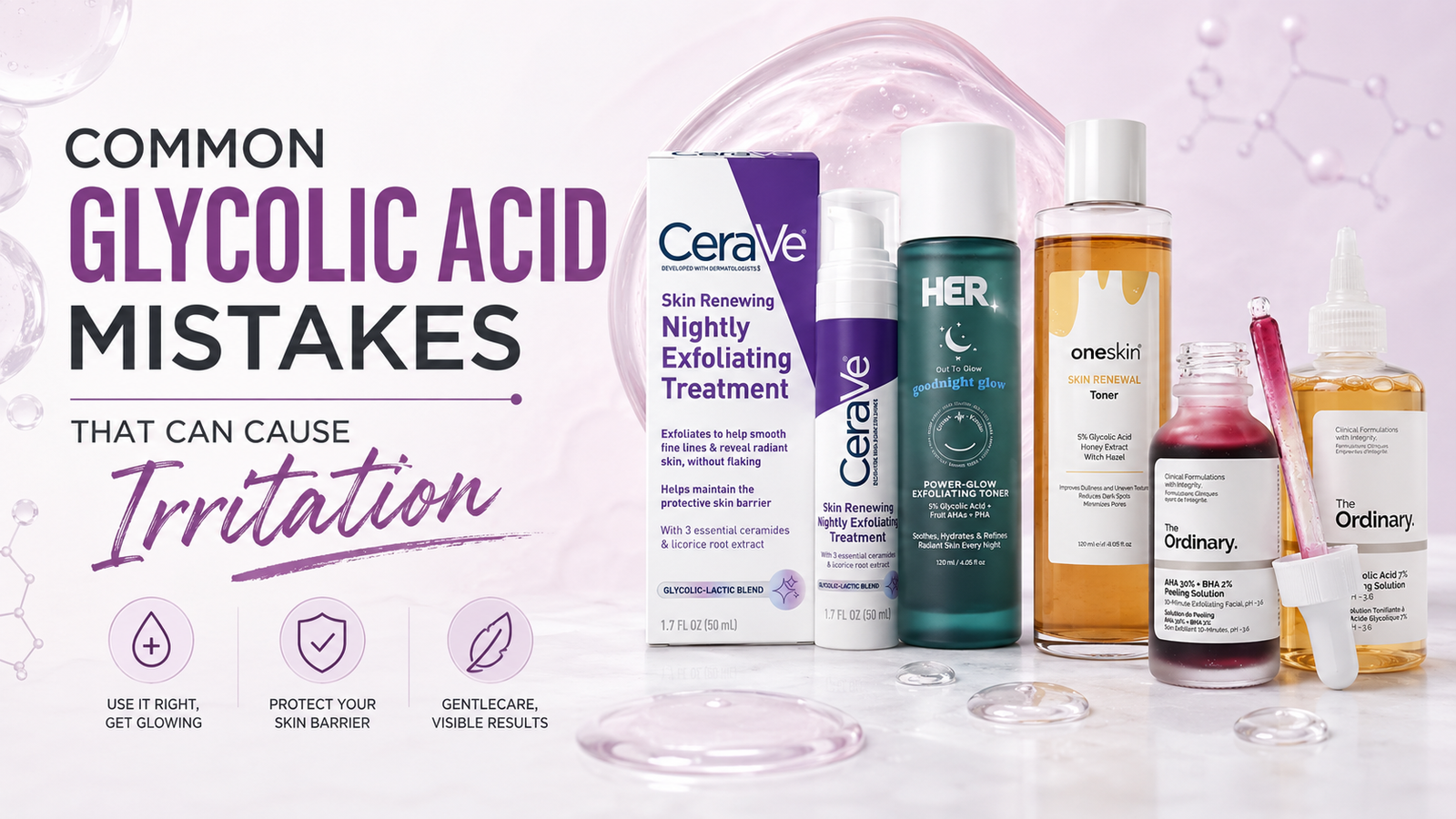
Common Glycolic Acid Mistakes That Can Cause Irritation
Glycolic acid is one of those skincare ingredients that can make the skin look smoother, brighter, and more refined when used the right way. It works as an alpha hydroxy acid, which means it helps loosen dead skin cells from the surface so the skin feels fresher and less congested. The problem is that many people start using glycolic acid too quickly or mix it with too many strong products. Instead of getting a healthy glow, they end up with redness, stinging, dryness, peeling, or fresh breakouts.
That does not always mean the product is bad. In most cases, the routine around it needs to be softer and more balanced. Klean Beauty Exfoliating Super Toner With Glycolic Acid 4% is designed as a gentle exfoliating toner for concerns like uneven skin tone, acne blemishes, open pores, excess oil, dullness, and rough texture. Since it contains 4% glycolic acid, it can be a practical option for people who want to introduce exfoliation without jumping straight into a very strong acid product.
Why Glycolic Acid Can Cause Irritation
Glycolic acid exfoliates the skin surface, so it needs to be used with care and patience.
Even a gentle acid can feel irritating if the skin barrier is already dry, weak, sun-exposed, or overloaded with active ingredients. Some people confuse irritation with results. A mild tingle may happen for a few users, but burning, strong redness, tightness, peeling, and lasting sensitivity are signs that your skin is not comfortable. Glycolic acid should make your routine better over time, not leave your face feeling raw. Irritation can also happen when the skin is not protected during the day. Since AHAs can increase sun sensitivity, sunscreen becomes a very important part of the routine. Without sunscreen, dark spots and uneven tone may look more stubborn, even if you are using exfoliation at night.
Common Glycolic Acid Mistakes That Can Cause Irritation
Most glycolic acid problems come from overuse, wrong layering, or not supporting the skin after exfoliation. A safer routine starts with using the product less often and keeping the rest of your skincare simple.
1. Using It Every Night From the Start
Glycolic acid should not be rushed, especially if your skin is new to exfoliating toners. Start with 2 to 3 nights a week, then increase only if your skin stays calm and comfortable.
2. Applying It on Damp Skin
Damp skin can make active ingredients feel stronger and may increase stinging. After cleansing, let your face dry before applying a glycolic acid toner.
3. Mixing It With Retinol Too Soon
Retinol and glycolic acid can both be useful, but using them together in the same routine can be too much for many skin types. Keep them on separate nights if your skin is not used to actives.
4. Layering It With Other Exfoliants
Using glycolic acid with salicylic acid, lactic acid, strong scrubs, peeling gels, or exfoliating masks can lead to over-exfoliation. One exfoliating step is enough for most routines.
5. Skipping Moisturizer
Glycolic acid helps remove dead skin buildup, but your skin still needs moisture afterwards. A gentle moisturizer helps reduce dryness, tightness, and barrier discomfort.
6. Forgetting Sunscreen
This is one of the biggest mistakes. If you use glycolic acid at night, apply sunscreen the next morning because your skin can become more sensitive to the sun.
7. Using It on Irritated or Broken Skin
Do not apply glycolic acid to sunburn, fresh acne wounds, scratched skin, peeling patches, or areas that already sting. Let your skin recover first.
8. Expecting Fast Results on Dark Spots
Glycolic acid can support a more even-looking tone, but dark spots need time. Using it more often will not make marks fade faster if the skin becomes irritated.
How to Use Klean Beauty Exfoliating Super Toner With Glycolic Acid 4%
This toner fits best into a night routine because exfoliating acids can make skin more sun-sensitive. The goal is to use it consistently but gently, so the skin gets the benefit without unnecessary irritation. Start by cleansing your face with a mild face wash. Let your skin dry, then take a small amount of Klean Beauty Exfoliating Super Toner on your palms or a cotton pad. Apply it evenly across the face, avoiding the eye area and the corners of the nose if those areas are sensitive.
Do not rub harshly. Pat or sweep it lightly over the skin, then give it time to absorb before applying your next product. On glycolic acid nights, keep the routine simple with a hydrating serum if needed and a gentle moisturizer. Use it 2 to 3 times a week in the beginning. If your skin feels normal after a few weeks, you can adjust slowly based on tolerance. The next morning, apply sunscreen before going outdoors. This step matters even when the weather is cloudy or you are mostly indoors near windows.
Who Should Be Careful With Glycolic Acid?
Glycolic acid can suit many people, but it is not ideal for every skin condition or every routine.
Knowing when to slow down helps prevent the kind of irritation that makes skin look dull, red, or uneven. People with very sensitive skin, rosacea, eczema, active skin infection, fresh sunburn, or a damaged skin barrier should be careful. If your skin already burns when you apply a basic moisturizer, it is better to repair the barrier first before adding exfoliating acids.
Oily and combination skin types may enjoy glycolic acid because it can help with excess sebum, clogged pores, and rough texture. Dull skin may also look brighter with steady use. Still, oily skin can get irritated too, so do not treat it like it can handle anything. If you are using prescription acne creams, strong retinoids, peeling treatments, or dermatologist-recommended actives, ask your dermatologist before adding glycolic acid. A simple routine is often safer than using many strong products together.
What Results Can You Expect?
Glycolic acid is not an overnight fix, and it should not be used like one.
With steady use, it can support smoother texture, clearer-looking pores, and a brighter-looking skin surface.
- Smoother texture: Dead skin buildup can make the face feel rough and uneven. Regular gentle exfoliation may help the skin feel softer and look more refined.
- Brighter-looking skin: Dullness can improve when old surface buildup sheds more evenly. The skin may start to look fresher when glycolic acid is paired with hydration and sunscreen.
- Less congested pores: Glycolic acid can help clear surface buildup that contributes to clogged pores. This can be helpful for oily and combination skin types.
- More even-looking tone: Post-acne marks and dark spots can take time, but glycolic acid may support a more even look with consistent use. Sunscreen is important because sun exposure can make marks look darker.
- Better routine performance: When the skin surface is smoother, moisturizers and hydrating products may sit better on the face. This can make the whole routine feel more comfortable.
Is It Worth Buying in Pakistan?
In Pakistan, heat, humidity, dust, sweat, and strong sun exposure can make the skin look dull, oily, and congested. A gentle exfoliating toner can be useful, but only when it is used with sunscreen and a barrier-friendly routine. Klean Beauty Exfoliating Super Toner With Glycolic Acid 4% is worth considering if your main concerns are rough texture, clogged pores, dullness, open pores, excess oil, or uneven-looking tone. Its 4% glycolic acid strength makes it easier to introduce slowly compared to stronger acid treatments, especially if you are still learning how your skin reacts. You can check or buy it from TheSkinFit if you want the original product in Pakistan with clear product details. It is a better match for oily, combination, and dull skin types, while very sensitive or damaged skin should use glycolic acid with extra care.
FAQs
Glycolic acid becomes easier to use when you understand frequency, layering, and aftercare.
These quick answers can help you avoid common mistakes and build a safer routine.
Can I use glycolic acid toner every day?
A. It is better to start with 2 to 3 times a week. Daily use can irritate your skin if you are new to exfoliating acids.
Should glycolic acid be used at night or in the morning?
A. Night use is usually better because glycolic acid can increase sun sensitivity. Apply sunscreen the next morning.
Can I use moisturizer after glycolic acid toner?
A. Yes, moisturizer is important after glycolic acid. It helps keep the skin comfortable and reduces dryness.
Can glycolic acid help with acne marks?
A. It can support a more even-looking tone over time, but acne marks need patience. Sunscreen is necessary to prevent marks from looking darker.
What should I not mix with glycolic acid?
A. Avoid using it in the same routine with retinol, strong vitamin C, salicylic acid, peeling masks, or other exfoliants unless your skin is used to them or your dermatologist advises it.
Final Thoughts
Glycolic acid can be a helpful ingredient for dullness, rough texture, clogged pores, excess oil, and uneven-looking tone. The real key is not using more product, but using it in a way your skin can tolerate. Klean Beauty Exfoliating Super Toner With Glycolic Acid 4% can fit well into a simple night routine when used 2 to 3 times a week at first, followed by moisturizer and daily sunscreen. If you are searching for a glycolic acid toner in Pakistan, focus on safe use, slow results, and barrier care. Avoid the common glycolic acid mistakes that cause irritation, and your skin has a better chance of looking smoother, brighter, and healthier over time.


0 Comments