
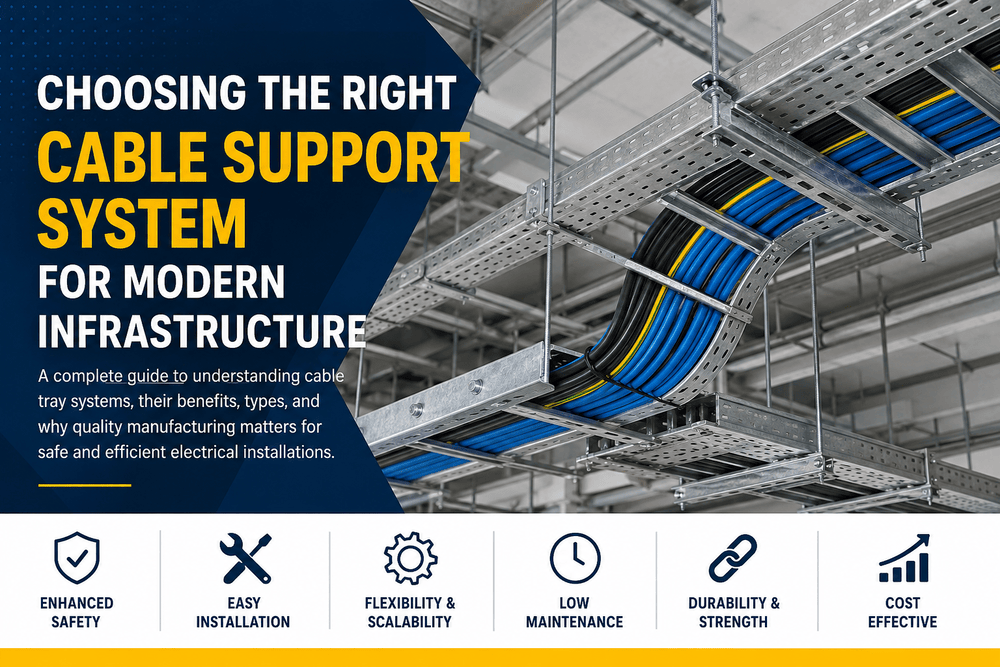
Choosing the Right Cable Support System for Modern Infrastructure
In today’s fast-moving construction and industrial world, efficient cable management has become more important than ever. From commercial buildings and manufacturing plants to data centers and infrastructure projects, organized wiring systems help improve safety, maintenance, and long-term performance. Without proper cable routing, electrical systems can become difficult to manage, unsafe, and expensive to maintain over time.
One of the most important components in modern electrical installations is the cable tray system. These systems are designed to support insulated electrical cables used for power distribution, communication, and control. They provide a structured path that keeps wiring organized while also allowing easier access for inspections, upgrades, and repairs.
As industries continue to expand, businesses now look for durable, cost-effective, and high-quality cable management solutions that can handle heavy electrical loads and changing infrastructure needs. This is why selecting the right manufacturing company plays a major role in ensuring the success of any electrical installation project.
Importance of High-Quality Cable Management
Electrical systems are the backbone of nearly every modern facility. Whether it is a factory, office building, shopping mall, or industrial warehouse, power and communication networks must remain reliable at all times. Poor cable organization can lead to overheating, maintenance difficulties, and even safety hazards.
Cable trays help solve these issues by offering a dedicated support structure for cables. Compared to traditional conduit systems, they are more flexible, easier to install, and simpler to modify when future upgrades are required. This makes them an ideal solution for projects that demand scalability and efficiency.
Modern cable tray systems are available in various types including perforated trays, ladder trays, wire mesh trays, and raceway systems. Each design serves a different purpose depending on the environment and cable load requirements. Choosing the correct tray type ensures better airflow, improved cable protection, and longer service life.
Factors to Consider Before Selecting a Manufacturer
Not all cable tray products offer the same quality or reliability. Before making a purchasing decision, contractors and project managers should carefully evaluate the manufacturer’s expertise, material quality, certifications, and production capabilities.
A reliable manufacturer focuses on precision engineering and follows strict quality standards to ensure durability and safety. The use of premium raw materials such as galvanized steel, stainless steel, aluminum, and powder-coated finishes can significantly improve corrosion resistance and long-term performance.
Another important factor is customization. Different projects often require different tray sizes, load capacities, and installation designs. A manufacturer capable of providing tailored solutions can help meet specific project requirements more effectively.
Businesses should also look at delivery timelines, technical support, and industry experience. Working with an experienced supplier helps reduce project delays while ensuring the cable management system performs efficiently for years to come.
Growing Demand in Industrial and Commercial Sectors
The rapid growth of infrastructure development has greatly increased the demand for advanced electrical support systems. Industries such as telecommunications, energy, transportation, healthcare, and IT all rely heavily on organized cable routing solutions.
Large-scale facilities require systems that can safely handle hundreds of cables while maintaining accessibility and ventilation. Cable trays provide a practical and economical option for managing these complex networks.
In commercial buildings, cable trays also contribute to cleaner and more organized installations. Since cables are neatly arranged, technicians can identify and repair issues faster without disturbing the entire system. This helps reduce downtime and maintenance costs.
Data centers especially benefit from structured cable management because airflow and accessibility are critical for maintaining server performance and operational efficiency. Poor cable organization in such environments can negatively impact cooling systems and increase operational risks.
Advantages of Modern Cable Tray Systems
Modern cable tray systems offer several advantages over older wiring support methods. One major benefit is flexibility. As technology evolves, electrical systems often need modifications or expansions. Cable trays allow technicians to add or remove cables easily without major reconstruction work.
Another advantage is reduced installation time. Since trays are open and accessible, installation crews can complete projects faster compared to enclosed conduit systems. This reduces labor costs and speeds up project completion.
Safety is another key benefit. Properly installed cable trays minimize the risk of cable damage, overheating, and electrical hazards. They also help maintain better separation between different cable types, improving overall system organization.
Ventilation is equally important. Open tray systems allow heat generated by electrical cables to dissipate more effectively, reducing the risk of overheating in high-load environments.
Durability also plays a significant role. High-quality trays are designed to withstand harsh environmental conditions including moisture, dust, chemicals, and heavy industrial use. This makes them suitable for indoor and outdoor applications alike.
Why Manufacturing Quality Matters
The performance of a cable tray system depends heavily on manufacturing quality. Weak structures, poor finishing, or low-grade materials can lead to bending, corrosion, or system failure over time.
A trusted manufacturer focuses on engineering precision, load-bearing strength, and compliance with international safety standards. This ensures the products can handle demanding environments while maintaining long-term reliability.
Advanced manufacturing processes such as CNC fabrication, automated welding, and protective coating technologies further improve product consistency and structural integrity. Manufacturers that invest in modern production facilities are usually able to deliver better quality products and customized solutions for different industries.
Quality testing is also essential. Reliable manufacturers perform load testing, corrosion resistance testing, and dimensional inspections to ensure every product meets required specifications before delivery.
Sustainability and Future Infrastructure
As industries move toward smarter and more energy-efficient infrastructure, cable management systems continue to evolve. Sustainable construction practices now encourage the use of recyclable materials and durable systems that require less maintenance over time.
Aluminum and galvanized steel trays are becoming increasingly popular because of their durability and recyclability. These materials help reduce environmental impact while offering long-lasting performance.
Future-ready infrastructure also demands systems that can support growing electrical and communication needs. Modern cable trays are designed to adapt to technological expansion, making them a valuable investment for businesses planning long-term growth.
Smart factories, renewable energy projects, and large commercial developments all require dependable electrical support systems capable of handling increasing data and power demands. Efficient cable organization will continue to play a critical role in supporting these advancements.
Final Thoughts
Efficient cable management is essential for maintaining safe, organized, and high-performing electrical systems. Whether for industrial facilities, commercial buildings, or modern infrastructure projects, cable trays provide a flexible and reliable solution for supporting electrical and communication networks.
Selecting the right manufacturer can significantly impact the durability, efficiency, and long-term success of an installation project. High-quality products not only improve system reliability but also reduce maintenance challenges and operational costs.
As infrastructure demands continue to grow, businesses increasingly rely on advanced cable management solutions that combine durability, safety, and adaptability. Investing in well-manufactured cable tray systems helps ensure smoother operations and better performance for years to come.








0 Comments