
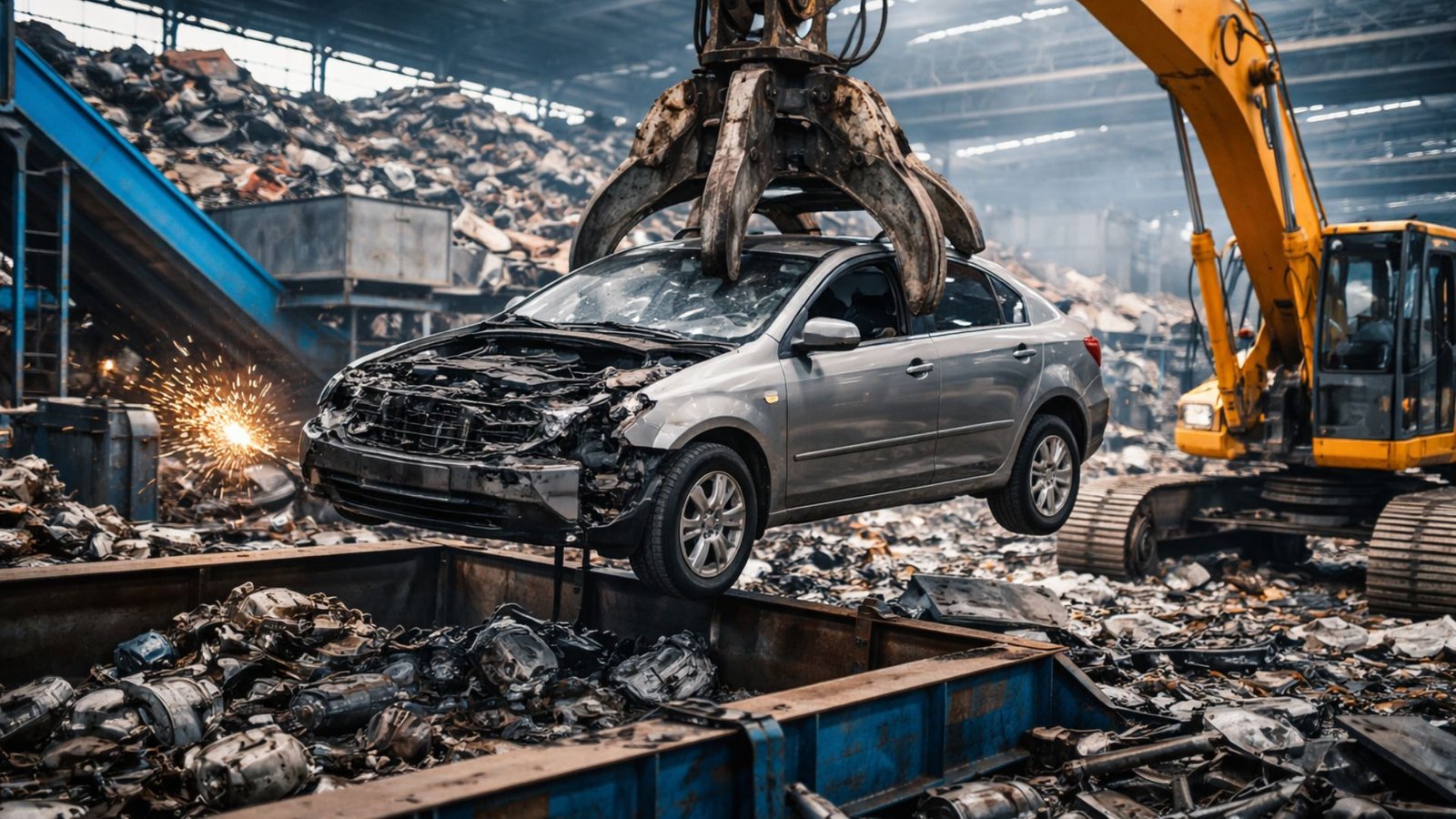
Beyond the Scrap Heap How Sydney’s Towing Services Fuel the 2026 Circular Economy
Every year, Australians retire somewhere between 500,000 and 650,000 end-of-life vehicles. Most of those vehicles carry steel, aluminium, copper, rubber, and recoverable fluids. Handled correctly, these materials re-enter manufacturing supply chains and displace the need for virgin resource extraction. What sits at the very beginning of that recovery chain is something most people never think twice about: the tow truck. Specifically, the growing network of operators offering unwanted car removal towing Sydney-wide, who have quietly become critical infrastructure in the city's transition toward a functioning circular economy. The industry does not often get credit for its environmental role. That is starting to change.
In 2026, the conversation around end-of-life vehicles has shifted significantly. Where once the dominant narrative was landfill and leakage (used oil contaminating soil, batteries dumped illegally, refrigerant gases venting into the atmosphere), there is now a measurably different story being written across Greater Sydney. Towing operators, auto recyclers, metal processors, and remanufacturers are increasingly operating as an integrated system rather than a loose collection of independent transactions. The circular economy framework, which prioritises keeping materials in use for as long as possible before recovery, has found an unlikely but effective ally in the humble tow truck and the businesses that dispatch them.
The Scale of the Opportunity Nobody Is Talking About
Let's ground this in numbers, because the scale of what is at stake is genuinely impressive.
The Australian Bureau of Statistics estimates there are currently around 20.1 million registered motor vehicles in Australia. The Motor Trades Association of Australia projects that the average age of Australia's vehicle fleet continues to rise, currently sitting at just over 10.6 years, meaning a growing number of vehicles are approaching or past their economical repair threshold. In NSW alone, the EPA reports that motor vehicles are one of the top contributors to hazardous waste streams when not properly disposed of, with an estimated 12 litres of fluids per vehicle presenting contamination risk if mishandled.
The market response to this challenge has been a maturing network of end-of-life vehicle (ELV) operators across Greater Sydney. These are businesses that collect, depollute, dismantle, and process vehicles in ways that maximise material recovery. According to the Australian Automotive Aftermarket Association (AAAA), the auto recycling sector recovers approximately 75–80% of a vehicle's material composition by weight, with the industry progressively pushing that figure higher as processing technology improves.
Steel and iron, which account for roughly 65–70% of an average vehicle's mass, are almost entirely recoverable and represent a direct input into electric arc furnace steelmaking, one of the lower-carbon pathways for steel production. Aluminium recovery is equally significant: producing aluminium from recycled scrap requires approximately 95% less energy than producing it from bauxite ore. Every vehicle properly processed through the circular economy chain represents a meaningful reduction in both energy consumption and greenhouse gas emissions.
How Sydney's Towing Network Functions as Circular Infrastructure
The towing sector's role in the circular economy is deceptively straightforward: it provides the logistics that move end-of-life assets from wherever they are stranded (a driveway in Parramatta, a flooded street in the Hawkesbury, a suburban garage in Sutherland) to the facilities where recovery can occur. Without that logistics layer, the circular economy model for vehicles simply does not function at scale.
What is changing in 2026 is the degree to which that logistics layer is becoming smarter and more intentional. Several developments are reshaping how Sydney's vehicle removal and towing sector operates:
- Digital dispatch and route optimisation: Leading operators now use GPS-based fleet management and AI-assisted dispatch systems that reduce fuel consumption per collection by 15–25%, lowering the operational carbon footprint of the removal process itself.
- Transparent material tracking: A growing number of Sydney ELV operators have adopted digital certificates of destruction and material tracking documentation, partly driven by NSW EPA regulatory requirements and partly by downstream customers (steel mills, aluminium smelters) demanding verified supply chain provenance.
- Integrated depollution facilities: Best-practice operators are investing in on-site fluid recovery infrastructure, capturing engine oil, transmission fluid, brake fluid, coolant, and refrigerant gases before a vehicle enters the dismantling process. This eliminates one of the most significant environmental risks in the ELV stream.
- Parts reuse before shredding: Progressive dismantlers are prioritising serviceable parts recovery, including engines, transmissions, body panels, and electronics, for resale into the repair market before vehicles reach the shredder. This extends the useful life of components beyond the vehicle's own lifecycle, a core circular economy principle.
The Regulatory Landscape Driving Change
Circular economy outcomes do not emerge spontaneously. They are shaped by policy frameworks, and NSW is one of the more active jurisdictions in Australia on this front.
The NSW Circular Economy Policy Statement (2019) and its associated Waste and Sustainable Materials Strategy 2041 set ambitious targets for resource recovery and landfill diversion. While these documents focus broadly on the waste stream, the implications for the automotive sector are direct: vehicles that end up partially dismantled and illegally dumped on public land represent a policy failure the state is actively working to address through both regulation and market incentives.
The Product Stewardship Act 2011 (Cth) has also created momentum for a formal national end-of-life vehicle scheme, something industry bodies have been advocating for over a decade. A voluntary accreditation framework currently exists, but industry stakeholders argue that a co-regulatory or mandatory scheme would significantly lift recovery standards and eliminate the competitive advantage currently enjoyed by operators who cut corners on depollution and material tracking.
In 2025, the federal government's National Waste Policy Action Plan progress report flagged end-of-life vehicles as a priority stream for enhanced stewardship arrangements, a signal the industry is watching closely.
The Economics of Responsible Vehicle Disposal
One of the most persistent misconceptions about end-of-life vehicle disposal is that it represents a cost rather than an opportunity. The reality is more nuanced and, in current commodity market conditions, often more favourable than people expect.
Global steel prices, aluminium demand driven by electric vehicle manufacturing, and copper recovery from wiring harnesses have all contributed to periods where the scrap value of a vehicle meaningfully offsets, and sometimes exceeds, the cost of collection and processing. Sydney's vehicle removal operators frequently offer cash payments to vehicle owners for cars that meet minimum material value thresholds, reflecting the genuine commodity value embedded in what most people dismiss as a worthless old car.
For vehicle owners, the financial equation is worth understanding clearly:
- A running or repairable vehicle typically commands the highest return through private sale or trade-in.
- A non-running vehicle with significant mechanical damage may still carry $200–$600 in scrap and parts value, depending on the make, model, age, and metal market conditions.
- Vehicles with certain powertrains, particularly older diesels or high-aluminium-content European makes, can command premiums at dismantlers specifically seeking those components.
The key is connecting with operators who apply genuine circular economy principles rather than those who view collection as a one-dimensional scrap transaction. The difference in material recovery rates, and therefore environmental outcomes, between a best-practice operator and a bottom-tier operator can be substantial.
What the 2026 Landscape Looks Like on the Ground
Across Greater Sydney, the contours of a more mature circular economy for vehicles are becoming visible. Several trends are worth watching:
Electric vehicle end-of-life is emerging as the next frontier. As Australia's EV fleet grows, currently modest but accelerating, the question of what happens to lithium-ion battery packs at end-of-vehicle-life is pressing. A small number of specialist operators are already developing battery assessment, repackaging, and second-life capabilities. Sydney's proximity to processing infrastructure and its concentration of automotive industry expertise position it well to lead national capability development in this space.
Collaboration between towing operators and local councils is deepening. Several Sydney-region councils have established preferred provider arrangements with licensed ELV operators to manage abandoned vehicle removal from public land, ensuring that vehicles which would otherwise leak fluids and occupy road verges are directed into proper recovery pathways.
Consumer awareness is shifting. Sustainability-conscious vehicle owners are increasingly asking questions about where their car ends up when they dispose of it, a behavioural shift that creates genuine market differentiation for operators who can clearly articulate their circular economy credentials.
The Bigger Picture
Sydney's towing and vehicle removal sector is not typically the first industry that comes to mind when people think about sustainable cities. It operates in the background, collecting the assets that consumers and businesses have finished with, and channelling them back into productive use. But that is precisely what makes it important.
The circular economy does not run on good intentions. It runs on logistics, processing capacity, regulatory discipline, and the unglamorous work of ensuring that materials flow where they are most valuable rather than where they are least managed. Sydney's vehicle removal network, at its best, does exactly that.
As the city's sustainability ambitions grow more ambitious and the pressure on natural resources intensifies, the industries that quietly close material loops, rather than those that simply talk about doing so, are the ones that will define what a genuinely circular Sydney looks like.
The tow truck, it turns out, is one of the most important vehicles in that story.






0 Comments