
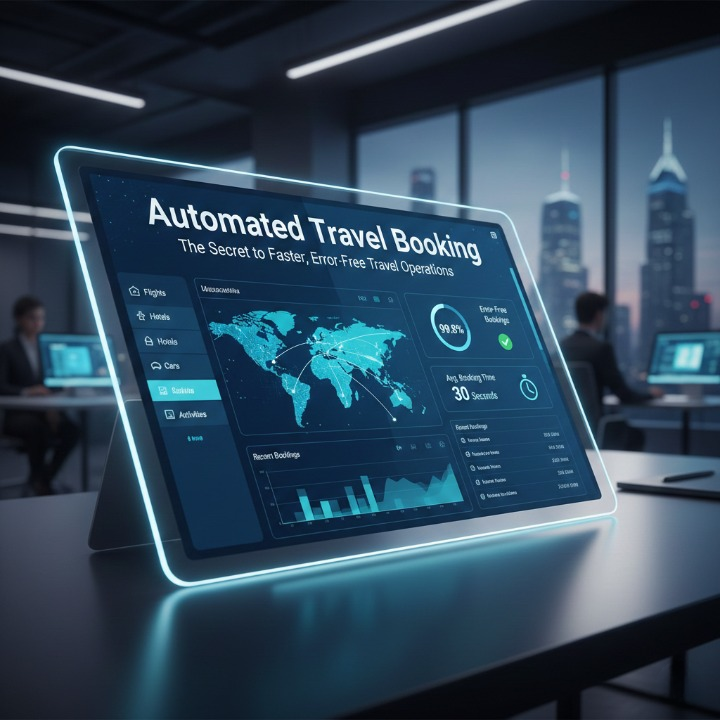
Automated Travel Booking: The Secret to Faster, Error-Free Travel Operations
Automated travel booking is rapidly becoming essential for US travel agencies, tour operators, travel wholesalers, and DMCs to stay competitive in today's fast-paced industry.Manual processes for booking flights, hotels, and experiences often result in inefficiencies, errors, and delays that can compromise client satisfaction and operational productivity.
Automated travel booking and travel booking automation have emerged as essential solutions for travel businesses looking to streamline operations. By leveraging digital booking platforms and travel software automation, companies can reduce manual effort, enhance accuracy, and scale operations more effectively. B2B travel automation tools now provide centralized systems for managing bookings, supplier connections, and itineraries, allowing staff to focus on value-driven tasks rather than repetitive administrative work.
The adoption of automated systems is no longer optional , it is a strategic imperative for US travel agencies and tour operators aiming to stay competitive in an increasingly digital marketplace.
Common Challenges for US Travel Agencies and DMCs
Despite advances in technology, many travel agencies and DMCs still rely on manual processes that introduce inefficiencies and risks. Common pain points include:
- Manual booking inefficiencies: Entering bookings across multiple suppliers manually increases the likelihood of errors and slows down operations.
- Human error in travel bookings: Mistakes in itineraries, dates, or customer details can lead to costly disruptions and customer dissatisfaction.
- Time-consuming itinerary management: Crafting detailed itineraries for individual clients or group tours often requires hours of repetitive work.
- Booking confirmation delays: Reliance on manual confirmations can create lag times, leading to miscommunications and missed opportunities.
- Complex supplier integration: Coordinating rates and availability from multiple hotels, airlines, and ground operators can be overwhelming without an automated system.
- Low productivity in travel operations: Employees spend significant portions of their workday on administrative tasks instead of focusing on client engagement and business growth.
These challenges highlight the need for automated solutions that improve operational efficiency while reducing errors and delays.
The Role of Automation in Boosting Operational Efficiency
Automation addresses many of the operational hurdles faced by US travel businesses. Key benefits include:
- Real-time availability and pricing: Automated systems provide up-to-date inventory from multiple suppliers, ensuring clients receive accurate options.
- Error-free booking processes: By removing manual data entry, travel companies minimize mistakes that could impact customer satisfaction.
- Multi-supplier integration: Seamlessly connecting airlines, hotels, and excursion providers simplifies complex workflows.
- Streamlined travel operations: Automation reduces administrative workload, allowing staff to focus on high-value tasks.
- Faster itinerary creation: Automated platforms generate detailed itineraries quickly, improving response times to client requests.
- Travel management systems: Centralized dashboards provide a holistic view of bookings, client data, and operational performance.
Through these capabilities, travel agencies, tour operators, and DMCs can significantly enhance productivity, reduce operational costs, and improve the overall customer experience.
B2B Travel Software Solutions: Unlocking Productivity
Modern US travel agencies software and tour operator software USA are designed to meet the specific needs of B2B travel companies. These tools provide features such as:
- Travel wholesaler management tools: Centralized platforms help wholesalers manage inventory, pricing, and client relationships efficiently.
- Group tour management platforms: Automation simplifies the creation and management of group itineraries, ensuring accuracy and timely updates.
- DMC technology solutions: Destination management companies can leverage software to coordinate local services, manage supplier communications, and track operational performance.
- SaaS solutions for tour operators: Cloud-based solutions allow travel companies to scale without heavy IT infrastructure investments, offering flexibility and real-time access from anywhere.
By adopting these solutions, US travel businesses can reduce manual workloads, improve response times, and ensure a consistent, high-quality service experience for their clients.
Emerging Trends in US Travel Technology
The travel industry is evolving rapidly, driven by digital transformation and technological advancements. Key trends shaping the future include:
- Travel technology trends USA: Companies are increasingly investing in automation, AI, and cloud solutions to improve operational efficiency.
- Digital transformation in travel: Traditional processes are being replaced by integrated platforms that offer real-time inventory, seamless bookings, and data analytics.
- AI in travel management: Artificial intelligence enables predictive analytics, personalized travel recommendations, and intelligent workflow automation.
- Cloud-based travel solutions: Cloud systems provide scalability, security, and easy access, allowing travel agencies to operate more efficiently.
- Future of tour operator software: Emerging platforms focus on end-to-end automation, from booking to customer communication, enhancing operational agility.
- Smart travel operations: Automation and AI empower staff to focus on strategic decision-making and client engagement rather than routine administrative tasks.
By staying ahead of these trends, US travel companies can future-proof their operations and maintain a competitive edge.
Case in Point: Leveraging Automation for Seamless Bookings
Several travel companies have successfully implemented automation to optimize their operations. For instance, B2B platforms that integrate booking engine APIs enable real-time access to flights, hotels, and excursion inventories, ensuring accuracy and efficiency.
- Automated customer notifications: Customers receive instant updates on bookings, changes, and itinerary details, improving satisfaction and reducing the need for manual follow-ups.
- Data-driven travel solutions: Automated analytics tools provide insights into booking patterns, supplier performance, and client preferences, guiding strategic decisions.
- Cloud software for travel: Centralized, cloud-based systems allow remote teams to collaborate efficiently, manage complex itineraries, and scale operations without additional infrastructure.
These examples demonstrate that adopting travel technology is not just a convenience—it is a strategic approach to enhancing operational efficiency, reducing errors, and providing a superior client experience.
FAQs
What are the key benefits of automated travel booking for US travel agencies?
Automated travel booking reduces manual errors, accelerates itinerary creation, ensures real-time availability, and increases staff productivity, allowing agencies to focus on strategic and client-focused tasks.
How does automation improve travel operations for DMCs?
Automation streamlines supplier integration, simplifies itinerary management, reduces human error, and enables faster booking confirmations, resulting in smoother operations and improved customer satisfaction.
Which B2B travel software solutions are most effective for US tour operators?
Cloud-based tour operator software USA, group tour management platforms, and integrated travel wholesaler tools are highly effective, offering real-time booking, multi-supplier integration, and automated itinerary creation.
How does AI enhance automated travel booking platforms?
AI enables predictive analytics, personalized travel recommendations, intelligent workflow automation, and smart pricing strategies, making bookings more efficient and customer-focused.
What are the future trends in US travel technology?
Future trends include cloud-based solutions, AI-driven personalization, fully integrated digital booking platforms, real-time multi-supplier connections, and smart travel operations that combine automation with data-driven insights.
The Future of Automated Travel Booking in the US Market
As US travel agencies, tour operators, wholesalers, and DMCs navigate an increasingly competitive landscape, automated itinerary management and travel booking automation will play a central role in operational success. Digital tools and travel software automation reduce manual effort, improve accuracy, and enable scalable, agile operations.
The adoption of B2B travel automation and digital booking platforms ensures that companies can meet growing customer expectations, respond swiftly to changes, and maintain high service quality. By embracing automation, US travel businesses can focus on strategic growth, innovative service offerings, and long-term sustainability.
The future of travel booking lies in intelligent, automated systems that transform how travel companies operate, offering a seamless experience for both staff and clients.








0 Comments