
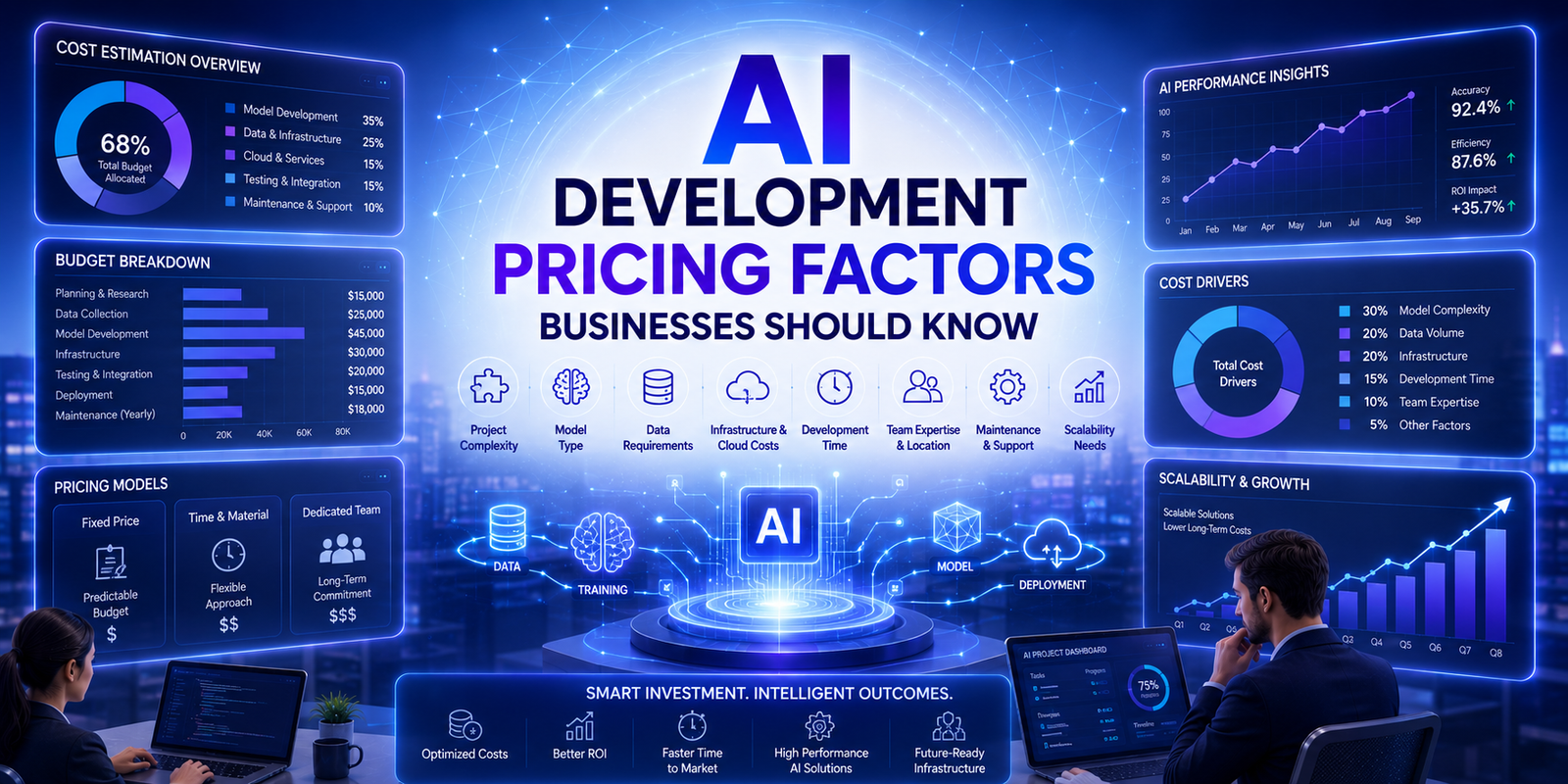
AI Development Pricing Factors Businesses Should Know
AI Development Pricing Factors Businesses Should Know
Most firms today see shifts due to artificial intelligence, especially in how tasks run themselves, interact with users, examine information, or manage daily operations. Yet confusion remains around what it truly costs to create systems driven by AI. Understanding the key AI development pricing factors — which change based on layers like tech setup, company needs, and workflow demands — lets organizations choose wisely when spending on AI tools.
Understanding AI Development Costs
Depending on how complex a project turns out to be, building AI can range widely in price. Different tools and software frameworks add further variation to overall expenses. Data needs often shape both time frames and budget demands behind the scenes. The skill level of those designing and coding the system also influences the total effort required.
When companies consider using Artificial Intelligence development solutions, clarity comes first. Knowing exactly what they aim to achieve makes later steps more predictable. If the target is forecasting trends, handling routine tasks automatically, powering digital assistants, suggesting products, or training models that learn from patterns, each path unfolds differently. Some demand large volumes of clean information; others rely heavily on specialized knowledge.
Though modest AI efforts often demand smaller budgets, large organizational deployments — especially those using complex algorithms, language interpretation tools, or live data tracking — typically drive up costs in notable ways.
AI Development Pricing Factors That Drive Costs
1. Project Complexity
Complexity drives price when it comes to AI models. Not every system demands heavy investment — basic chatbots run cheaper than platforms built for live data flows paired with smart task management. Custom code, links to cloud systems, plus expansive backend setups tend to push expenses higher, especially when companies pursue custom AI development services for high-end development paths.
Development of intricate systems typically takes more time, followed by thorough evaluation plus ongoing refinement.
2. Data Collection and Processing
Most AI tools depend on reliable information to function well. Gathering that data — preparing, sorting, correcting it — takes time and manpower. When inputs are flawed, performance drops while expenses rise during model learning phases.
When firms put resources into AI development solutions, having trustworthy information becomes essential. Often, outside sources supply what internal efforts cannot, increasing total expenses. Some rely on specialized staff to manage raw inputs, further stretching financial demands. Access gaps can slow progress, even when technology is ready. External help sometimes fills holes local teams miss, though costs rise as a result.
3. Development Team Expertise
Because skilled workers bring deep technical understanding, their rates shape overall costs. When you hire dedicated developers with expertise in artificial intelligence, software development, and data analysis, it influences how much companies pay. Teams focused on a single project tend to deliver results more quickly than scattered ones. Long-running initiatives benefit from steady involvement, which reduces delays. Professionals with proven track records command higher fees — experience matters when building complex systems.
Depending on where the team is based, how long the project takes, and what level of technical skill it demands, expenses shift accordingly.
4. Tools and Systems Used
Costs shift noticeably depending on which AI tools, frameworks, or cloud systems are chosen. Picking TensorFlow might lead down one financial path, while going with PyTorch opens another. Each option brings its own demands for computing resources. Services like OpenAI's API introduce usage-based charges that add up quickly. Relying on major providers — say, AWS or Google Cloud — involves ongoing expenses tied to performance needs.
Over time, companies relying on AI development services for large-scale apps may find themselves needing powerful computing systems. These tools — like graphics processors and cloud-based data storage — tend to raise expenses gradually. As demands grow, so does the strain on budgets meant for infrastructure. Cost shifts emerge not all at once, but through the steady accumulation of resource needs.
5. Customization Requirements
Though off-the-shelf AI tools cost less, custom AI development services demand higher investment due to their alignment with unique company objectives. When firms choose bespoke AI solutions, individualized functions often become necessary. Integration into existing operational sequences plays a role in the added complexity. Security upgrades emerge as another contributing factor. Special capabilities tied to particular sectors further shape the design process.
While custom development allows more adaptability over time, it demands increased investment in study, building, and evaluation phases. Though built-to-fit solutions adjust well to future needs, expenses rise due to extended design and validation efforts.
Maintenance and Updates Matter
Staying ahead with artificial intelligence means more than an initial setup. Over time, these systems need regular checkups — watching how they perform, refreshing their data, fixing hiccups, adjusting models. Without steady attention, results drift or decline. Companies tapping into Artificial Intelligence development services must plan for long-term costs — not just launch expenses. Support budgets ensure tools stay sharp, relevant, and reliable. Ignoring upkeep risks inefficiency, errors, and even system failure down the line.
Over time, fresh inputs let artificial intelligence adjust to shifts in user actions, industry patterns, or new data flows. Expenses tied to upkeep often cover server space on remote networks, correcting errors, refreshing decision models, and strengthening digital defenses.
Industry-Specific Pricing Variations
Some fields need distinct approaches to building artificial intelligence. In healthcare, meeting tight regulations plus protecting patient information often shapes how systems are designed. Meanwhile, online retail tends to prioritize tools that suggest products based on user habits. The needs shift depending on what problems each sector faces.
Just like that, financial institutions usually need strong tools to catch fraud along with forecasting models, which pushes up both intricacy and price. A trusted AI development company helps businesses weigh regulatory demands, data protection needs, and growth capacity unique to their field before setting spending plans.
Reducing Expenses in Business AI Projects
Starting with a well-defined plan allows companies to lower spending on AI projects while focusing first on must-have functions. Instead of building from scratch, tapping into existing models helps keep budgets in check. Cloud-hosted platforms offer another way to manage outlays without sacrificing progress. Breaking work into stages supports steady advancement at predictable price points.
Working alongside seasoned developers can steer firms clear of tech issues while cutting down on wasted expenses. To secure lasting results, assessment of growth potential comes before funding decisions — maintenance demands along with projected returns matter just as much.
Conclusion
Starting a project involving artificial intelligence means costs shift based on how intricate the design is, how data gets handled, what kind of systems support it, whether changes are needed later, and ongoing upkeep. When companies consider using such technology through dedicated custom AI development services, thought must go into objectives, available funds, and tech needs prior to moving forward.
Understanding these AI development pricing factors lets firms shape better investments while tapping into AI tools that drive expansion through automated processes and fresh approaches. Yet clarity on costs opens doors to strategic tech adoption without overspending upfront. Smarter choices emerge when financial insights meet practical applications across departments. Growth follows where resources align with intelligent systems. Automation gains traction once price barriers become transparent. Innovation thrives under conditions shaped by informed spending habits rather than guesswork alone.








0 Comments