
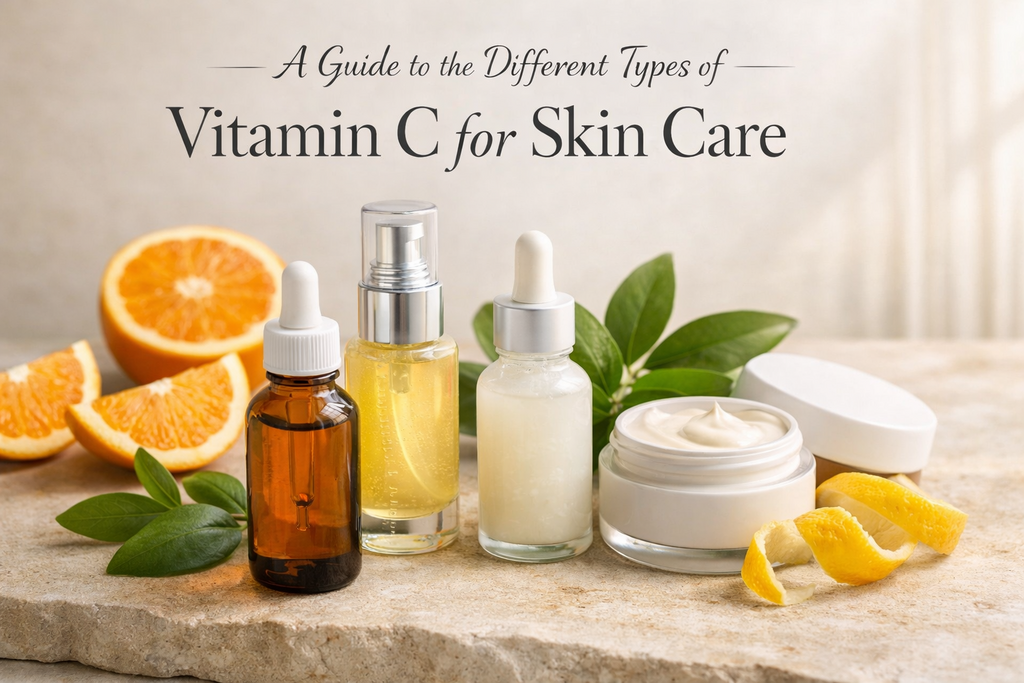
A Guide to the Different Types of Vitamin C for Skin Care
Vitamin C has earned its place as one of the most trusted ingredients in skin care. Known for its brightening, smoothing, and protective benefits, Vitamin C is used in many modern skin care products. However, not all Vitamin C is the same. Different types of Vitamin C for skin care work in different ways, and choosing the right one can make a noticeable difference in results.
This guide explains the most common types of Vitamin C used in skin care, their benefits, and how to select the right option based on your skin type and needs.
Why Vitamin C Is Important for Skin Care
Vitamin C plays a vital role in maintaining healthy looking skin. It acts as a powerful antioxidant that helps protect the skin from environmental damage caused by pollution and daily exposure to sunlight. In skin care, Vitamin C is also valued for supporting collagen production, which helps improve firmness and texture over time.
Benefits of Vitamin C for Skin Care
Using Vitamin C regularly in skin care can help improve uneven skin tone, enhance natural radiance, and support smoother skin. It also helps defend the skin against premature aging by reducing the visible effects of oxidative stress. These benefits make Vitamin C a popular ingredient for people focused on long term skin health.
Understanding the Different Types of Vitamin C for Skin Care
Vitamin C is naturally unstable, which is why skin care formulations use different derivatives to improve effectiveness and shelf life. Each type of Vitamin C for skin care has unique properties, levels of stability, and suitability for different skin types.
Understanding these differences helps you choose a form that works best for your routine.
L Ascorbic Acid as a Vitamin C for Skin Care
L Ascorbic Acid is the purest and most researched form of Vitamin C used in skin care. It is known for delivering fast and visible results when formulated correctly.
This type of Vitamin C works best at higher concentrations and acidic pH levels. It is highly effective for improving brightness, reducing the appearance of fine lines, and supporting collagen production.
Pros and Cons of L Ascorbic Acid in Skin Care
L Ascorbic Acid offers strong results but may cause irritation for sensitive skin. Beginners or those with reactive skin may need to start with lower concentrations or use it less frequently.
Sodium Ascorbyl Phosphate in Skin Care Products
Sodium Ascorbyl Phosphate is a gentler and more stable form of Vitamin C for skin care. It converts to active Vitamin C after application, making it easier for sensitive skin to tolerate.
This form is commonly used in skin care products designed for oily or acne prone skin. It helps improve skin clarity while offering antioxidant protection.
Who Should Use Sodium Ascorbyl Phosphate for Skin Care
This type of Vitamin C is ideal for those new to Vitamin C skin care or those who experience breakouts or irritation from stronger formulas. It provides gradual benefits without overwhelming the skin.
Magnesium Ascorbyl Phosphate for Skin Care
Magnesium Ascorbyl Phosphate is a water soluble Vitamin C derivative known for its hydrating and soothing properties. It supports skin elasticity and helps improve dull or tired looking skin.
This form works well in moisturizers and lotions designed for daily use.
Benefits of Magnesium Ascorbyl Phosphate for Dry Skin Care
Dry skin benefits from this gentle Vitamin C option because it supports moisture retention while helping brighten the complexion. It is less likely to cause dryness or sensitivity.
Check out this article, Vitamin C Serum Before and After.
Ascorbyl Glucoside in Vitamin C Skin Care Products
Ascorbyl Glucoside is a stable form of Vitamin C that slowly releases active Vitamin C into the skin. This slow conversion makes it suitable for consistent daily skin care routines.
It helps improve skin clarity, tone, and overall radiance over time.
Best Skin Types for Ascorbyl Glucoside in Skin Care
Normal and combination skin types often respond well to Ascorbyl Glucoside. It offers noticeable results with minimal irritation and works well in lightweight serums.
Tetrahexyldecyl Ascorbate in Advanced Skin Care
Tetrahexyldecyl Ascorbate is an oil soluble form of Vitamin C that penetrates deeper into the skin. It is highly stable and commonly used in advanced and premium skin care formulations.
This type of Vitamin C is known for its anti aging benefits and ability to support firmer looking skin.
Why Tetrahexyldecyl Ascorbate Is Popular in Skin Care
Because it is gentle and effective, this form is suitable for sensitive and mature skin. It blends well with facial oils and nourishing serums without causing irritation.
How to Choose the Right Type of Vitamin C for Skin Care
Choosing the right Vitamin C for skin care depends on your skin type, concerns, and experience level. Stronger forms like L Ascorbic Acid are better for experienced users, while gentler derivatives suit beginners and sensitive skin.
Vitamin C for Skin Care Based on Skin Type
Oily skin often benefits from lightweight Vitamin C serums with stable derivatives. Dry skin responds well to hydrating forms combined with moisturizing ingredients. Sensitive skin should focus on low irritation options and gradual use.
How to Use Vitamin C in a Daily Skin Care Routine
Vitamin C is typically applied in the morning after cleansing and before moisturizing. Using sunscreen alongside Vitamin C enhances protection against environmental damage. When layering products, apply Vitamin C before heavier creams or oils.
Consistency is more important than concentration. Regular use delivers better long term results.
Common Mistakes When Using Vitamin C for Skin Care
One common mistake is using high concentrations too quickly, which can irritate the skin. Improper storage is another issue, as exposure to light and air can reduce effectiveness. Mixing Vitamin C with incompatible ingredients may also limit results.
Choosing well formulated products and following proper application methods helps avoid these problems.
Conclusion
Vitamin C is a powerful and versatile ingredient, but understanding the different types of Vitamin C for skin care is essential for achieving the best results. From potent L Ascorbic Acid to gentle derivatives like Sodium Ascorbyl Phosphate, each form serves a unique purpose.
By selecting the right type of Vitamin C and using it consistently, you can support brighter, smoother, and healthier looking skin over time.
Frequently Asked Questions About Vitamin C for Skin Care
What is the best type of Vitamin C for skin care?
The best type of Vitamin C for skin care depends on your skin type. L Ascorbic Acid is highly effective for brightening and anti aging, while gentler forms like Sodium Ascorbyl Phosphate and Magnesium Ascorbyl Phosphate work better for sensitive or acne prone skin.
Can sensitive skin use Vitamin C for skin care?
Yes, sensitive skin can use Vitamin C for skin care by choosing milder derivatives. Forms such as Ascorbyl Glucoside and Tetrahexyldecyl Ascorbate are less irritating and suitable for daily use.
How often should Vitamin C be used in a skin care routine?
Vitamin C can be used once daily, usually in the morning. Consistent use provides better results than applying high concentrations occasionally.
Can Vitamin C be used with other skin care ingredients?
Vitamin C works well with sunscreen and hydrating ingredients. It should be used carefully with strong exfoliating acids to avoid irritation, especially for beginners.
How long does it take to see results from Vitamin C skin care products?
Visible improvements such as brighter skin tone and smoother texture usually appear within four to eight weeks of regular use, depending on the formulation and skin type.
Is natural Vitamin C better than synthetic Vitamin C for skin care?
Both natural and synthetic Vitamin C can be effective. The formulation and stability matter more than the source, as properly formulated products deliver the best results.
Why does Vitamin C sometimes tingle on the skin?
A mild tingling sensation can occur, especially with L Ascorbic Acid. This is normal for some users, but strong burning or irritation indicates the product may be too strong.









0 Comments