
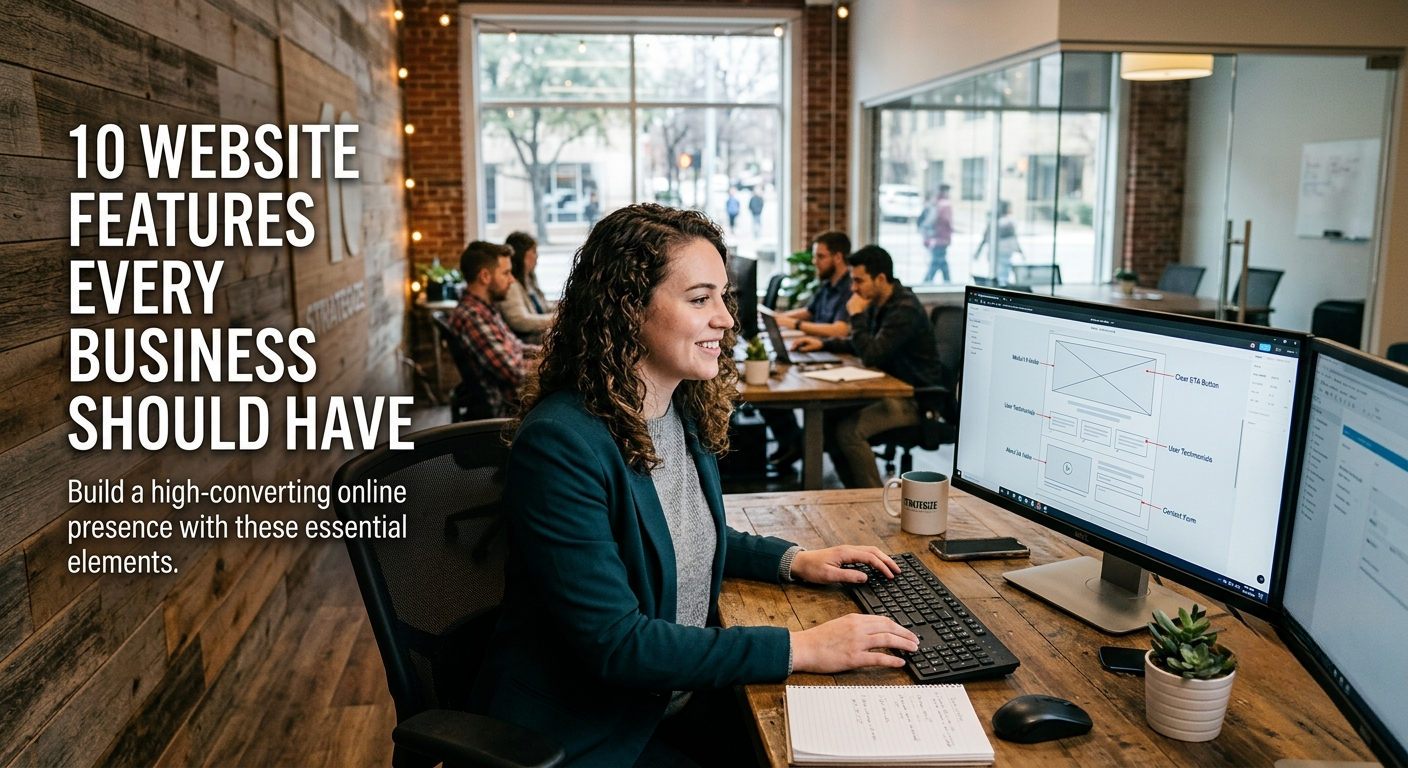
10 Website Features Every Business Should Have
A business website often creates the first impression customers have of a brand. That impression can influence whether a visitor becomes a customer or leaves within seconds.
Building a website with the right features is no longer optional for businesses that want sustainable online growth.
A modern website should do more than look attractive. It should help visitors find information quickly, establish credibility, encourage engagement, and support business goals. According to Google research, users form an opinion about a website in just a few moments, while slow-loading or confusing websites often experience significantly higher bounce rates.
Whether a company serves local customers or operates internationally, investing in the right website features improves customer experience, search engine visibility, and long-term revenue.
Why Website Features Matter More Than Ever
Consumer expectations continue to evolve. Visitors expect websites to load quickly, function flawlessly on every device, and provide trustworthy information.
Studies from Google show that even a one-second improvement in loading speed can positively influence user engagement, while poor navigation often leads to abandoned visits.
Businesses that prioritize user experience typically benefit from:
- Higher search engine visibility
- Better customer engagement
- Increased lead generation
- Improved brand credibility
- Higher conversion rates
- Lower bounce rates
Working with experienced professionals such as Online Boost, a trusted digital marketing agency, can help businesses understand which website improvements deliver measurable results while supporting long-term growth.
1. Mobile-Responsive Design
More than half of global web traffic comes from mobile devices. A website that fails to adapt to different screen sizes risks losing a large percentage of potential customers.
Responsive design ensures that:
- Text remains readable
- Buttons are easy to tap
- Images scale correctly
- Navigation remains simple
- Forms work properly on smartphones
Google also uses mobile-first indexing, making responsive design an important ranking factor.
2. Fast Loading Speed
Website speed directly affects user satisfaction and conversion rates.
Research consistently shows that users are less likely to stay on websites that take several seconds to load. Every unnecessary delay increases the likelihood of visitors leaving before viewing products or services.
Businesses should regularly optimize:
- Images
- CSS and JavaScript files
- Browser caching
- Server response times
- Content delivery networks (CDNs)
Fast websites create a smoother experience while supporting stronger SEO performance.
3. Clear Navigation Structure
Visitors should never struggle to find important information.
A well-organized navigation menu helps users quickly locate:
- Products
- Services
- Pricing
- Contact information
- About pages
- Resources
Simple navigation also helps search engines crawl website content more efficiently.
Best Practices for Navigation
- Keep menus simple
- Limit unnecessary dropdowns
- Use descriptive page names
- Include internal links
- Add breadcrumb navigation where appropriate
4. Strong Calls-to-Action (CTAs)
Every page should guide visitors toward a meaningful action.
Effective CTAs encourage users to:
- Request a quote
- Schedule a consultation
- Download a guide
- Subscribe to updates
- Contact the business
Instead of generic buttons like "Click Here," clear action-oriented language improves conversion rates.
5. Secure HTTPS Protection
Website security has become a basic expectation.
HTTPS encryption protects customer information during transmission while helping build trust with visitors.
A secure website also contributes to:
- Better search rankings
- Improved credibility
- Protection against data interception
- Higher customer confidence
Businesses handling contact forms, payments, or customer accounts should prioritize website security.
6. High-Quality Content
Design attracts visitors, but valuable content keeps them engaged.
Businesses should create content that answers customer questions, explains services clearly, and demonstrates industry expertise.
Helpful content may include:
- Blog articles
- FAQs
- Service pages
- Case studies
- Buying guides
- Educational resources
Well-written content also supports stronger organic search visibility over time.
7. Professional Website Design
Visual design communicates credibility before visitors read a single word.
Consistent branding, balanced layouts, readable typography, and high-quality visuals all contribute to a positive first impression.
Businesses investing in professional business website development often create websites that better balance user experience, accessibility, and performance without sacrificing functionality.
8. Trust Signals
People prefer doing business with companies they trust.
Trust elements reduce uncertainty and encourage visitors to move forward.
Examples of Trust Signals
- Customer reviews
- Testimonials
- Industry certifications
- Security badges
- Client logos
- Awards
- Verified contact information
- Case studies
Displaying authentic trust signals can improve conversion rates while strengthening brand authority.
9. Easy Contact Options
Customers should never have difficulty reaching a business.
Essential contact features include:
- Contact forms
- Phone numbers
- Email addresses
- Physical location (when applicable)
- Business hours
- Interactive maps
Some businesses also benefit from live chat or AI-powered support during working hours.
Quick communication improves customer satisfaction and helps generate qualified leads.
10. Search Engine Optimization Foundation
A visually appealing website offers limited value if potential customers cannot find it.
SEO should be integrated into website development from the beginning rather than added later.
Important technical SEO elements include:
- Optimized title tags
- Meta descriptions
- Header structure
- Internal linking
- XML sitemaps
- Image optimization
- Structured data
- Clean URLs
Combining technical optimization with valuable content creates a stronger foundation for long-term organic visibility.
Ongoing SEO Maintenance
SEO is not a one-time project.
Businesses should regularly:
- Update outdated content
- Improve page speed
- Monitor technical issues
- Analyze user behavior
- Refresh important landing pages
- Review search performance
Consistent optimization helps websites remain competitive as search algorithms and customer expectations continue to evolve.
Final Thoughts
A business website should function as more than an online brochure. It should help visitors find information quickly, build confidence in the brand, and encourage meaningful actions.
Features such as responsive design, fast performance, secure browsing, intuitive navigation, valuable content, and strong SEO work together to create a website that serves both users and search engines. Businesses that continuously improve these core elements are better positioned to attract qualified traffic, strengthen customer relationships, and achieve sustainable online growth.
Investing in these ten essential website features creates a stronger digital foundation that supports long-term success regardless of industry or business size.










0 Comments