
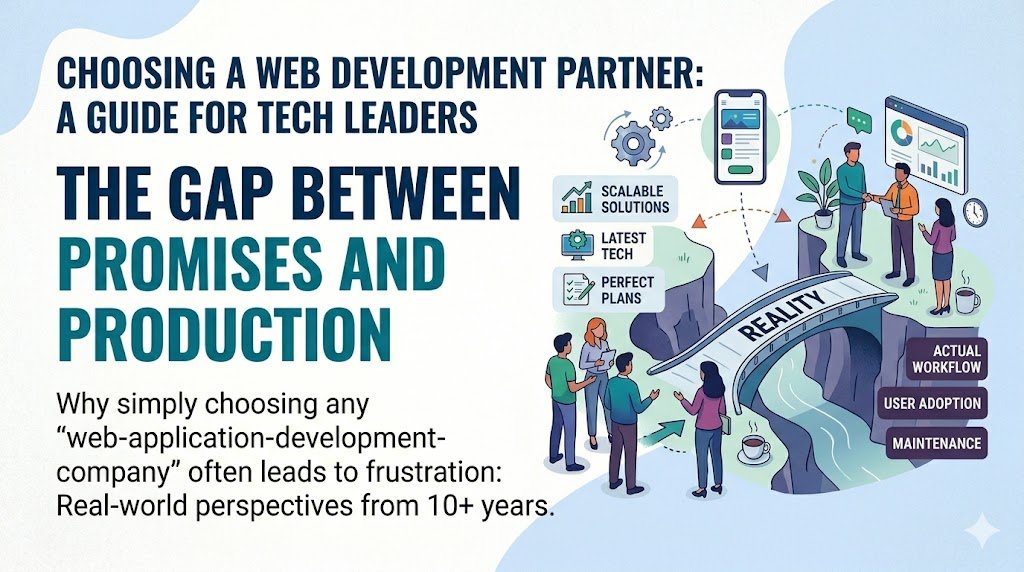
Web Application Development Company: What Actually Matters When You’re Building Something Real
It’s easy to get confused at the start
If you’ve been looking for a web-application-development-company, you’ve probably already noticed something… every website says almost the same thing. Same promises, same words, same we build scalable solutions.
After a point, it honestly becomes hard to trust any of it.
I’ve spent more than 10 years around tech teams, sometimes writing for them, sometimes sitting in meetings where products are being planned and one thing I’ve seen again and again is this: what looks good on a website is very different from how things actually work during a project.
And that gap? That’s where most problems start.
Not every “web app” is actually useful
Let me tell you something I saw a few years back.
A small service company wanted a custom web application to manage their daily operations. They hired a development team, explained their requirements, and within a few months, the product was ready.
On paper, everything was there. Login system, dashboard, reports… all the usual features.
But within weeks, their team stopped using it.
Not because it was broken but because it didn’t fit how they actually worked.
Their staff found it slow on mobile. Some steps felt unnecessary. A few things that mattered in real life weren’t even included because no one asked the right questions at the beginning.
They didn’t need more features.They needed a better understanding.
That experience stuck with me because I’ve seen similar situations more times than I can count.
A good development company doesn’t just build they think
This is where a lot of people get it wrong.
They assume a development company’s job is to take requirements and deliver exactly that.
But the better teams don’t work like that.
They pause. They ask questions. Sometimes they even disagree.
Not in a negative way but in a let’s think this through.
Because honestly, many times what a client asks for is based on assumptions. And if no one questions those assumptions, the final product ends up being… okay, but not really useful.
A reliable web application development company will try to understand what’s happening behind the request. What’s slow right now? What’s frustrating your team? Where are people wasting time?
That’s where real solutions come from.
Simplicity is underrated (and often ignored)
I’ve seen projects where developers used too many tools, too many layers, too many advanced setups just because they could.
At the beginning, it looks impressive.
But after a few months, even small updates become difficult. Fixing one issue affects something else. Timelines stretch. Costs increase.
I remember reviewing one dashboard project where even a simple change required touching three different parts of the system. It wasn’t broken but it was exhausting to maintain.
Later, another team simplified the whole structure. Fewer dependencies, cleaner flow, easier updates.
And suddenly everything felt lighter.
That’s something experience teaches you, simple doesn’t mean basic. It means sustainable.
Cost conversations are always tricky
Let’s be real, budget is always part of the decision.
And I’ve seen this play out in very predictable ways.
Someone chooses a cheaper web application development company thinking they’re saving money. The project starts well, but slowly issues begin to show. Performance problems, bugs, delays… nothing dramatic at first, but enough to slow everything down.
Then comes the second phase fixing things.
And sometimes, that turns into rebuilding.
I’m not saying expensive is always better. That’s not true either.
But the real question should be: will this hold up after six months? After a year? When will more users start using it?
Because that’s where the real cost shows up.
The process is never as clean as it looks
If you’ve seen development timelines online, they look very neat. Step 1, Step 2, Step 3… everything perfectly planned.
In reality, it’s a bit messy.
Ideas change midway. Features get adjusted. Something that looked good initially doesn’t work in actual use.
And that’s completely normal.
Good teams expect this. They don’t treat the plan as something fixed, they treat it as something that evolves.
They test early. They release small parts. They listen to feedback.
It’s less about following a perfect plan… and more about staying flexible without losing direction.
Small mistakes that create big problems later
Over time, I’ve noticed a few patterns.
One common mistake is trying to build everything at once. It feels productive in the beginning, but it usually slows things down and creates unnecessary complexity.
Another one is ignoring real users. Decisions get made in meetings, but no one checks how actual users interact with the product.
And then there’s the “we’ll fix it later” mindset, especially around performance or mobile experience. That “later” often becomes difficult and expensive.
None of these are huge mistakes individually but together, they can quietly affect the whole project.
Choosing the right company is more about people than technology
This might sound simple, but it’s true.
Technology matters, of course. But communication matters more.
When you talk to a development team, notice how they respond.
Do they try to understand your business?
Do they explain things clearly without overcomplicating?
Do they point out possible issues before you even ask?
Or do they just agree with everything?
Because in my experience, the teams that challenge you (in a good way) are usually the ones who care about getting it right.
Conclusion
A web application isn’t just a piece of software.
It becomes part of your daily operations. Your team depends on it. Your customers interact with it.
If it works well, you don’t think about it much, it just makes things easier.
If it doesn’t… it becomes a constant source of frustration.
And most of the time, that difference comes down to one thing:
Did the web application development company truly understand the real problem before they started building?
If they did, you’re in good hands.
If they didn’t, no amount of features will fix that later.


0 Comments