
The Science Behind Vertical Roof Style Barns and Superior Water Runoff
Rain may seem harmless, but over time, uncontrolled water can quietly destroy even the strongest structures. From small leaks and rust spots to weakened foundations and interior damage, water is one of the biggest long-term threats to barns and agricultural buildings. That is why roof design is not just about appearance. It is about engineering, physics, and smart material choices.
Vertical roof style barns have become increasingly popular because they handle water differently and more effectively than many traditional roof styles. Their design is not accidental. Every slope, seam, and panel orientation is engineered to guide water away from the structure as fast and safely as possible. Let's get ready to take a closer look at how vertical roof barns are engineered, how they move water so efficiently, and what makes them one of the most reliable roofing systems available.
What Is a Vertical Roof Style?
A vertical roof is a roof where the metal panels or seams run from the peak (ridge) straight down to the eaves without interruption. Unlike horizontal or staggered panel layouts, this vertical orientation creates a continuous path for water to travel downward, making it easy for rainwater to escape the roof surface quickly. This design is especially common on barns, agricultural buildings, and metal structures where efficiency and long-term durability are priorities.
How Vertical Roofs Differ from Other Roof Types
Traditional roof types like gable, gambrel, or flat roofs all handle water differently. For example, a flat roof has very little slope and requires more complex drainage systems to remove water, increasing the risk of water pooling and leaks. In contrast, pitched roofs with steeper angles let gravity do the work, helping water flow rapidly off the surface.
Research shows that pitched roofs reduce water retention compared to flat surfaces, which tend to accumulate runoff and drain slowly, increasing runoff volume and drainage challenges. Vertical roof barn designs optimize this gravity-driven flow by minimizing interruptions to the panel path, thereby improving overall drainage performance.
Key Structural Components:
Vertical roofs are not just about panel direction. They include key elements such as:
- Vertical metal panels or standing seam systems that span from peak to eave.
- Raised seams that interlock to seal against water under load.
- Ridge caps and edge trim are designed to direct water off the roof and into gutters efficiently.
These components work together so water can't easily penetrate joints or flange points, and instead is moved quickly away from critical structural areas.
The Physics of Water Movement on Vertical Roofs
1. Gravity, Slope, and Runoff Speed
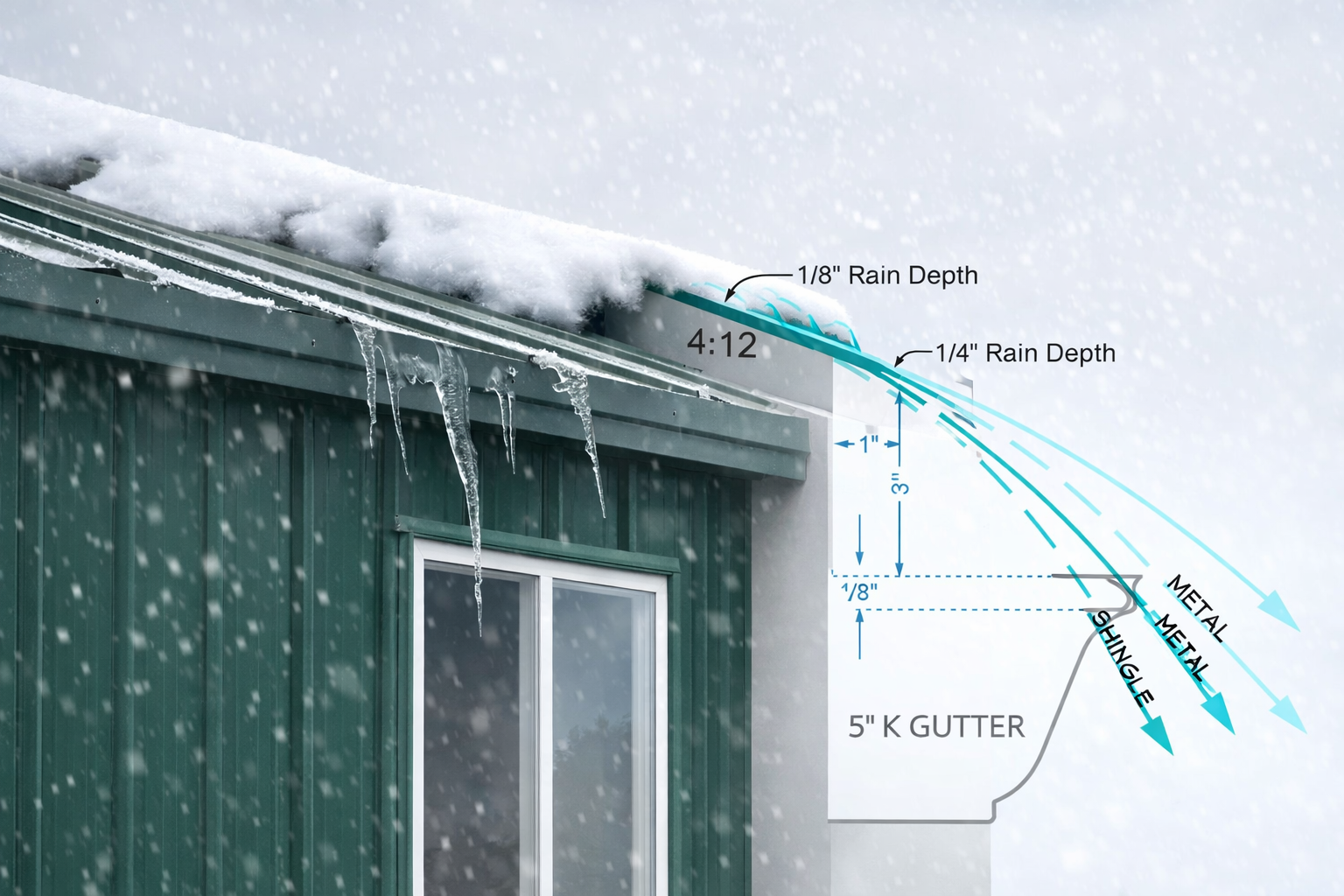
Gravity is the simplest and most powerful force acting on rainwater. When a roof has a significant slope, water travels downward faster and with less resistance. This reduces the time water spends on the roof surface, minimizing the chance for infiltration or ponding.
Steeper roof angles also mean faster runoff velocity. This not only clears the surface quickly but also helps gutters and downspouts manage flow more effectively.
2. Smooth Metal Surfaces vs Rough Surfaces
Metal panels are smoother than asphalt shingles or tile surfaces, which helps water flow more freely. Smooth surfaces reduce friction, allowing rainfall to cascade down rather than cling to texture or irregularities. Faster runoff means less time for water to infiltrate imperfections or seep through weak points.
3. But Why Vertical Seams Matter?
Vertical seams reinforce this flow. Raised seams act as continuous, interlocking barriers that channel water down the slope without interruption. This reduces opportunities for water to redirect sideways or slow down, preventing moisture from lingering near fasteners or joints. These raised seam profiles are often 1 inch or more in height, which enhances resistance against heavy rainfall and reduces potential seepage.
4. How Roof Pitch Influences Runoff Efficiency:
Most steel roof systems, including standing seam, require some minimum slope to drain well. While some installations can work with shallow pitches, a steeper roof generally performs better for runoff. Industry standards suggest minimum slopes to ensure effective water shedding, for example, a slope of around 3:12 is commonly recommended so water doesn't pool and increases drainage efficiency.
Materials Science & Structural Engineering Behind Vertical Roof Performance
1. Why Metal Is Ideal for Vertical Roof Systems
Metal roofing is often chosen for vertical barns because metal is non-porous, resilient, and can be coated for weather protection. Unlike porous roofing materials like shingles, metal doesn't absorb moisture and sheds rain quickly. Steel and aluminum panels reflect much of the energy from water and weather, helping them remain durable for decades.
2. Standing Seam vs Exposed Fastener Systems
Vertical roofs are typically installed with standing seam metal roof systems. These have panels joined with raised seams that lock together tightly. This design hides fasteners and creates a barrier that resists water infiltration better than systems where screws are exposed.
Standing seams also accommodate expansion and contraction due to temperature changes without compromising the seal. In contrast, roofs with exposed fasteners can have more points where water might penetrate over time, especially under heavy rainfall or freeze-thaw cycles.
3. Load Distribution & Structural Framing
A vertical roof system isn't just aesthetic, it's structural. The slope and panel orientation help distribute loads, including water and snow, more evenly. Support trusses and purlins work with the roof panels to safely transfer forces down into the walls and foundations.
4. Snow, Ice, and Thermal Behavior
In cold regions, snow and ice can accumulate on roofs. Vertical designs help snow slide off naturally, reducing the load the structure must bear. Fast runoff also reduces the risk of ice dam formation, which can occur when snow melts and refreezes at roof edges, trapping water. Efficient drainage reduces ice buildup and prolongs roof life.
Drainage Engineering, Snow Management & Long-Term Durability
1. Controlled Water Collection & Gutter Design
Even with superior runoff, vertical roofs should be paired with decent drainage systems like gutters and downspouts. Engineers use runoff coefficients to determine how much water a roof surface will channel and size drainage systems accordingly. Properly placed gutters capture the quick flow of water from a vertical roof and guide it safely away from foundations and erosion-prone areas.
2. Downspout Routing & Ground Protection
Since vertical roof sheds water quickly, downspouts must direct high volumes of runoff away from building bases. Techniques like splash blocks, swales, or even landscaping can prevent erosion and manage stormwater safely.
3. Snow Load Design & Safety Considerations
In regions with significant snowfall, roof pitch is also chosen with snow shedding in mind. While steep roofs encourage sliding, controlled snow guards can balance shedding with safety, preventing sudden, large sheets of snow from falling directly onto people or walkways below.
4. How Vertical Roofs Reduce Maintenance Over Time:
Because water drains quickly and debris slides off more readily, vertical roofs accumulate less organic matter, standing water, or debris that traps moisture. This reduces maintenance needs and limits potential corrosion or degradation over time.
Environmental Benefits, Real-World Performance & Best Practices
1. Improved Rainwater Harvesting Potential
Vertical roofs improve water runoff quality and collection efficiency, making rainwater harvesting more effective. By reducing the time water spends on the surface, there is less opportunity for contamination and cleaner collection for reuse. This design is beneficial for barns that collect rainwater for irrigation or livestock use.
2. Impact on Storm water Management
In broader hydrological terms, sloped roofs accelerate runoff, reducing areas of standing water that can contribute to urban flooding and erosion. Studies show that pitched and sloped roofs drain much more rapidly than flat roofs, which tend to retain water longer and increase runoff burden on drainage systems.
3. Typical Lifespan & Performance Expectations
Metal vertical roofs are known for long service lives, often 40-60 years or more when installed correctly and maintained lightly. Their resistance to corrosion, seamless design, and rapid water drainage contribute to this longevity.
Design Best Practices for Maximum Runoff Performance
Recommended Pitch Ranges
Choosing an appropriate slope (often greater than the minimum 3:12) improves drainage efficiency and reduces risks of pooling.
Panel Profiles
Selecting the right standing seam profile with higher seams enhances water resistance, especially in areas prone to heavy rain.
Flashing & Underlayment
Proper flashing at ridges and valleys ensures water doesn't penetrate weak points.
Climate-Based Adjustments
Designs should reflect local weather patterns, steeper in snowy climates, moderate slopes in rain-heavy but mild regions.
Limitations & Trade-Offs
While vertical roofs offer superior runoff, they may be more costly to install up front. The precision installation demanded by standing seam systems may require experienced contractors and can affect budgets. However, long-term performance and reduced maintenance often justify the investment.
The Bottom Line
Vertical roof style barns are more than an architectural choice, they are engineered systems designed to harness basic physics and material science to manage water responsibly and effectively. Their slope, smooth metal surfaces, raised seams, and proper drainage systems channel water quickly and protect the structure from damage. These roofs improve longevity, support rainwater harvesting, reduce maintenance needs, and contribute to better storm water management overall.
Choosing the right design and understanding how water interacts with roof geometry ensures your barn remains protected for decades to come.


0 Comments