
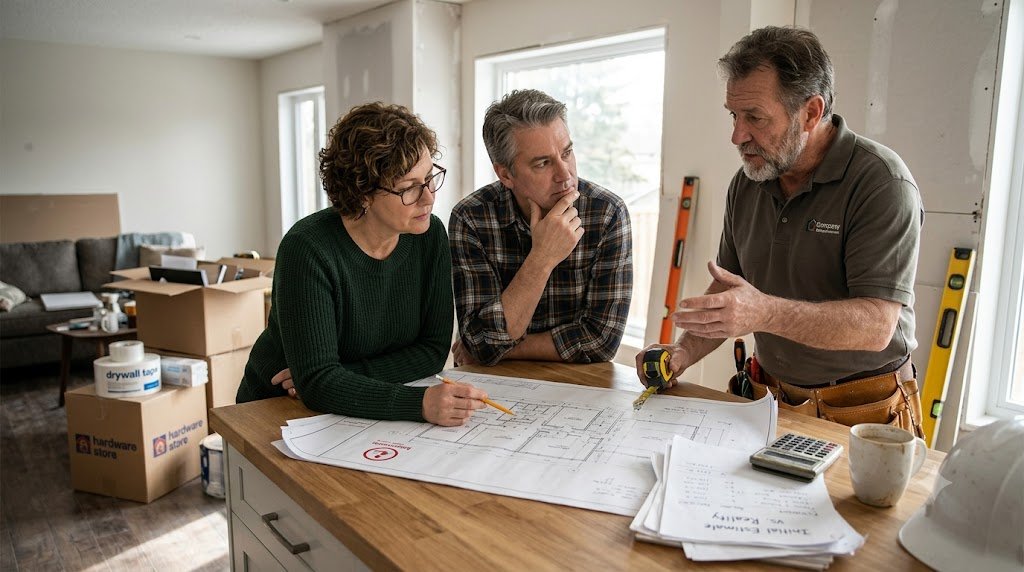
Residential Estimating Myths That Continue to Mislead Property Owners
Building a new home, adding an extension, or renovating an existing property starts with one important step: understanding the cost. This is where residential estimating comes into the picture. A residential estimate helps property owners understand the expected cost of labor, materials, equipment, and other project-related expenses before construction begins.
Even though estimating plays a major role in construction planning, many property owners still have the wrong idea about how it works. These misunderstandings often lead to poor decisions, budget problems, project delays, and disputes with contractors.
Many of these myths have existed for years. Some come from outdated construction practices, while others come from information shared by people who have little knowledge of the estimating process.
This article explores common residential estimating myths that continue to mislead property owners and explains the facts behind them.
Why Residential Estimating Matters
Before discussing the myths, it is important to understand the purpose of residential estimating.
A residential estimate is not just a random number attached to a construction project. It is a detailed calculation based on drawings, specifications, material quantities, labor requirements, local market conditions, and project scope.
Accurate estimates help property owners:
- Plan their budgets
- Compare contractor bids
- Reduce unexpected expenses
- Make informed construction decisions
- Understand where project funds are allocated
Without proper estimating, property owners often enter projects with unrealistic expectations.
Myth #1: An Estimate Is Just an Educated Guess
This is one of the most common misconceptions in residential construction.
Many property owners believe estimates are rough predictions with little factual support. In reality, a residential estimate is built using measurable data.
Estimators review project drawings, calculate material quantities, analyze labor requirements, and study local pricing conditions. Every major construction component is evaluated before costs are calculated.
A well-prepared estimate relies on numbers, measurements, and project details rather than assumptions.
The more complete the project information is, the more accurate the estimate becomes.
Myth #2: All Contractors Should Produce the Same Price
Property owners are often surprised when they receive several bids with large price differences.
Many assume all contractors should arrive at nearly identical figures if they are looking at the same plans.
Construction pricing does not work that way.
Different contractors may have:
- Different labor rates
- Different supplier relationships
- Different equipment costs
- Different overhead expenses
- Different project schedules
Some contractors also include items that others leave out.
This explains why prices can vary even when contractors review the same drawings.
A lower bid does not always mean lower construction costs in the long run. Missing items can later appear as change orders or additional charges.
Myth #3: Residential Estimates Never Change
Many property owners expect an estimate to remain fixed from the beginning of a project until completion.
Construction costs are influenced by many changing factors.
Material prices can increase. Labor rates can change. Design revisions can affect quantities. Site conditions may reveal unexpected challenges.
According to construction industry reports, material prices have experienced significant fluctuations during recent years due to supply chain disruptions, transportation costs, and market demand.
Because construction conditions change, estimates may also require updates throughout the project lifecycle.
An estimate reflects the information available at a specific point in time.
Myth #4: Online Cost Calculators Are Enough
The internet offers many construction cost calculators.
While these tools can provide rough budgeting figures, they are not designed to replace detailed residential estimates.
Most online calculators rely on average costs. They often fail to account for:
- Local labor rates
- Site conditions
- Material selections
- Design complexity
- Permit requirements
- Project-specific challenges
A custom home in one neighborhood can have a completely different cost structure than a similar-sized home in another area.
Online calculators can provide a starting point, but they should never be treated as a final project budget.
Myth #5: Bigger Homes Always Cost More Per Square Foot
Many property owners believe larger homes always have higher costs per square foot.
The reality is more complicated.
Some construction costs remain relatively fixed regardless of house size.
For example:
- Bathrooms
- Kitchens
- Utility systems
- Permits
- Site preparation
A larger home may spread some of these expenses across more square footage.
As a result, the cost per square foot may sometimes decrease even though the total project cost increases.
This is one reason why square-foot pricing alone rarely tells the full story.
Myth #6: Estimates Only Matter Before Construction Starts
Many people think estimating is only useful during the planning stage.
Estimating remains valuable throughout the entire project.
Updated estimates help property owners:
- Monitor budget performance
- Evaluate design changes
- Review material substitutions
- Track cost impacts
- Make financial decisions
Construction projects rarely remain identical from start to finish.
Regular cost reviews help keep expectations aligned with project realities.
Myth #7: Detailed Plans Automatically Guarantee Accurate Costs
Detailed plans are important, but they do not guarantee perfect estimates.
Even the most complete drawings cannot predict every construction condition.
Hidden site issues, weather conditions, permit requirements, and market fluctuations can still affect project costs.
Accurate estimating depends on both detailed plans and careful cost analysis.
The strongest estimates combine technical drawings with current market information.
Myth #8: The Lowest Estimate Is Always the Smart Choice
Many property owners focus entirely on finding the lowest price.
This approach can create problems later.
A very low estimate may result from:
- Missing scope items
- Underestimated labor hours
- Incorrect material quantities
- Pricing errors
When important costs are overlooked, project budgets often increase during construction.
Comparing estimates line by line provides a clearer picture than simply comparing total prices.
Understanding what is included is just as important as understanding the final number.
Myth #9: Material Costs Are the Biggest Part of Every Estimate
Materials are important, but they are only one portion of construction costs.
Residential estimates often include:
- Labor
- Equipment
- Permits
- Insurance
- Site preparation
- Waste removal
- Subcontractor costs
In many residential projects, labor can represent a significant share of the total budget.
Property owners who focus only on material prices often overlook other major cost drivers.
Myth #10: Estimating Is Only Important for Large Residential Projects
Some homeowners believe estimating is only necessary for custom homes or major developments.
Even smaller projects can experience budget issues without proper cost planning.
A bathroom renovation, room addition, garage conversion, or kitchen remodel involves dozens of cost components.
Small estimating errors can still create significant financial challenges.
Every residential project benefits from clear cost visibility.
How Property Owners Can Make Better Estimating Decisions
Understanding the facts behind these myths helps property owners approach construction projects with realistic expectations. Working with a construction estimating service can also provide a more detailed understanding of project costs and help identify expenses that may otherwise be overlooked.
A few practical steps include:
- Reviewing detailed estimates carefully
- Comparing project scope instead of only total price
- Asking questions about included and excluded items
- Consulting a construction estimating service when evaluating complex projects
- Updating estimates when project changes occur
- Avoiding reliance on rough online calculators alone
These steps create a stronger foundation for construction planning and help property owners make informed decisions throughout the project.
The Role of Residential Estimating Services in Modern Construction
As residential projects become more detailed, many property owners seek independent cost analysis before making major financial commitments.
Companies such as PROESTIMATRIX provide residential estimating services that help property owners understand material quantities, labor requirements, and projected construction costs before work begins. This additional level of cost evaluation can help identify budget concerns early in the planning process and create a clearer understanding of where project funds may be allocated.
Final Thoughts
Residential estimating remains one of the most misunderstood parts of construction planning. Many property owners enter projects believing estimates are guesses, that all contractor prices should match, or that online calculators can accurately predict total construction costs.
The reality is very different.
Residential estimates are built from project data, measurements, labor requirements, and market conditions. They help property owners understand financial expectations before construction begins and provide guidance as projects move forward.
When myths replace facts, budgets often suffer. When property owners understand how estimating actually works, they are better prepared to make informed decisions, evaluate contractor proposals, and plan construction projects with greater confidence.


0 Comments