
Landing Page vs Sales Page: What’s the Difference and Which One Should You Use?
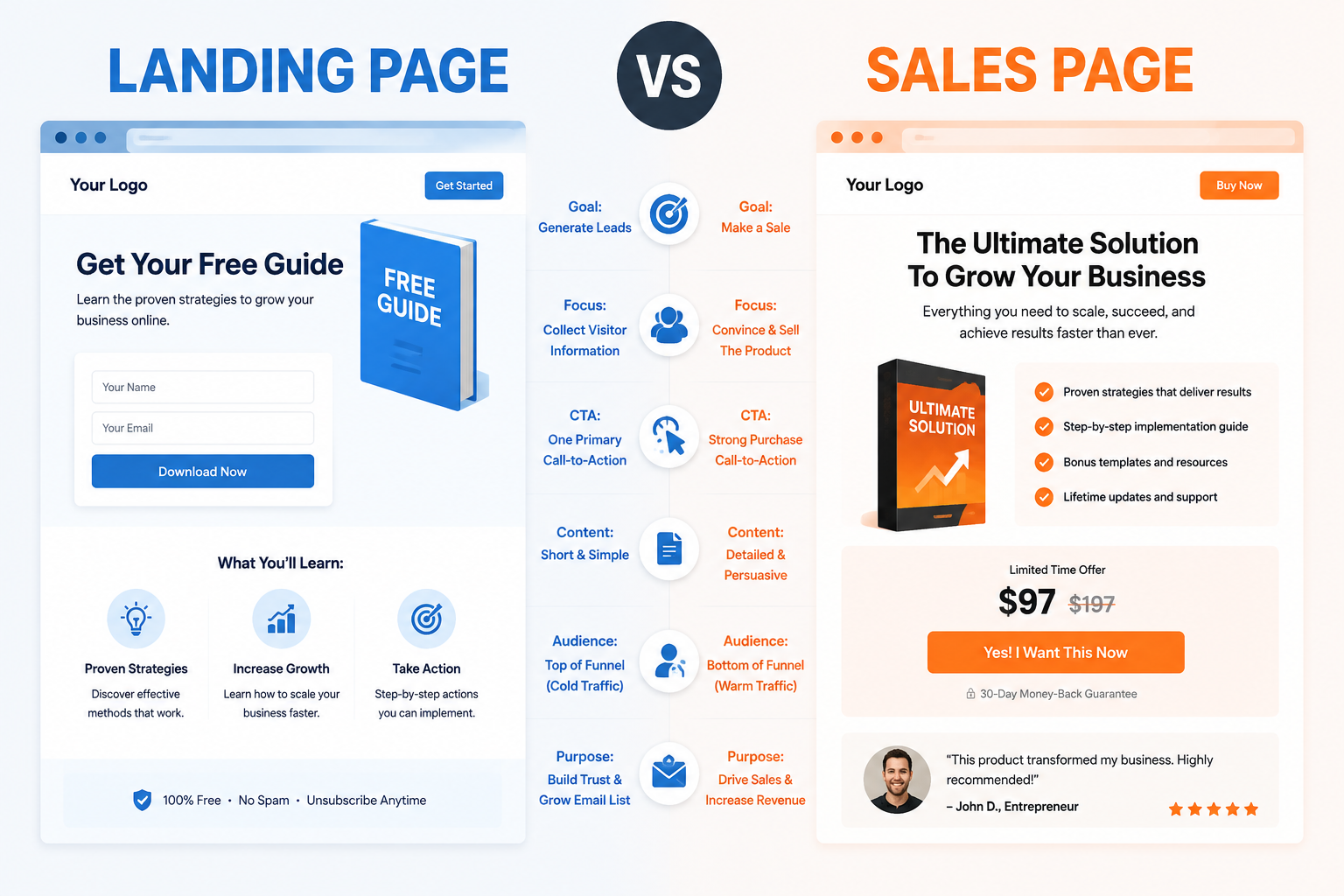
Understanding the difference between a landing page vs sales page is important for businesses that want to improve their digital marketing strategy, generate more leads, and increase conversions. Although both types of pages are designed to encourage visitors to take action, they are created for different purposes and often target different stages of the customer journey.
A landing page is usually built around a specific marketing campaign, advertisement, offer, or conversion goal. It may encourage visitors to submit a form, download a resource, book a consultation, request a quote, register for an event, or sign up for a service. Because the goal is highly focused, landing pages generally avoid unnecessary distractions and guide visitors toward one primary action.
A sales page, on the other hand, is primarily designed to persuade visitors to purchase a product or service. It often contains more detailed information, including product or service benefits, features, pricing, testimonials, case studies, frequently asked questions, guarantees, and answers to common objections. The purpose is to provide enough information and build enough trust to help a potential customer make a buying decision.
In this article, we take an in-depth look at the landing page vs sales page difference and explain how each type of page works. You will learn about their main objectives, content structure, audience intent, calls to action, pricing information, and ideal use cases.
The article also explains how landing pages can support lead-generation campaigns and paid advertising, while sales pages can be useful for products, online courses, software, coaching programs, professional services, and other offers that require more explanation before purchase.
Choosing between a landing page and a sales page should depend on your marketing objective. If your primary goal is to collect leads or encourage a specific action, a focused landing page may be the better option. If your goal is to convince a visitor to make a purchase, a detailed sales page may be more suitable.
Whether you are running Google Ads, Meta Ads, email campaigns, content marketing, or other digital marketing activities, selecting the right page can create a more effective customer journey. A well-designed page should match the visitor's intent, communicate the value of the offer clearly, build trust, and make the next step easy.
By understanding the landing page vs sales page distinction, businesses can make better decisions about website design, campaign strategy, conversion optimization, and lead generation. The right page is not necessarily the one with the most content or the most attractive design—it is the one that clearly supports the specific action you want your audience to take.
Another important factor to consider when comparing a landing page vs sales page is the visitor’s position in the buying journey. Someone who has just discovered your brand may need a simple landing page that provides a clear offer and encourages them to take the next step. A visitor who already understands the product but needs more information may respond better to a detailed sales page. Understanding your audience, campaign objective, and level of purchase intent can help you choose the right page structure. Ultimately, the best page is one that removes distractions, builds confidence, and makes conversion easier.










0 Comments