
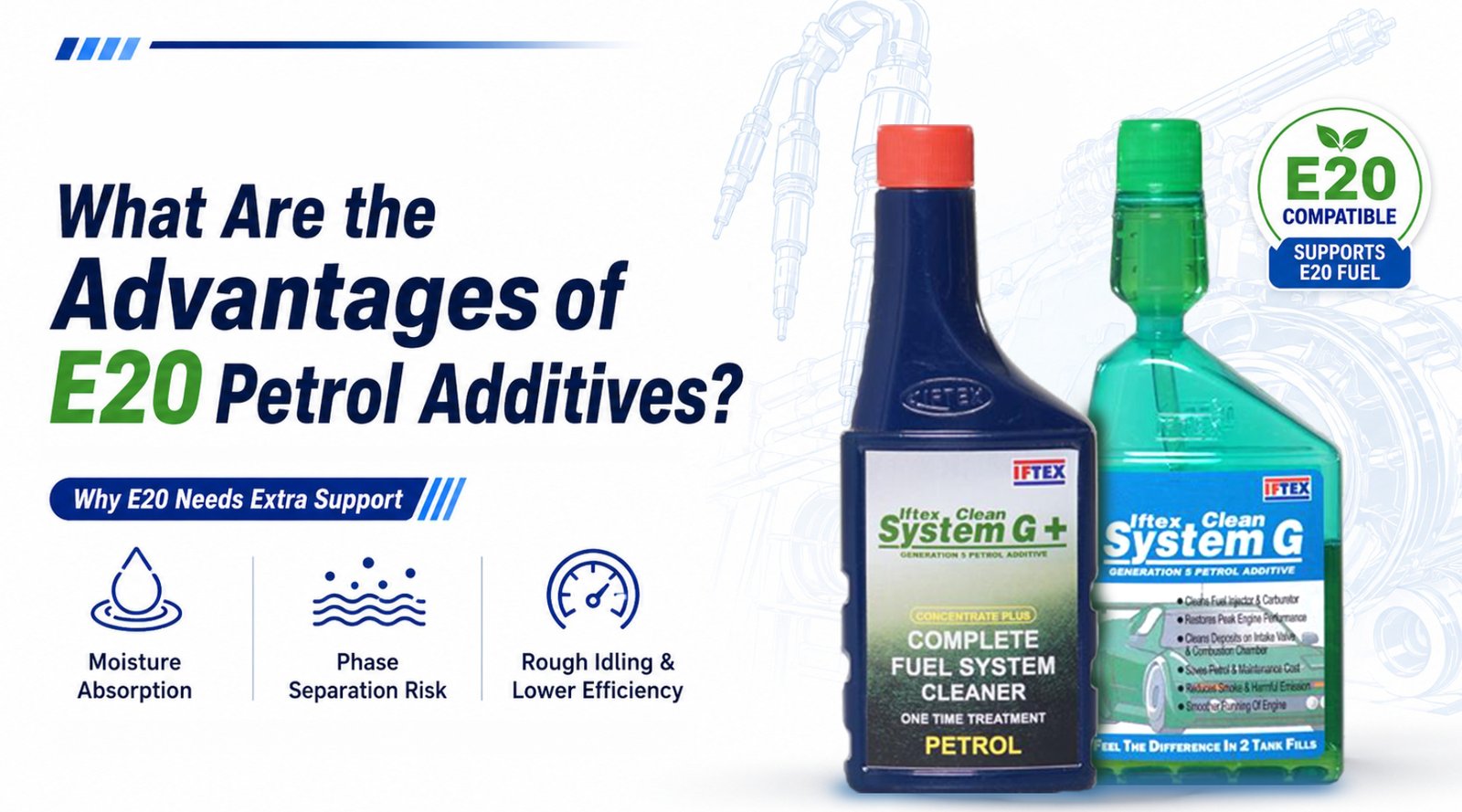
What Are the Advantages of E20 Petrol Additives?
Since the introduction of a 20% ethanol blend in India, many drivers are concerned about whether this will have a long-term impact on their engine or cause premature wear on older, non-E20-compliant components. Introduced to curb crude oil imports and reduce carbon emissions, the policy marks a major shift in the nation's energy roadmap. But this decision has not been without widespread public controversy.
The main concern is that ethanol is hygroscopic, meaning it actively pulls moisture from the atmosphere. This can potentially lead to phase separation, which means the fuel breaks into two layers in the tank, causing hard starts, misfires, and serious long-term damage.
While the government maintains that E20 is safe for existing vehicles, the real-world impact will only become clear with time. In the meantime, using E20 fuel additives is a simple way to protect your engine. Understanding why additives matter, and what they actually do, can save you a fair bit of trouble (and money) down the road.
Why E20 Fuel Needs a Little Extra Help
As previously mentioned, Ethanol behaves differently to pure petrol in a few important ways. It's hygroscopic, meaning it attracts moisture, and it burns slightly differently too. Over time, this can lead to a handful of issues:
- Corrosion in fuel lines, tanks, and injectors, particularly in vehicles not built with ethanol-resistant components
- Reduced fuel efficiency as deposits build up in the combustion chamber
- Rougher idling and hesitant throttle response
None of this means E20 is a bad fuel. It simply means your engine benefits from a bit of chemical support to handle it properly, which is where additives step in.
The Real Advantages of Using an Additive
A quality additive relies on real results, not just promotional claims. Users often notice better performance almost right away.
- Better fuel economy. One of the most immediate advantages is improved mileage. When deposits are cleaned from injectors and intake valves, fuel atomises more evenly, and combustion becomes more efficient. Drivers often report a noticeableimprovement in mileage within a few days.
- Smoother engine performance. A clean fuel system means a smoother idle, quicker throttle response, and less hesitation when accelerating. This is particularly reassuring for drivers with vehicles that have started feeling sluggish since the ethanol blend increased.
- Protection against corrosion. Ethanol's tendency to draw in moisture can quietly corrode metal components over months and years. A well-formulated fuel additive petrol blend includes corrosion inhibitors that coat internal surfaces, reducing the risk of rust forming inside the fuel system where you can't see it happening.
- Reduced carbon build-up. Every time petrol combusts, it leaves behind tiny deposits. Over thousands of kilometres, these accumulate on valves and injectors. Additives help dissolve and prevent this build-up, keeping the combustion chamber closer to factory condition for longer.
- Lower emissions. Cleaner combustion doesn't just help your engine, it helps the air too. More complete fuel burn means fewer unburnt hydrocarbons escaping through the exhaust, which is a small but meaningful contribution given how many vehicles are on Indian roads today.
- Extended engine life. Put simply, an engine that isn't fighting corrosion, gunk, and uneven combustion tends to last longer. Regular use of an additive is a low-effort way to protect an investment that, for most people, is one of the more expensive things they own.
A Few Practical Considerations
It's worth remembering that not all additives are created equal, and results depend on a few factors, such as the condition of your engine before you start using one, as well as how consistently you use it. Older vehicles, in particular, tend to show the most noticeable improvement, simply because they have more accumulated deposits to clean out. Newer cars can also benefit by taking preventative measures.
Bringing It All Together
Adjusting to E20 fuel shouldn’t come with headaches. With a bit of awareness and the right additive used consistently, most of the concerns around ethanol blending become far less significant. If your car has felt slightly less responsive lately, or your mileage has dipped without an obvious reason, it might genuinely be worth trying a proper fuel system cleaner petrol additive. A cleaner fuel system, protected against corrosion and carbon build-up, is one of the easiest ways to keep your car running the way it did on day one, even as the fuel itself continues to change around it.









0 Comments